

























































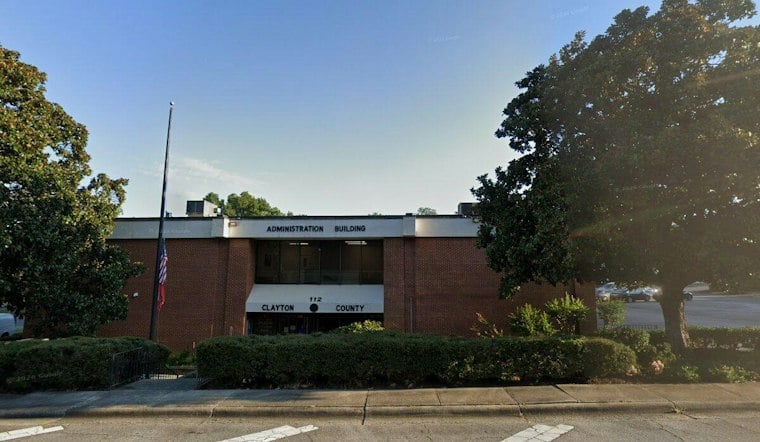
Clayton County homeowners could see their property tax bills climb by about $100 a year under a proposed millage rate increase that officials say is needed to hire new firefighters and paramedics and give county employees a raise. The Board of Commissioners has tentatively set the 2026 general maintenance and operations millage rate at 15.052 mills, a jump of 0.911 mills over the county's rollback rate.
That 0.911-mill increase amounts to a 6.44 percent hike above the rollback benchmark, the rate Georgia law uses to determine whether a jurisdiction is technically raising taxes. According to 95.5 WSB, the increase would generate nearly $7.8 million, according to Clayton County Chief Financial Officer Terry Jackson, and that money is earmarked for salaries, including a cost-of-living increase for county employees and about a dozen new firefighter and paramedic positions.
Specifically, the county plans to hire six paramedic sergeants and six firefighter EMTs with the new revenue, the station reports. The hires would be folded into the county's already-approved $522.1 million Fiscal Year 2027 budget, which the Board of Commissioners formally adopted during a special called meeting on June 17.
Public Hearing Set for Later This Month
Because the proposed rate sits above the rollback rate, Georgia's Property Taxpayer's Bill of Rights requires Clayton County to issue a formal press release, publish legal notices, and hold three public hearings before finalizing the increase, according to the Georgia Department of Revenue. A public meeting on the proposal is scheduled for September 24, and per the same account, a final decision on the millage rate is expected in another few weeks.
The county isn't the only local government asking Clayton County property owners to pay more. The Clayton County Board of Education has tentatively adopted a 2026 school millage rate of 20.000 mills, which is 2.42 percent above its own rollback rate and would add an estimated $42.48 annually in school taxes for a home assessed at $250,000, according to Best of Clayton County.
Municipal and County Levies Stack Up
Within the county, the city of Jonesboro has proposed an even steeper increase — a 40.48 percent hike over its rollback rate that would raise its municipal millage rate from 7.500 to 12.500 mills, as Jonesboro's proposed hike detailed last month. Property owners inside Jonesboro's city limits pay combined city, county, and school levies on the same parcel, meaning the layered increases could compound noticeably on a single tax bill.
The pressure isn't unique to Clayton County. In nearby Fulton County, Schools Superintendent Mike Looney has recommended a 5.85 percent property tax rate increase for 2026, raising the millage rate from 17.08 to 18.08 mills to counter rising healthcare, retirement, and inflationary costs, according to Rough Draft Atlanta. That district also faces an estimated $50 million revenue loss from senior tax exemptions. Meanwhile, the city of Roswell has proposed its first property tax hike in roughly a decade, seeking to raise its millage rate from 4.949 to 7.732 mills to cover infrastructure, debt service, and public safety costs, as reported by WSB-TV.
Rising Digest Meets Rising Bills
Clayton County's overall taxable property base has grown substantially in recent years, with the net taxable digest reaching $11.73 billion in 2026, up from $11.36 billion in 2025 and $7.14 billion in 2021 — a roughly 64 percent expansion over five years, according to county financial disclosures. That growth means rising assessments alone can push up total tax collections even without a rate increase.
Yet those gains have coincided with mounting strain for residents. An Atlanta Journal-Constitution analysis of Census Bureau data found that median property tax bills in Clayton County increased by more than 50 percent between 2020 and 2024, as reported by the Atlanta Journal-Constitution. Census figures show Clayton County had a median household income of $59,806 and a poverty rate of 17.95 percent as of 2024, according to Data USA, underscoring why any additional millage increase carries weight for local homeowners.



