

























































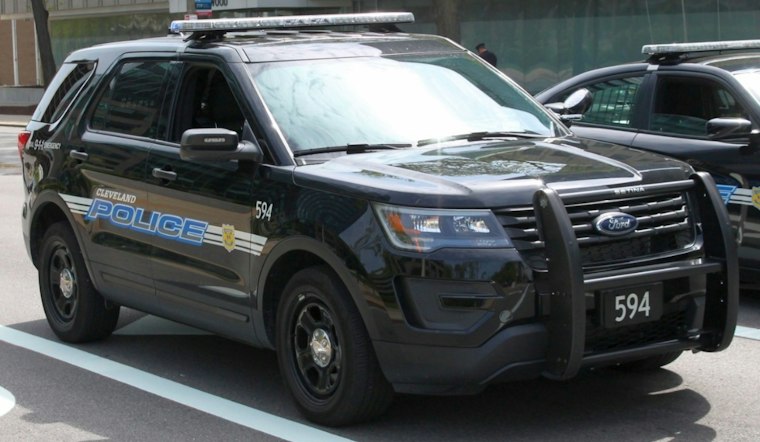
Cleveland police have conducted 184 vehicle pursuits so far this year through September 9, putting the department on pace for nearly 200 high-speed chases in 2026 despite a department policy meant to sharply limit when officers can give chase. That tally comes as recent pursuits have left multiple officers injured and defendants facing dozens of felony counts.
A Policy Born From Tragedy
As reported by Cleveland.com, the city's pursuit policy dates back to 2002 and was revised in 2014, two years after Cleveland police officers pursued Malissa Williams and Timothy Russell through the city in a chase that ended with officers firing 137 shots and killing both of them. That 2012 pursuit remains a defining moment for the department's approach to chases, and it helped shape a federal consent decree that, since 2015, has required Cleveland police to limit pursuits to situations where capturing a suspect outweighs the danger to the public.
Under the current policy, officers may pursue fleeing drivers in cases involving violent felonies or suspected drunk driving, but they must weigh whether letting a suspect escape actually poses a greater danger than chasing them down, according to the same report. Cleveland Police Chief Dorothy Todd has said plainly that police do still pursue fleeing suspects when circumstances warrant it, pushing back on any suggestion that the department has effectively stopped chasing people.
The Numbers Tell a Complicated Story
The 184 pursuits recorded through early September 2026 sit below the 212 pursuits logged over the same January-through-September stretch in 2025 and the 219 pursuits during that period in 2024, but they remain well above the 191 pursuits from the same months in 2022. The high point in recent years came in 2023, when Cleveland police conducted 275 pursuits from January through September, per the outlet's reporting.
Two pending criminal cases illustrate what those pursuits can look like on the ground. Rueben Bell, accused of carjacking multiple people and shooting at someone on a freeway during a chase that lasted nearly an hour, was indicted on more than 60 counts and has pleaded not guilty; his trial is scheduled for October 2026. Brian Branch, indicted on 21 counts including six counts of attempted murder and labeled by authorities as a mobile active shooter, also pleaded not guilty in June 2026 and faces an October 2026 trial date as well.
Officers Hurt, Chief Defends Limits
A May 2026 pursuit injured five Cleveland police officers, with two hurt by a bullet or shrapnel and three others injured when two police cars collided, according to Cleveland.com's reporting. Chief Todd has pushed back on any suggestion that the department has effectively stopped chasing people.
Todd has also expressed skepticism about deploying some newer pursuit-ending technologies on Cleveland's tight residential streets, even as departments elsewhere in Ohio experiment with alternatives. Police departments broadly are exploring tools such as GPS tags, drones, engine disablers, license plate readers and vehicle-manufacturer GPS data to track fleeing vehicles without resorting to high-speed chases.
How Nearby Departments Handle Pursuits
Other Northeast Ohio agencies have taken varied approaches. Parma Heights police were involved in nine pursuits over the past 12 months that led to nine arrests and 29 grand-jury indictment counts. Lorain police say they weigh crime seriousness, the need for immediate custody, traffic levels and a driver's recklessness before deciding whether to give chase.
Canton has gone further than most. Canton Police Chief John Gabbard allows pursuits only for violent felonies, and officers there cannot chase vehicles over felony warrants or stolen cars alone. Canton police lean on license plate readers, public safety cameras and drones instead, engaging in only about one or two pursuits per year, and the department reports zero pursuit-related crashes, injuries or deaths in recent years, per the same Cleveland.com report.
The National Toll of Police Chases
The stakes extend well beyond Cleveland. David Licate, a University of Akron criminal justice professor, has said vehicle chases are dangerous to everyone involved, and he notes that police pursuits nationwide kill roughly one person every day. A JAMA study covering 2009 through 2023 documented 5,425 fatal pursuit-related crashes involving 8,307 vehicles and 14,497 people, reporting 6,352 deaths overall, including 270 fatalities among people who were not even inside a vehicle.
Those national figures echo an incident closer to home. In May 2024, Cleveland Heights police learned from an automated license plate reader that a Kia Sportage stolen out of Cleveland had entered the city, touching off a chase that hit roughly 75 miles per hour before the Kia slammed into a telephone pole, according to cleveland.com. A 15-year-old boy fled the crash on foot before a K-9 helped officers track him down on Parkway Drive. He suffered injuries to his forehead, upper left arm, left hand and both knees, and he was ultimately charged with felony fleeing and eluding, obstructing official business, and felony receiving stolen property.
As Cleveland's reported pursuit count continues to decline from its 2023 peak, the tension at the center of the debate remains the same one that shaped the 2014 policy revision: officers deciding, often in seconds, whether the danger of letting someone go outweighs the danger of chasing them down.



