

























































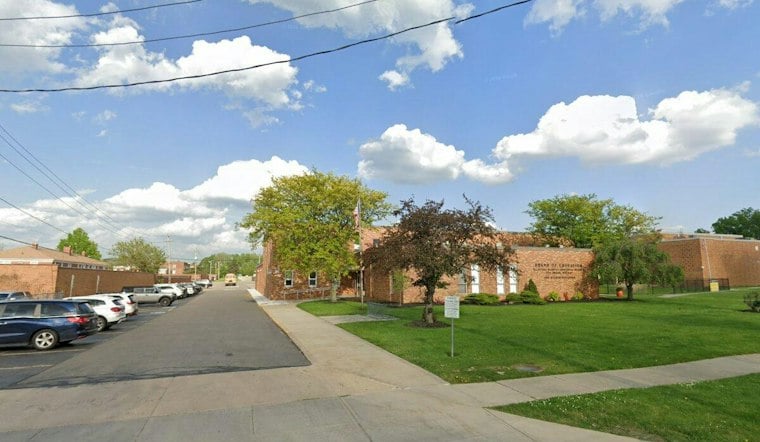
Cleveland Heights-University Heights City School District voters will decide on Nov. 3 whether to approve a new 6.5-mill operating levy, the district's first ask for new operating money since 2020. The levy, listed as Issue 4 on the ballot, would generate about $11.1 million annually for a district that has made $3.4 million of its planned $5 million in budget cuts and laid off 21 employees this year.
The Cleveland Heights-University Heights Board of Education unanimously approved a resolution on Aug. 3 to place the current operating expenses levy before voters, according to Cleveland.com. That vote followed a resolution of necessity the board approved at a July 21 special meeting, according to the Cleveland Heights-University Heights City School District. If approved, the levy would begin in tax year 2026, with first payments due in calendar year 2027.
District officials say the levy is meant to address a projected decline in the district's available general fund balance, which is forecast to drop from $32.2 million in fiscal year 2027 to negative $3.7 million by fiscal year 2030, per the district's August 2026 five-year forecast. Separately, the district has said it began deficit spending in fiscal year 2025, with its overall cash balance expected to turn negative by fiscal year 2029, the outlet's report notes.
Cuts Already Made, More Losses Looming
The district has eliminated 32 positions and laid off 21 employees in May as part of its budget-cutting efforts, the same report states. It has made $3.4 million of the planned $5 million in local cuts, while it expects to lose $7 million in state funding over the next two school years, according to the same account.
The new levy would cost homeowners about $228 per year for every $100,000 of assessed property value, an estimate attributed to county officials. Actual tax bills may vary because of exemptions, credits and other property-specific factors, and Cuyahoga County has separately cautioned that estimated tax bills can differ from final ones due to special assessments, delinquency charges and future changes in property valuations, per the county's calculator explainer covered by Cleveland.com in its report on the November levies. The county is also preparing for a 2027 property-value update that will lean heavily on recent sales data and housing-market trends, a factor that could reshape tax bills independent of how the levy vote turns out.
What the Money Would Fund
District officials say the levy would support classroom instruction, teachers and other staff, special education services, transportation, technology, instructional materials, utilities, maintenance and general school operations. Ballot language states the levy would collect $11,100,193 annually at a rate not exceeding 6.5 mills, and it is structured as a continuing tax without a set expiration date. It will appear on the same Nov. 3 ballot alongside other school funding requests across Cuyahoga County.
The Cleveland Heights-University Heights City School District serves Cleveland Heights, University Heights and part of South Euclid, according to the district's own description. It educates nearly 5,000 students annually from pre-kindergarten through 12th grade across seven elementary schools, two middle schools, one high school, a career and technical education consortium, an alternative options school and an early childhood learning program.
A Tough Recent Ballot History
This marks the first time since November 2020 that the board has asked voters to approve a new operating levy. Voters that year approved a 4.8-mill operating levy, but the district's report notes that measure narrowly passed only after a larger 7.9-mill levy was defeated in the spring election that preceded it.
That April 2020 extended primary was rough for the district: the 7.9-mill levy, which would have brought in more than $8 million in new revenue, failed with just 48% of the vote in favor, a margin of more than 600 votes, according to Ideastream Public Media. Neighboring districts fared better in that same election — a 4.9-mill levy for Lakewood City Schools passed with 77% of the vote, and a 6.9-mill levy for South Euclid-Lyndhurst Schools passed with 59%.
District officials have framed the timing of this year's request as a matter of scale. If the district waits until November 2028 to try again, officials estimate they would need 10 to 15 mills to close the projected budget gap, according to Cleveland.com's report — nearly double what's being asked of voters this fall. Under Ohio law, approval of the levy depends on a majority of electors voting for the purpose stated in the resolution, and a continuing levy may later be reduced under a separate provision of the Ohio Revised Code.





