

























































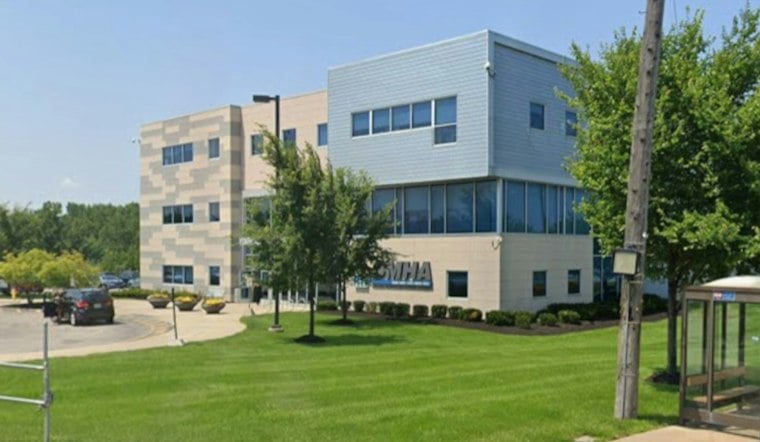
A Cleveland mother says her toddler ended up hospitalized after mold took hold inside their Cuyahoga Metropolitan Housing Authority apartment, reigniting long-running concerns about how the region's largest public housing landlord handles habitability complaints. The mother has described the mold problem inside her unit as serious enough to threaten her young child's health.
Cleveland 19 News reported the mother's account and her toddler's hospitalization. CMHA is one of the oldest public housing authorities in the country and operates roughly 22,805 housing units across Cleveland and Cuyahoga County, including about 2,700 CMHA-owned public housing units and more than 5,500 Housing Choice Vouchers, according to VoucherReady. That scale means thousands of low-income families across the county depend on the authority to keep units livable.
Why Mold Poses Outsized Risk to Young Children
Toddlers face heightened danger from indoor mold exposure because their lungs are still developing, they breathe faster relative to their body size, and they spend more time near floors where spores settle, per updated guidance from the U.S. Environmental Protection Agency. Mold exposure can contribute to respiratory problems in young children, according to public-health guidance.
Federal Rules Treat Large Mold Growths as Emergencies
Under HUD's National Standards for the Physical Inspection of Real Estate, which took effect for public housing in July 2023, visible mold-like substances covering more than 9 square feet are classified as life-threatening health and safety deficiencies that require a mandatory 24-hour emergency response. The standard, detailed by the National Apartment Association, also addresses life-safety hazards such as mold.
Whether that emergency timeline was followed in this case is not addressed in available reporting. It remains unclear which CMHA development the family lives in, whether prior work orders or 311 complaints were filed before the toddler's hospitalization, or what relocation assistance, if any, CMHA offered the family while the mold issue was addressed.
Ohio's Legal Options Are Narrow for Tenants
Ohio has no standalone mold-exposure statute, so mold-related habitability claims fall under the implied warranty of habitability in Ohio Revised Code 5321.04. Tenants who want to withhold rent over unresolved conditions cannot simply stop paying; they must give landlords 30 days written notice under O.R.C. 5321.07 before depositing rent into a municipal court escrow account, according to Fast Mold Testing. Direct rent withholding without going through that court process is illegal under Ohio law, the outlet notes.
Cleveland tenants also have a local avenue: the city's Department of Building and Housing takes habitability complaints through 311 or its online portal and can dispatch code enforcement officers to inspect units and issue formal notices of violation forcing landlords to fix the underlying moisture source. Those violation notices can serve as independent documentation of conditions inside a unit, separate from whatever a landlord or housing authority reports internally.
A Pattern of Inspection Failures and Legal Aid Demand
This is not the first time CMHA's unit conditions have drawn scrutiny. Public records obtained by News 5 Cleveland showed the authority abated Section 8 voucher payments to private landlords 7,670 times over nine months in 2022, according to reporting cited by the Legal Aid Society of Cleveland. The report included an example involving structural problems and separately discussed lead and mold exposure. Those abatements, while intended to force landlord compliance, can also leave low-income families stuck living in deteriorating units during repair disputes.
Housing conditions remain a concern for Cleveland tenants. The available reporting does not establish a 2025 representation total for the Legal Aid Society of Cleveland, a ranking of its housing-condition complaints, or a 2025 CMHA eviction filing count.
Mold complaints inside CMHA housing are not new to local news coverage either. In March 2021, WOIO's Cleveland 19 News investigated a separate case in which a Cleveland mother reported that severe mold inside her public housing apartment threatened her young children's health, an account that mirrors the concerns raised in this week's report.
Open Questions Remain
CMHA has not been reported as issuing a public response to this specific case, and it is not yet known which development is involved, whether the family filed prior complaints, or what support the authority has offered since the hospitalization became public. Hoodline previously reported on other issues at CMHA properties, including a property manager accused of rent skimming, underscoring the range of oversight challenges facing the housing authority as it manages tens of thousands of units across the county.





