

























































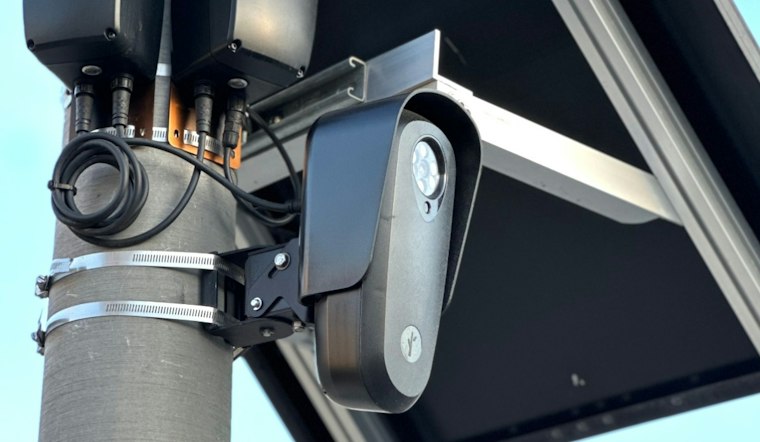
Cleveland's Community Police Commission voted to tell Cleveland police to pause use of automated license-plate-reader cameras starting Jan. 1 unless the city and commission have finished updating the policy governing them. The vote sets up a three-month scramble to rewrite rules for a surveillance system that already scans every vehicle that passes roughly 100 camera locations around the city.
What the Resolution Actually Requires
The resolution, detailed by Signal Cleveland, requires that the pause continue until the commission updates its license-plate-reader policy with input from the community. It was presented by Commissioner Shandra Moriera-Benito, who cited millions of searches of Cleveland's camera data by other law enforcement agencies as a reason for proposing the halt. The measure also reaches beyond the Flock Safety brand specifically, applying to any non-Flock patrol-car cameras that read license plates.
Moriera-Benito has argued that the commission's authority to make this kind of demand comes from the city charter, which establishes the Community Police Commission as the final authority over police policies, procedures and training regimens, according to the same report. The review process itself is set to begin within 30 days of the commission's Sept. 23 meeting, and the resolution calls for a thorough process involving community stakeholders, subject matter experts, the Cleveland Division of Police and City Council. It also calls for review of any new or renewed city contracts with license-plate-reader technology providers.
Cleveland’s charter gives the commission a broad role in police oversight: its 13 members must reflect the city’s diverse communities, and it has final authority over police policies, procedures and training. The charter also authorizes the commission to review police data and records, including on data collection and retention, and to seek public comment on policy issues. That gives the proposed rewrite a clear policy connection even as the separate question of authority over city contracts remains contested. Cleveland’s charter
A Commissioner Says the Vote Has No Teeth
Not everyone on the commission is convinced the resolution means much. Commissioner Michael Nelson abstained from the vote, saying it is nonbinding, lacks legal force, and reaches into an area — the city's contracting process — that falls outside the commission's oversight. The city itself has not said whether the commission actually has the power to enforce the moratorium, per the report.
Two other commissioners, James Chura and Sheila Mason, voted against the resolution outright. Chura said license-plate-reader technology prevents and solves many crimes, while also saying there should be clear consequences when officers misuse it.
City Points to Council Action, No Known Local Misuse
City officials have pushed back on the idea that Cleveland has a demonstrated misuse problem. Dorothy Todd said Cleveland police have not misused Flock license-plate readers and wrote that the city is not aware of any instance in which a Cleveland Division of Police officer illegally used the technology. Todd said misuse incidents in other cities should not be presented as evidence of wrongdoing in Cleveland, even as she said she supports clear, consistent consequences for intentional misuse of law enforcement technology and continued policy review. She did not ask the commission to reconsider the January moratorium, the report noted.
Cleveland City Council has already taken its own steps this year, extending the Flock contract for six months while requiring the Public Safety Department to seek proposals from other providers. Council also restricted license-plate-reader data sharing. The backdrop for that caution includes a vendor mistake that allowed immigration-related searches, and the broader reality that law enforcement agencies can share access to each other's license-plate-reader databases — a concern given that the cameras capture images of every passing vehicle, transmit them via cellular networks to a database, and store them for 30 days.
Flock has also announced platform changes that could affect the safeguards debate: the company says that by Jan. 1, law enforcement customers will have to use a tool intended to flag unusual searches and link searches to a case number. It also plans to shorten its standard data-retention period from 30 days to seven, while allowing longer retention for evidence tied to a case. The company’s planned changes
Dayton is confronting a related problem through a separate review: the city says police found its fixed-camera network was shared more broadly than intended with law enforcement agencies around the country. Dayton has suspended the program while an independent audit is planned, with public input set to inform the eventual decision on whether to resume camera use. Dayton’s public update
Advocates and a Skeptical Council Member Weigh In
Piet van Lier said the resolution is not a ban on the technology, but argued the policy's data-access provisions are insufficient from his perspective. Bryn Adams, of the group Flock No Cleveland, said the organization is heartened by the resolution and hopes the community-input process will enable a more robust conversation about the risks and costs of license-plate readers.
Not every city leader is on board. Mike Polensek, a Cleveland City Council member and Safety Committee chair, called the resolution another example of the commission being anti-police and said he plans to discuss the city's response with Public Safety Director Wayne Drummond. The commission had approved its original license-plate-reader policy in October 2025, and the fight now is over whether that policy needs a rewrite before the cameras can keep running past the new year.



