

























































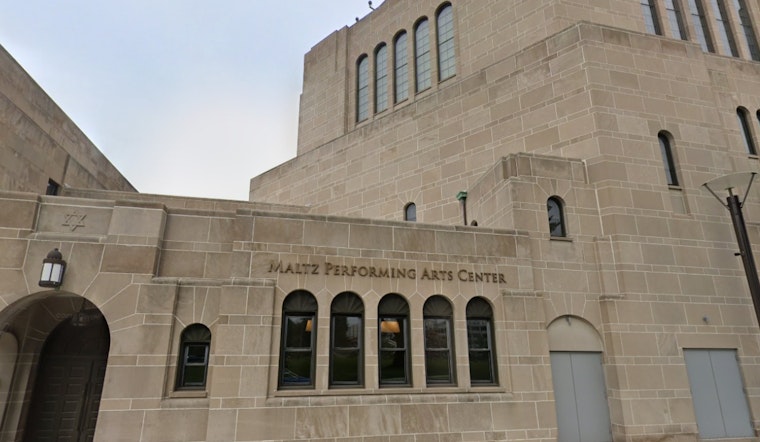
Four debut authors just swept every competitive category of the Anisfield-Wolf Book Awards, Cleveland's 91-year-old literary prize built to confront racism and celebrate the world's diverse cultures. The prize money behind that sweep was tripled this year too, jumping from $10,000 to $30,000 per genre winner, making it one of the highest-paying literary honors in the country. The 91st awards ceremony lands at the Maltz Performing Arts Center on September 18, 2026, with more than 1,000 attendees expected.
According to Signal Cleveland, the Anisfield-Wolf Book Awards have recognized more than 250 writers since their founding in 1935, and remain the only American book prize focused specifically on works addressing racism and diversity. Past winners span from Zora Neale Hurston, Langston Hughes, and Martin Luther King Jr. to Toni Morrison, Wole Soyinka, Isabel Wilkerson, Isabelle Allende, Maxine Hong Kingston, and Colson Whitehead — a roster that places this year's first-time authors in rarefied company. The genre-category cash prize, the outlet reports, was tripled from its previous amount ahead of this year's cycle.
A Clean Sweep for First-Time Authors
Carrie R. Moore received the fiction award for “Make Your Way Home,” while Gbenga Adesina won the poetry prize for “Death Does Not End at the Sea” and Sarah Aziza took the memoir award for “The Hollow Half: A Memoir of Bodies and Borders,” per Signal Cleveland. Bench Ansfield won the nonfiction award for “Born in Flames: The Business of Arson and the Remaking of the American City.” WOSU Public Media reports that all four are debut authors, an unprecedented sweep for first-time book creators in the award's history, with organizers noting the selected books share deep thematic ties around migration and belonging.
Ansfield's decade of research behind “Born in Flames” coined the term “brownlining” to describe subprime, discriminatory property insurance practices imposed on low-income communities of color following 1968 federal insurance reforms, according to Temple University. That research argues the 1970s wave of landlord arson in major American cities stemmed from predatory financial incentives rather than resident vandalism, the university notes. The 2026 programming will explore housing, migration, borders, faith, race, and history, per Signal Cleveland's reporting on the ceremony's themes.
Lifetime Achievement Honors a Scholar of Whiteness
Nell Irvin Painter, professor emerita at Princeton University, is receiving the awards' Lifetime Achievement honor this year, according to Signal Cleveland. Painter is best known for “The History of White People,” which the Society of American Historians describes as reframing whiteness as an evolving, constructed socio-historical category rather than a fixed biological identity. She joins past Lifetime Achievement recipients including Eric Foner, Samuel R. Delany, Charlayne Hunter-Gault, and Ishmael Reed.
Natasha Trethewey, the former U.S. Poet Laureate, now leads the Anisfield-Wolf jury, Signal Cleveland reports. She took over as jury chair in 2024 after winning the 2021 nonfiction award, succeeding Harvard scholar Henry Louis Gates Jr., who had chaired the panel for 27 years. Gates himself had succeeded anthropologist Ashley Montagu, who led the jury from the early 1960s until 1996 and, in 1991, brought on poet Rita Dove and Gates to help manage a surge in submissions across academic disciplines.
From a $1,000 Memorial to a Cleveland Institution
The prize traces back to Edith Anisfield Wolf, a Cleveland poet and philanthropist who established the awards in honor of her father, John Anisfield, and her husband, Eugene Wolf, according to Signal Cleveland. She initially set up a single $1,000 prize in 1934 for scientific and scholarly books, per the Encyclopedia of Cleveland History, before expanding it in 1941 to include a second $1,000 prize for creative literature following her husband's death. The award was originally sponsored by the Saturday Review magazine before Wolf's death in January 1963, when she willed her personal book collection to the Cleveland Public Library and left estate funds to the Cleveland Foundation, which has administered the awards ever since.
“The Anisfield-Wolf Book Awards are a uniquely Cleveland prize,” said Kortney Morrow, per Signal Cleveland's reporting, adding that the awards are making monumental strides to invest in authors of their times. The awards now offer a book club, educational resources, and year-round programming beyond the annual ceremony, the outlet notes. This year's celebration, running September 18-19 in Cleveland, includes a literary book crawl across the city and a public reception at the Ballroom at Park Lane.
An Expanding Book Fest Across Northeast Ohio
Sarah Aziza is scheduled to appear at a City Club of Cleveland forum with WEWS reporter Nadeen Abusada as part of the surrounding events, according to Signal Cleveland. The awards have built what has grown into a broader, month-long showcase of literary programming throughout Northeast Ohio, known as the Cleveland Book Fest, expected to bring together thousands of readers, writers, and residents.
Official Book Fest partners include the City Club of Cleveland, Cleveland Public Library, Cuyahoga County Public Library, the Great Lakes African American Writers Conference, and Literary Cleveland, per Signal Cleveland. The festival includes author talks, readings, writing workshops, and publishing panels held across the city. Hoodline previously reported that Literary Cleveland's Inkubator conference, which draws over 4,500 attendees annually, serves as the kickoff event for the same festival that culminates in the Anisfield-Wolf ceremony.





