

























































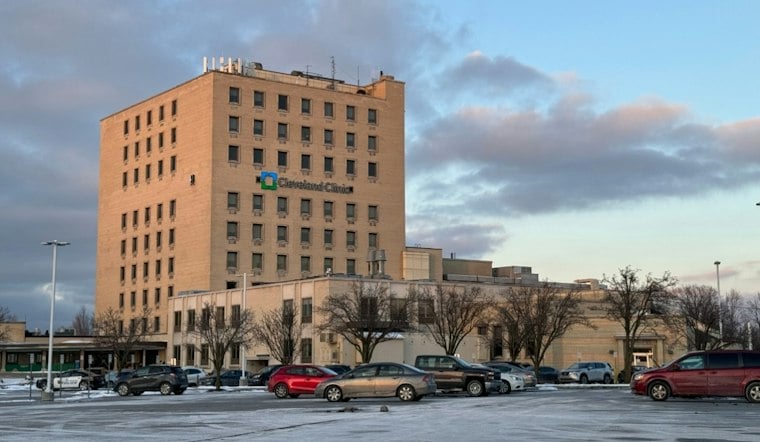
A five-institution research consortium based in Cleveland has secured a five-year, $21.1 million grant to keep studying Alzheimer's disease, a renewal that arrives as Cuyahoga County posts the highest Alzheimer's prevalence rate anywhere in Ohio. The Cleveland Alzheimer's Disease Research Center, led by Cleveland Clinic, is the only such federally designated center in the state, and the new money extends work that began when the center first opened its doors in 2019.
The National Institute on Aging awarded the grant, according to Cleveland.com, and it represents a $5.7 million jump over the center's prior five-year, $15.4 million award from August 2021, according to Cleveland Clinic. Before that, the center received initial funding in July 2019, according to the same Cleveland Clinic account. The consortium is one of 37 NIH-funded Alzheimer's Disease Research Centers nationwide and remains the only one designated in Ohio, according to the CWRU Newsroom.
A Regional Health Crisis Driving the Research
The funding lands against a stark local backdrop. Cuyahoga County has the highest prevalence of Alzheimer's disease in Ohio at 13.4%, affecting an estimated 31,500 adults aged 65 and older, with Alzheimer's and related dementias ranking as the seventh leading cause of death in the county in 2020, per the Cuyahoga County Board of Health. Statewide, Alzheimer's disease, unpaid caregiving and Medicaid costs remain part of the broader picture. Nationally, Alzheimer's disease is a leading cause of death in the United States, according to federal data cited in Cleveland.com's report, with the number of people living with the disease projected to rise from 6.9 million in 2020 to nearly 14 million by 2060.
Cleveland Clinic's Dr. Jagan Pillai, director of the health system's Center for Brain Health, leads the research center. Pillai said the center represents an ongoing partnership with the community, per Cleveland.com's reporting. The center studies healthy individuals at risk for developing dementia and follows participants over time, supporting a wide range of studies that include Lewy body dementia and atypical Alzheimer's disease.
Five Institutions, One Coordinated Effort
The center's structure pulls together Cleveland Clinic, Case Western Reserve University, University Hospitals, the MetroHealth System, and the Veterans Affairs Northeast Ohio Health Care System. The VA partnership is intended to increase veteran research participation, while the consortium also focuses on socioeconomically disadvantaged urban populations. Urban and minority populations face higher statistical risks for dementia but remain historically underrepresented in research, a gap the partnership structure is meant to help close.
Dr. Brian S. Appleby, a UH neuropsychiatrist and professor of neurology, psychiatry and pathology at the Case Western Reserve University School of Medicine, said the center brings patients, families, clinicians and scientists together across institutions, per Cleveland.com. The center also carries an education component for the Northeast Ohio Alzheimer's medical community, working to educate scientists, healthcare professionals and the public on the causes and treatment of dementia, and it focuses specifically on people in socioeconomically disadvantaged communities who face higher risk for dementia.
Founding Leadership and a Recent Transition
The center was established in 2019 under founding director Dr. James Leverenz of Cleveland Clinic, who transitioned to the University of Washington in 2025, according to the Global Parkinson's Genetics Program. Pillai is now the center's director. In March 2026, the center cited a publication involving 1,028 participants and mixed Alzheimer's-Lewy body pathology, according to the Cleveland Alzheimer's Disease Research Center. Mixed dementia pathologies often complicate clinical diagnosis and treatment responsiveness in older patients, the center's research notes.
Feeding a National Data Network
Data from U.S. Alzheimer's Disease Research Centers, including Cleveland's, were coordinated through the National Alzheimer Coordinating Center, per PMC. That kind of standardized, longitudinal data lets researchers across institutions track cognitive decline over decades rather than relying on isolated snapshots. Separately, Case Western Reserve University researchers led by CADRC Data Management Lead Dr. Jonathan L. Haines received a five-year, $6.2 million grant from the National Institute on Aging to apply artificial intelligence and genetics to Alzheimer's drug discovery, according to the Cleveland Alzheimer's Disease Research Center. Haines serves as the Data Management and Statistics core leader.
The renewal also fits into a broader state policy push. That effort addresses early diagnosis, workforce training, and research funding statewide. The center's work has also added value to national and international Alzheimer's research programs, per Cleveland.com's account, as data collected locally in Cleveland feeds into the same coordinating networks used by research centers across the country.
For families in Northeast Ohio navigating dementia, the stakes remain immediate even as researchers work toward better diagnosis and treatment tools.





