

























































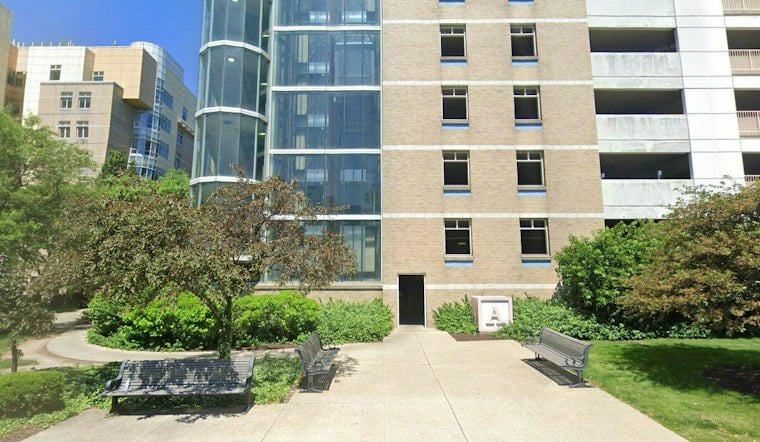
Dr. Edward Barksdale Jr., the surgeon who spent nearly two decades at Rainbow Babies and Children's Hospital and built one of Cleveland's most closely watched anti-violence programs, has sued University Hospitals in federal court, alleging he was underpaid, harassed and ultimately pushed out because of his race. The lawsuit, filed in federal court in Cleveland, accuses the hospital system of racial discrimination, retaliation and creating a hostile work environment, and it seeks his reinstatement or compensation for lost wages and benefits.
According to cleveland.com, Barksdale says he endured racial harassment and discrimination over several years, including being paid less than his white counterparts, and that he was the only Black male surgeon at Rainbow Babies and Children's Hospital. He alleges he repeatedly informed senior-level hospital executives about the discrimination but was ignored or rebuffed each time. University Hospitals spokesman Mike Tobin denied the allegations and said the system looks forward to addressing them in court.
Barksdale joined Rainbow Babies and Children's Hospital in 2007 as division chief and was promoted to surgeon-in-chief four years later, in 2011. He went on to serve as professor of surgery and pediatrics at Case Western Reserve University and as president of the American Pediatric Surgery Association, and the lawsuit says he performed thousands of surgeries on infants, children and teenagers during his tenure.
Pay Gap and a Program Under Pressure
The lawsuit claims Barksdale's compensation was in the 25th percentile of similar surgeons-in-chief, while he ranked in the 75th percentile for productivity — a disparity the suit points to as evidence of underpayment relative to his peers. He also alleges that hospital officials pressured him to give up the Antifragility Initiative, the violence-intervention program he had led, and allow others whom the lawsuit describes as white to run it instead.
The suit further alleges that Barksdale reported an email in which white nurses were said to have made disparaging comments, claiming they believed he was racist toward white women — and that University Hospitals did not take corrective action in response, according to the lawsuit. Separately, Barksdale says he was sidelined during coronavirus-era calls with government and hospital officials, and that he complained about understaffing in his department and the poor performance of an assistant.
An Audit, Discipline, and a Grueling Schedule
University Hospitals initiated an audit of Barksdale's work in 2022, and according to the lawsuit, the doctor conducting that audit found no cause to fire him. That same year, Barksdale was disciplined over complaints that he was intimidating and over safety procedures he had implemented, the suit states. He also alleges that upper-level staff assigned him to be surgeon of the week every other week, even though surgeons typically had several weeks of rest between such rotations — a schedule the lawsuit says included at least 12-hour shifts and emergency surgeries.
In late 2023, Barksdale suffered a breakdown after performing surgery and was rushed to an emergency room with a fever exceeding 103 degrees, severe muscle breakdown, acute kidney injury and a diagnosis of urosepsis. He returned to work with a full surgery schedule in April 2024, but the hospital posted the following month that it was seeking his replacement. He submitted his resignation in May 2024 and left Rainbow Babies and Children's Hospital in September 2024. Barksdale says racial discrimination led to his resignation as surgeon-in-chief, while University Hospitals has characterized his departure as a voluntary resignation, per the hospital's statement.
A Program Built to Break Cycles of Violence
The Antifragility Initiative sought to curb gun violence in impoverished Cleveland neighborhoods, targeting areas where Black children were disproportionately affected, according to the lawsuit. Cleveland.com reports that Barksdale launched the program in 2016, though the National Press Foundation has reported that Barksdale and collaborators developed the initiative in 2019 — accounts that differ on the program's origin date.
University Hospitals has said it devoted hundreds of millions of dollars to programs Barksdale spearheaded aimed at reducing youth gun violence in Cleveland, and the Antifragility Initiative was modeled on similar violence-intervention efforts in Chicago, Milwaukee, Philadelphia and Pittsburgh, Ideastream Public Media reported. Ideastream reported that a 2017 study found 29% of Cleveland youth ages 6 to 15 were reinjured violently within a year, while a later study of more than 600 program participants found a rate about 10 percentage points lower. The outlet noted that program leaders are seeking additional research funding and weighing Medicaid reimbursement as a way to build more consistent long-term support.
The stakes behind that work were laid out by News 5 Cleveland, which reported that University Hospitals found that 30% of the time, a child who came in with a gunshot wound would return with another injury or become a perpetrator of a violent crime themselves. That statistic underscores why the program Barksdale built, and the fight over who would control it, sits at the center of his lawsuit.
Roots in a Civil Rights Fight
Barksdale grew up in Lynchburg, Virginia, where his parents successfully sued to desegregate the school district, an effort that drew Martin Luther King Jr. to his childhood home, according to the lawsuit as reported by cleveland.com. Barksdale and his sister attended a previously all-white school in Lynchburg before he went on to Yale University and Harvard Medical School.
University Hospitals has denied the accusations laid out in the suit, and Tobin's statement made clear the system intends to fight the case in court rather than settle. With Barksdale seeking reinstatement or back pay and benefits, and the hospital system disputing his account of nearly two decades on staff, the lawsuit was filed in federal court in Cleveland.





