

























































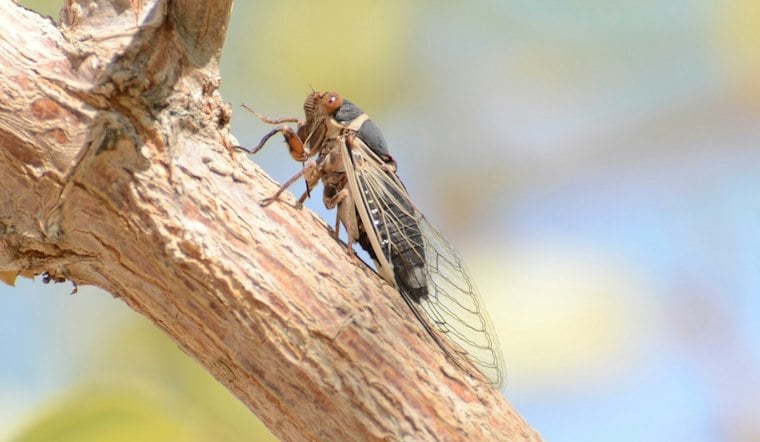
If the desert's late-summer soundtrack seems to be running long this year, it's not your imagination. Cicadas are still buzzing across the Coachella Valley well into what should be their quiet season, and the culprit may be sitting in everyone's backyard: the sprinkler system.
The Species Behind the Noise
According to The Desert Sun, cicadas can remain active beyond summer in the Coachella Valley, a pattern tied in part to how continuously people water trees across the region. The dominant species behind the racket is *Diceroprocta apache*, commonly known as the Apache cicada or citrus cicada, which is widespread across desert river basins and irrigated urban landscapes in Southern California and Arizona, according to Cicada Mania. Unlike the periodical broods of the eastern United States, which famously emerge in 13-year or 17-year cycles, these desert cicadas emerge in overlapping multi-year cohorts every year from late spring through autumn, per University of Arizona News.
A Rare Insect Cooling System
Desert cicadas use evaporative cooling to cope with extreme heat. Adult cicadas tap their needle-like mouthparts into tree xylem tissue to ingest water-rich sap, according to research published on PubMed Central. The extended activity has been linked in part to the region's regularly watered trees.
Why the Singing Continues Through Peak Heat
Because Apache cicadas can thermoregulate this way, males remain active and sing during peak afternoon heat above 110 degrees, a window when natural predators such as birds and lizards are forced to seek shade, the University of Arizona reporting notes. Only males call, using rapidly flexing drum-like organs called timbals to produce sound; hollow body cavities amplify it, and the resulting choruses can carry more than 400 yards, according to Progressive Pest Control.
Years Underground Before a Few Weeks in the Sun
All that noise caps off a life cycle that starts well out of sight. Apache cicadas have overlapping three-to-five-year cycles, with nymphs developing underground and tunneling through soil to feed on tree root sap before digging to the surface to molt into winged adults, according to the USA National Phenology Network. Once above ground, females lay eggs by cutting slits into small tree branches.
A Bigger Role in the Desert Ecosystem
Cicadas are more than background noise for the desert food web. Cicada killer wasps prey on adult cicadas, paralyzing them to provision their underground larval nests, according to Bugs With Mike. Underground, cicada nymphs feed on tree roots.
Taken together, the Coachella Valley's extended cicada chorus may be linked in part to human landscaping, including irrigated trees. The valley's late-season buzz may keep going long after the summer heat has technically passed.





