

























































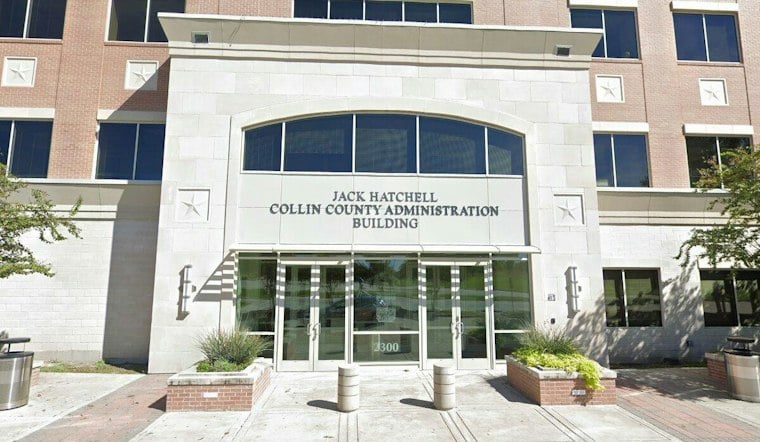
Collin County homeowners are getting their first property tax rate increase in 33 years after the Commissioners Court voted 4-1 on Monday to approve the fiscal 2027 budget and a new tax rate of about $0.151 per $100 of assessed value, up from roughly $0.149. The change takes effect October 1 and is expected to bring in about $16.3 million in additional county revenue.
For the owner of a median-value home with a homestead exemption, the increase translates to real dollars: estimated county property taxes will climb from $682.10 to $744.98, a jump of $62.88. That's based on a median home value of $517,911 used in this year's budget, up from $480,773 the year before. As The Dallas Morning News put it, this marks the first time in 33 years that Collin County homeowners will pay a higher property tax rate.
A Rate That Hadn't Budged Since the Early 1990s
Collin County had kept its property tax rate unchanged for more than three decades even as bills crept upward in recent years, a trend driven not by the rate itself but by rising home values, per KERA News. Property values kept increasing while the rate stayed flat, meaning this vote represents the first time the rate itself has moved since 1993, not just the underlying valuations. County Judge Chris Hill was the lone vote against the new budget and tax rate.
Hill had pushed an alternative. According to the Dallas Express account of the August 31 meeting, he proposed asking county departments to cut their budgets by 2.67% and forgoing employee raises in order to avoid raising taxes altogether, while KERA News's August 31 coverage cited a proposed cut of 2.76%. Either way, the motion failed to advance. Hill argued that taxpayers who aren't getting comparable salary increases are effectively subsidizing the raises given to county employees.
Commissioners Defend Raises as a Recruitment Necessity
Commissioners Susan Fletcher and Darrell Hale pushed back on Hill's framing, defending the employee raises as essential to keeping the county competitive. Fletcher said the raises are necessary for recruitment and retention to keep up with market rates for similar positions, the station's report noted, and she added that county departments already operate with lean budgets and are routinely asked to limit spending to only what they need.
Hale echoed that sentiment, saying he could not support a 2.67% budget reduction because the county already operates with tight margins. He said the county searched for every possible dollar during the budget cycle before landing on the final numbers presented to the court.
Growth Complicates the Math
Underlying the debate is Collin County's rapid population growth, which officials say makes further spending cuts difficult even as the county tries to keep pace with demand for services. Per KERA News, Collin County is one of the fastest-growing counties in the nation according to the U.S. Census Bureau, and the Dallas Morning News reported that the county is home to four of the nation's five fastest-growing cities.
The spending debate also drew on dueling interpretations of a Texas Public Policy Foundation study. During budget discussion, the study was cited as finding that Collin County government spending grew more slowly than population and inflation combined between 2015 and 2025 — a conclusion at odds with Hill's own reading. Per KERA News's August 31 report, Hill disputed that framing, saying the county budget actually grew faster than inflation and population growth combined when measured from 2013 through 2025. A separate breakdown from Texas Scorecard, citing the same foundation's research, found that Collin County's budget actually grew more slowly than population and inflation among the ten counties examined, while eight of those ten counties saw spending outpace that combined benchmark — with Fort Bend County's budget growing by more than 191% over the decade.
What Homeowners Should Watch Next
The new county rate is only one piece of a Collin County property owner's total tax bill. Cities, school districts and other local taxing entities set their own rates independently, meaning the county's increase won't be the only factor determining how much residents ultimately owe. Exactly how much any individual homeowner's bill rises will depend on their property's taxable value and applicable exemptions once the new rate takes effect October 1, as reported by Dallas Express.



