

























































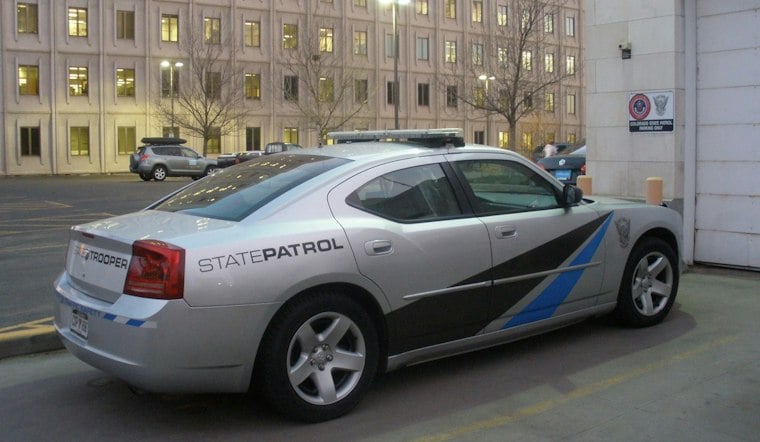
Colorado's 2023 expansion of its Slow Down Move Over law is the legal backdrop to a recent reminder from Colorado State Patrol: drivers approaching a stopped road user should create space by changing lanes when safe or reducing speed when a lane change is unavailable. In a post from its @csp_news account, the agency described the protection as extending to every roadway user.
What the 2023 Expansion Actually Changed
According to the Colorado State Patrol
, the patrol presents the reminder as a call to protect anyone stopped along the roadside. Colorado first broadened the Slow Down Move Over law in 2023 to provide greater protection for people and vehicles stopped along the roadside, according to the agency's own
Colorado State Patrol
safety page. The same year, the Colorado Department of Transportation described the update as extending protection to all motorists, including passenger vehicles, emergency responders, tow trucks and utility trucks, per the department's
Shift Into Safe
news post.
The underlying statutory language backs up the broad strokes of that reminder. Colorado law requires drivers approaching or passing a stationary emergency, towing, public utility or hazard-signaling vehicle to exhibit due care and caution, according to the version of the code published by law.justia.com. On highways with at least two lanes moving in the same direction, drivers are required to move into a lane at least one lane away from the stationary vehicle whenever it's possible to do so safely.
What the 2023 change required
Colorado's 2023 law was more specific than the general reminder. According to the Colorado General Assembly, HB23-1123 required a driver to move one lane away from a stationary vehicle when its hazard lights are activated, two lanes travel in the same direction and a safe lane change is possible. The available safety figures provide broader context rather than a separate statewide tally for crashes involving roadside-stopped people or vehicles. Preliminary Colorado Department of Transportation data recorded 684 traffic deaths statewide in 2024, down 5% from 2023. The department also reported nine fatalities and 548 injuries in Colorado construction and maintenance work zones in 2025, according to its work-zone safety update.
When Changing Lanes Isn't an Option
If a lane change isn't possible, the law doesn't just let drivers off the hook. Drivers must instead reduce and maintain a safe speed and continue with due care and caution, per the same statutory text. The rule applies to stationary vehicles on the roadside, including those pulled over on the shoulder.
The statute even spells out what counts as a safe speed in these situations. Speeds of 25 miles per hour or less are presumed safe when the posted limit is below 45 miles per hour, while a reduction of 20 miles per hour below the limit is presumed safe on roads posted at 45 miles per hour or higher, subject to conditions. Those thresholds are the reductions described in the statutory text. The relevant section of Colorado's vehicle code sets out these requirements.
Colorado Isn't Alone in Widening the Rule
Colorado's move-over law protects more roadside users than rules limited to emergency and utility crews. That broader protection reflects recognition that anyone stopped on a shoulder — whether they're a stranded motorist, a cyclist, or a pedestrian — faces real risk from passing traffic.
For now, the Colorado State Patrol's message to drivers remains straightforward: give roadside people and vehicles space, move over a lane when you can, and slow down when you can't. The agency has noted its social media account isn't monitored around the clock, and it directs anyone with an emergency to call 911 rather than reach out online, according to KRDO.




