

























































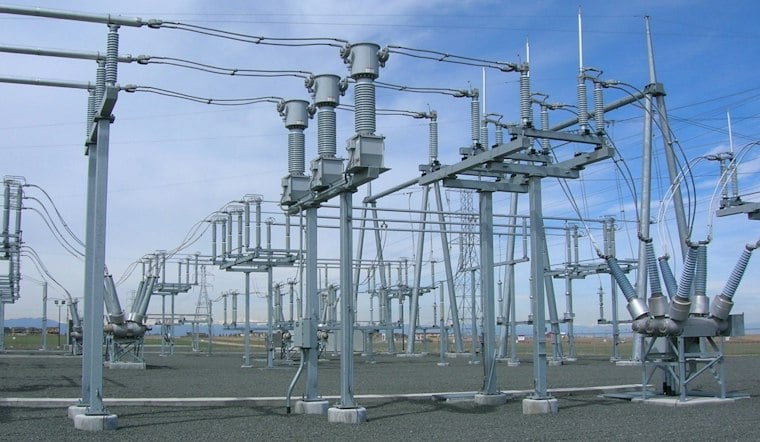
Colorado has been selected for $250 million in federal support for a project to modernize a critical, aging electricity link between the state and Texas. The project would move an outdated converter station from Lamar to a bigger substation in Brandon and more than triple how much power can flow between two of the nation's largest electric grids. The upgrade targets a 22-year-old bottleneck that has long limited how much power Colorado and its neighbors can share when demand spikes.
The U.S. Department of Energy selected the project for $250 million in federal support, according to Colorado Politics. The project, officially named the Colorado-to-Texas Western-Eastern Intertie Modernization Initiative, or CO2TX, will boost transfer capacity between the Western and Eastern interconnections from 210 megawatts to 700 megawatts, with a technical path toward as much as 2,000 megawatts, per Granted AI.
CO2TX is one of 31 grid-improvement projects across 26 states selected under the DOE's $1.9 billion SPARK initiative, announced September 24, which aims to unlock more than 23 gigawatts of grid capacity nationwide, according to the U.S. Department of Energy. The program focuses on reconductoring existing lines and deploying grid-enhancing technologies rather than pursuing new transmission corridors that can take decades to permit, the same report notes.
An Aging Link Gets a Bigger Home
The original Lamar high-voltage direct current converter station has been in service since 2004, creating an asynchronous 210-megawatt connection between Xcel Energy's Western and Eastern operating systems, according to the Colorado Public Utilities Commission. That tie has allowed limited power sharing between Public Service Company of Colorado, which sits in the Western Interconnection, and Texas-based Southwestern Public Service Company, in the Eastern Interconnection.
CO2TX will relocate that aging infrastructure to the higher-capacity May Valley substation in Brandon, per Colorado Politics reporting, and connect directly into Xcel Energy's Colorado Power Pathway. The Power Pathway is a $1.7 billion to $2 billion, 550-to-610-mile transmission backbone looping across 12 eastern Colorado counties, designed to deliver roughly 5,500 megawatts of wind and solar power from the rural eastern plains to Front Range population centers by 2030, according to Xcel Energy.
Who's Paying, and Why Now
The Colorado Energy Office is serving as the prime grant recipient for CO2TX, partnering with Xcel Energy subsidiaries Public Service Company of Colorado and Southwestern Public Service Company to cover a $950 million non-federal match, while the Southwest Power Pool will oversee regional grid coordination. Xcel Energy is the state's largest electric utility and is providing an 80% match to the project's financing, Colorado Politics reports.
That 80% cost-share ratio is one of the highest private corporate match rates among all 31 projects selected in the SPARK round, according to Canary Media. Across the entire $5.25 billion national SPARK program, the federal government covered an average of 36% of project costs, compared with just 21% for CO2TX, the same reporting notes.
A Grid Under Pressure From Data Centers
The timing reflects mounting strain on Colorado's electric system. Pending interconnection applications for 5.8 gigawatts of new capacity from data center developers had piled up in Colorado by late 2025, nearly matching Xcel Energy's total existing state generating capacity of 6.2 gigawatts, according to KUNC. Utility projections indicate Xcel may need to invest $22 billion in generation and transmission infrastructure by 2040 to keep pace, the station reports.
Colorado's power grid also has limited ability to share electricity between regional systems, a structural weakness the CO2TX project is meant to address directly. Nationally, fewer than a dozen direct current interties connect the Eastern and Western Interconnections, providing roughly 1,300 megawatts of combined transfer capacity, according to the Federal Energy Regulatory Commission — a bottleneck that has historically prevented utilities from sharing backup power during heat waves and winter storms.
State law compounds the urgency: Colorado utilities are required to cut carbon emissions 80% by 2030 relative to 2005 levels, per Xcel Energy filings, a mandate that state regulators consider closely tied to timely completion of transmission projects like the Power Pathway loop.
Officials Tout Reliability and Lower Costs
Gov. Jared Polis said the project would mean lower costs and fewer outages for Coloradans and strengthen the electric grid while expanding the ability to share power with other regions, according to Colorado Politics. Tim Walsh said the planned project would provide secure, abundant, and reliable power to households in Colorado and across the western United States, the outlet reports.
What Comes Next
Despite the announcement, the DOE selection represents an intention to fund rather than a finalized commitment. Formal contract negotiations between federal officials and project recipients are scheduled to run from October 2026 through January 2027 before any funds are officially obligated, according to Granted AI, meaning project scope, budget details, and milestones could still shift during that process.
Open questions remain about how Xcel's $950 million matching investment will affect ratepayer bills, an issue state regulators have scrutinized before, and about land-use permitting along the connecting Power Pathway corridor, where opposition has surfaced in Elbert County, according to the Colorado Sun. It's also unclear whether the DOE's contract negotiations through January will alter CO2TX's scope or timeline before funds are finalized.
The pressure from data center growth has already reshaped policy debates across the Front Range. Hoodline previously reported that Denver assembled a 20-person panel on data center rules tied to the same 5.8-gigawatt surge in interconnection requests. Aurora has considered regulations including restrictions on water-intensive cooling, while Longmont has moved to limit facility capacity.





