

























































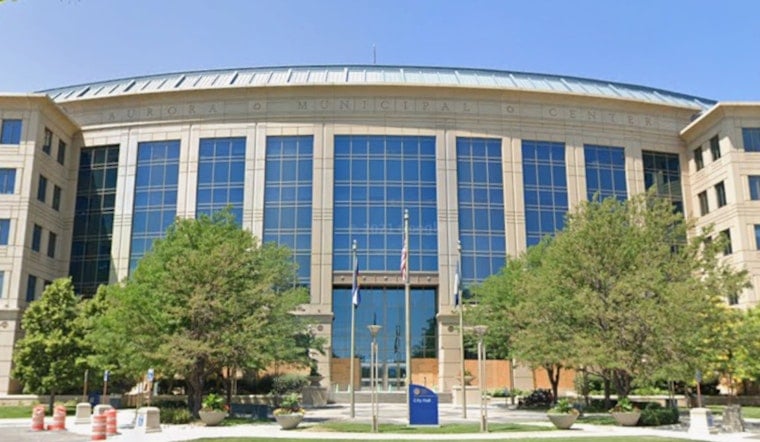
Aurora's city council narrowly voted down a proposed six-month pause on new data center applications last week, choosing instead to fast-track new regulations that would ban a water-intensive cooling technology within 35 days. The August 10 vote split the council 6-5, with Mayor Mike Coffman casting the deciding vote against the moratorium.
The rejected proposal, backed by Councilmember Amy Wiles, would have frozen new data center applications while the city rewrote its development code. Instead, the council approved a competing resolution from Councilmember Curtis Gardner directing the city manager to bring back recommended regulatory changes within 35 days, according to Sentinel Colorado. Public commenters at the meeting supported the moratorium, per the same outlet, but the council opted against pausing new applications altogether. Critics of Gardner's approach worried that developers could rush new applications into Aurora's pipeline before the 35-day rule-writing window closes, according to the Denver Gazette.
What the New Rules Would Actually Do
Among the changes the city manager could bring back is a ban on evaporative cooling, a water-intensive system, in multifamily, industrial, and commercial buildings, per Sentinel Colorado's reporting. The approved resolution also allows the city manager to recommend setback and landscape-buffer requirements for data centers in certain areas, along with regular noise testing. Aurora's unified development code already restricts data center noise to the same levels allowed for other businesses, with different allowances depending on zoning and time of day.
Other potential regulations would prevent data centers from being built in mixed-use office-industrial zoned areas, which can include residential units, and would update the city code's definition of a data center to account for differences in size and scale. Data centers are currently restricted to industrial, airport-district, or mixed-use office-industrial-zoned areas, though they can also be built in certain mixed-use zones through a conditional use process that requires additional public hearings — with the city council holding the final say. Aurora already governs data center water use through its large water user guide, but the council opted not to add a moratorium to the mix, leaving the door open for new applications while the 35-day clock runs.
Aurora's Footprint Keeps Growing
Aurora currently has nine established data centers and five more in the development process, per Sentinel Colorado. One of the largest is QTS Realty Trust's 67-acre hyperscale campus under construction on Gun Club Road in eastern Aurora, which will draw 177 megawatts of electricity once complete — enough to make it Xcel Energy's largest single industrial customer in Colorado, according to The Colorado Sun. That single facility's power draw is roughly equivalent to the peak electricity consumption of a city the size of Loveland.
The strain isn't isolated to one project. Xcel Energy told regulators in August 2025 that pending data center interconnection applications across Colorado had reached 5.8 gigawatts, nearly matching the utility's entire existing generating capacity of 6.2 gigawatts, according to KUNC. The utility has projected it may need to spend $22 billion by 2040 on generation and transmission just to keep pace with potential demand. In early 2026, Xcel filed regulatory proposals in Colorado and three other states to require data centers drawing over 100 megawatts to sign 15-year contracts and cover the full cost of grid upgrades, a move covered by Hoodline's earlier reporting on the utility's rate proposals.
Water Concerns Fuel the Cooling Ban
The push to ban evaporative cooling reflects broader worries about water use along the arid Front Range. Existing data centers in the Denver and Aurora metro areas consume between 1 and 40 acre-feet of water per facility annually, with a single acre-foot covering the yearly needs of roughly two average households, according to the Colorado Municipal League. Evaporative cooling systems, which rely on water to dissipate heat, are among the most water-intensive options available to data center operators.
Aurora Stands Apart From Its Neighbors
Aurora's approach diverges sharply from other Front Range cities that have already hit pause on new data center construction. Denver's city council unanimously enacted a one-year moratorium in May 2026 while creating a 20-person resident panel to draft updated zoning and environmental rules ahead of a 2027 deadline, a process Denver recruited a panel to shape, as per Hoodline. Longmont, Jefferson County and Broomfield have all taken similar steps, enacting their own temporary freezes over concerns about power and water strain.
The patchwork of local rules exists because state lawmakers failed to act. The Colorado General Assembly considered two major data center bills in its 2026 session — one to mandate environmental guardrails and another to create 20-year sales tax exemptions — but postponed both indefinitely in May 2026, according to Rocky Mountain Real Estate Law. That left cities like Aurora to write their own standards from scratch, without a statewide framework for either environmental protections or tax incentives.
Economic Stakes on Both Sides
The debate over how hard to regulate data centers carries real financial weight. Data centers generated $1.36 billion in state and local tax revenue in Colorado and supported 18,250 jobs statewide in 2023, according to a Data Center Coalition study cited by the Colorado Municipal League — figures that help explain why some Aurora council members favored regulation over an outright building freeze. At the same time, public appetite for tighter rules appears strong statewide: an April 2026 survey of 800 likely Colorado voters found 91% supported state-level rules to protect ratepayers, communities and water supplies from unrestricted data center growth, according to Conservation Colorado.
Aurora's own relationship with large-scale computing infrastructure extends beyond commercial developers. Buckley Space Force Base broke ground on an artificial intelligence data center for Aerospace Data Facility Colorado, part of a wave of local military and infrastructure investment previously detailed by Hoodline. Now, with the city manager's 35-day clock running, Aurora's council will soon face a fuller slate of proposed rules covering everything from cooling systems to noise limits and buffer zones — all without the building freeze that neighboring cities chose to impose first.





