

























































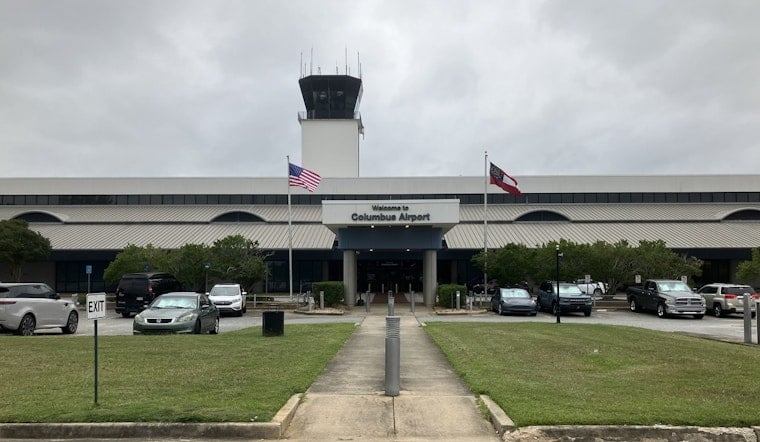
Families dropping off loved ones at John Glenn Columbus International Airport will soon be able to walk them all the way to the gate without buying a plane ticket. The airport is one of 13 nationwide selected for a new federal program that lets approved non-ticketed visitors pass through TSA PreCheck security lanes, a privilege that hasn't existed at American airports in more than two decades.
The Transportation Security Administration issued a press release Friday announcing the rollout of the program, called Gateside by TSA PreCheck, according to The Columbus Dispatch. Under the program, TSA PreCheck members and anyone with a valid Known Traveler Number can enter the airport without an airline ticket, giving family, friends and loved ones of air travelers a way through security that has been off-limits since the September 11, 2001 terrorist attacks eliminated non-passenger gate access, as Fox News reports.
To use the new access, visitors must apply online through Login.gov between one and three days before their planned trip to the airport, per the Transportation Security Administration. Applicants need an active Known Traveler Number that matches their official TSA PreCheck or Global Entry record, meaning walk-up access without prior enrollment in one of those trusted traveler programs won't be an option.
How Columbus Compares To Other Pilot Airports
John Glenn joins a mix of major hubs and regional airports in the initial rollout, including Los Angeles International Airport and Dallas Fort Worth International Airport alongside smaller facilities in Indianapolis, Salt Lake City and Phoenix-Mesa Gateway, according to Travel Market Report. TSA appears to have chosen a deliberately varied mix of airport sizes to test how the program handles different volumes of checkpoint traffic and demand.
Officials at Phoenix-Mesa Gateway Airport, another of the 13 pilot sites, said short average PreCheck wait times were a key factor in their selection, since efficient screening lanes there can absorb non-ticketed visitors without slowing down departing passengers, per KTAR News. Pass approvals nationwide will also be subject to daily visitor caps and peak-hour capacity limits set by each participating airport, a restriction meant to keep the new guest traffic from lengthening security lines for ticketed travelers.
A Federal First, Distinct From Local Guest Passes
Roughly 20 U.S. airports already run their own local visitor pass programs, but those still require non-passengers to use standard security lanes regardless of whether they hold TSA PreCheck, as noted by Frommer's. Gateside by TSA PreCheck is different because it plugs directly into federal Known Traveler Number databases and grants entry to the same expedited lanes ticketed PreCheck members use, marking the first time since 2001 that non-flyers have had that kind of access anywhere in the country.
The change comes as national air travel keeps climbing. AAA forecast that 72.2 million Americans would travel over the July 4th period this summer, a surge in demand that has fueled interest in easier ways for families to help kids and older relatives get to the gate, according to Deep Arrival.
Columbus Airport's Bigger Growth Story
The timing lines up with a period of rapid change at John Glenn Columbus International. The Columbus Regional Airport Authority reported a record 9.36 million total passengers across its airport system in 2025, with the Columbus airport ranking fifth nationally among the 50 busiest U.S. airports for flight growth after a 7.1% year-over-year surge, per flycolumbus.com data cited in the dossier.
That growth is unfolding alongside construction of the airport's $2 billion CMH Next project, a 1-million-square-foot replacement terminal slated to open in early 2029 with 36 gates, a single centralized security checkpoint and capacity for more than 13 million annual passengers. The scale of that build underscores how much the airport's footprint, and its approach to checkpoint access, is expected to shift in the coming years.
The gate-pass expansion also follows a rockier moment for the airport's security operation. In March, John Glenn Columbus International hosted a donation drive for unpaid TSA screeners at Concourse B, collecting grocery and gas gift cards for checkpoint staff working without pay during a partial federal government shutdown, with individual gift values capped at $20 under federal ethics rules.





