

























































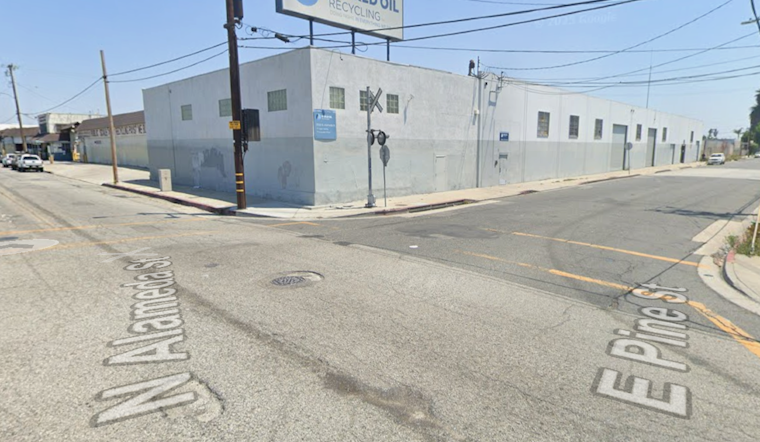
A driver struck and killed a 39-year-old pedestrian on Alameda Street near Pine Street in Compton before dawn Wednesday and then fled the scene, leaving investigators with no suspect vehicle description as they work to piece together what happened. The victim was later identified as Julio Munoz by the Los Angeles County Department of Medical Examiner.
The crash was reported at about 4:50 a.m. Wednesday near the border with the unincorporated Willowbrook area, according to the Los Angeles County Sheriff's Department, as reported by MyNewsLA.com. Munoz was struck and killed before sunrise, and the driver fled after hitting him. Deputies have not released a description of the suspect vehicle, leaving a critical gap in the investigation as of this writing.
A Familiar and Deadly Stretch of Road
This is not the first fatal hit-and-run to strike a pedestrian along Compton's Alameda Street this year. Just six months earlier, on February 25, 2026, 56-year-old Jose Navarette was struck and killed in a hit-and-run crash along North Alameda Street near East Dixon Street, with the driver in that case also fleeing, according to CBS News. Compton Fire Department crews attempted life-saving measures on Navarette before he was pronounced dead at the scene, the outlet reported.
The Alameda corridor's dangers extend beyond Compton's city limits. In December 2022, 64-year-old Luis Alvares was killed while crossing at 50th Street and Alameda Street in Los Angeles when two separate hit-and-run drivers struck him in succession and fled without stopping, per CBS Los Angeles. Alameda Street functions as a major freight and commercial corridor linking industrial centers and freeway networks across southern Los Angeles County, a role that makes pedestrian travel along its stretches especially hazardous, particularly during the pre-dawn hours when Wednesday's crash occurred.
Compton's Outsized Hit-and-Run Problem
State data underscores just how severe the pattern is locally. According to 2023 figures from the California Office of Traffic Safety evaluating 103 California cities of similar population size, Compton ranked 2nd for hit-and-run injury collisions and 6th overall for total fatal and injury traffic crashes. The same dataset ranked Compton 4th out of those 103 peer cities for nighttime injury collisions, a statistic that carries particular weight given that Wednesday's fatal crash happened at approximately 4:50 a.m., before sunrise.
The problem is not confined to Compton alone. California Highway Patrol SWITRS data shows Los Angeles County recorded 175 pedestrian fatalities in 2025, with pedestrians accounting for roughly 33 percent of the county's 526 total traffic deaths that year. Munoz's death adds to a regional toll that has made Los Angeles County one of the deadliest places in the nation for people on foot.
What the Law Says About Fleeing the Scene
Under California Vehicle Code Section 20001, any driver involved in a collision resulting in injury or death is legally required to stop immediately, render aid, and provide identification, regardless of who is at fault, according to FindLaw. That obligation applies equally on public roads and private property throughout the state.
Fleeing the scene of a fatal or severe injury collision can be charged as a felony under the same statute, carrying penalties of two, three, or four years in state prison along with fines of up to $10,000. If the fleeing driver is later found to have committed vehicular manslaughter, state law adds a mandatory five-year state prison enhancement under Vehicle Code Section 20001(c), and courts are restricted from striking that enhancement once it is proven in court.
How to Report Information
The Los Angeles County Sheriff's Department is investigating the crash through the Compton Sheriff's Station Traffic Unit and is asking anyone with information about the suspect vehicle to come forward. Tips can be submitted anonymously through LA Regional Crime Stoppers at (800) 222-TIPS or online at lacrimestoppers.org. Separately, the Los Angeles County Board of Supervisors maintains a formal cash reward program under Chapter 4.50 of the county code, which can offer financial incentives for information leading to the apprehension and conviction of suspects in unsolved major crimes, though any such claims must be submitted in writing within 60 days of an officially authorized reward window.





