

























































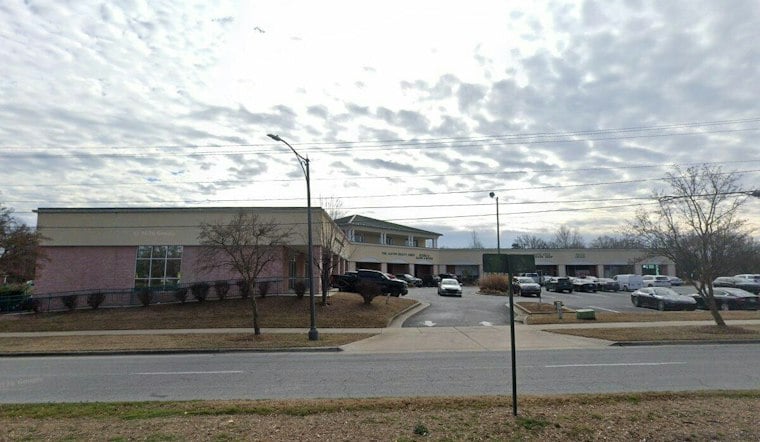
Roy Cooper says election officials stripped an early-voting site from North Carolina A&T State University ahead of the 2026 midterms, but a closer look at the record shows the site never existed for a non-presidential election in the first place. The former governor, now the Democratic candidate for U.S. Senate, made the claim during a recent interview, framing it as evidence that Republican-controlled election boards are cutting access for Black voters at the state's largest HBCU.
What Actually Happened in Guilford County
The North Carolina State Board of Elections voted 3-2 along party lines on August 20 to approve Guilford County's 2026 midterm early-voting plan, a plan that leaves out on-campus polling locations at both NC A&T and UNC Greensboro, according to WFDD. That state-level vote followed a divided local decision: the Guilford County Board of Elections had voted 4-1 on July 21 to advance a 17-site plan that omitted the two campuses in favor of new locations in rural Stokesdale and downtown Greensboro's Union Square, per The Carolina Peacemaker. Democratic board member Carolyn Bunker cast the lone dissenting vote at the county level.
As WFAE reports in the seed story behind this fact-check, North Carolina's system means a county election board only needs all five members to agree for its plan to stand on its own; if even one member dissents, the decision moves up to the state board, which is currently controlled by Republicans. That structural detail matters here, since Guilford County's plan reached the state board only because of the local board's 4-1 split rather than unanimous local consensus.
The Presidential-Versus-Midterm Distinction
Cooper's campaign has pointed to the fact that NC A&T hosted an early-voting site in 2024 as proof something changed for the worse. But PolitiFact's review found that NC A&T has hosted early-voting sites during presidential election years, including 2020 and 2024, while historically not hosting one during non-presidential midterm cycles — a nuance that led fact-checkers to rate Cooper's claim as missing important context. Guilford County's elections director pushed back on the word choice directly, saying “removed” is not the right word and that “not chosen” would be a better description, according to the same PolitiFact analysis.
PolitiFact ultimately rated Cooper's claim Mostly False, a rating the outlet defines as containing an element of truth while ignoring critical facts that would give a different impression. PolitiFact produced the fact-check.
The Real-World Cost for Students
Whatever the historical pattern, the absence of a campus site carries a tangible burden for NC A&T students this fall. Without transportation, students must walk 38 minutes — a distance exceeding a mile — to reach the nearest early-voting location at Union Square, according to reporting cited by Common Dreams. Student groups have organized campus rallies protesting that distance, per Carolina Public Press.
Students didn't just protest — they sued. In February, a federal judge denied a preliminary injunction sought by college students from NC A&T, UNCG, and Western Carolina University who wanted courts to force county boards to establish campus early-voting sites, and the lawsuit was ultimately thrown out. Cooper's campaign has noted that an A&T student joined that lawsuit alongside students from the other campuses.
A Fight That Predates This Year's Midterms
The dispute over campus access in Guilford County isn't new. It traces back to November 2025, when the county elections board voted 3-2 to exclude NC A&T and UNCG from the March 2026 primary early-voting schedule, a decision that set the tone for the fights to come, according to The Carolina Peacemaker. Guilford is far from alone: out of North Carolina's 100 counties, 80 local election boards approved their 2026 early-voting plans unanimously, while 20 counties, including Guilford, submitted divided plans that needed the state board to settle them, per Carolina Journal.
Some counties dropped Sunday voting, prompting disputes over access and a Republican claim that access was unprecedented.
The Political Backdrop
The timing raises the stakes considerably. This debate is unfolding as Cooper campaigns against Republican nominee Michael Whatley for the U.S. Senate seat being vacated by retiring Sen. Thom Tillis, a race widely viewed as pivotal to party control in Washington. Control over the boards making these decisions has itself been the subject of litigation: in April 2025, a Wake County Superior Court panel ruled that legislative attempts under Senate Bill 382 to strip the governor of election board appointment authority were unconstitutional, according to WCNC, while Senate Bill 382 became law in December 2024, the auditor's appointments took effect May 1, 2025, and the board moved to the auditor's department on July 1, 2025.
Early voting for the November 3 general election in Guilford County is set to run 17 days. The schedule described here does not specify whether same-day registration is available. For NC A&T students, that means the walk to Union Square, not a stop on campus, will be part of the plan this year — a broader debate over campus access.





