

























































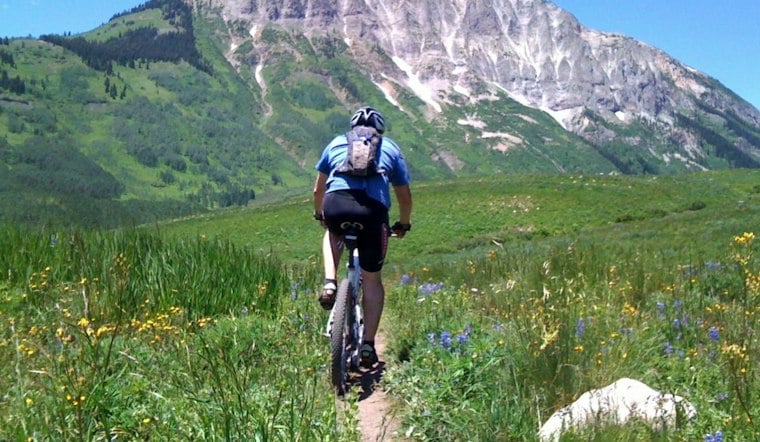
More than 100 cyclists gathered in downtown Crested Butte last weekend for the 50th Pearl Pass Klunker Tour, a 38-mile ride over 12,705-foot Pearl Pass into Aspen. The anniversary edition brought riders on vintage “klunkers” — balloon-tired, coaster-brake bicycles associated with mountain biking's early years — onto the route first ridden by Crested Butte cyclists in 1976.
The tour took place September 12-13, according to The Colorado Sun. Riders followed a wagon trail to the summit and descended toward Aspen through boulder fields. The route includes a 2,000-vertical-foot ascent, the Sun reported, and the event links Crested Butte's early riding culture with the mountain-bike history of Marin County, California.
Among the participants was Zach Gomulka of Santa Fe, who rode an 86-year-old steel Schwinn built from a 1940 frame and modified with 27.5-inch knobby-tired wheels, the Sun reported. Its Morrow coaster brake illustrated the practical limits of early-bike designs on the descent.
A Rivalry That Started With Bikers at a Bar
The tour began as a local response to Aspen motorcyclists who had crossed Pearl Pass into Crested Butte and prompted a bicycle response. In September 1976, the Crested Butte group known as the “Grubstake Gang” organized a bicycle crossing, according to Freehub Magazine. The riders used modified newspaper-delivery bikes, establishing the event's distinctive connection to improvised equipment and high-alpine terrain.
The second edition, planned for 1977, never happened. Several of the Crested Butte organizers were volunteer firefighters who got called away to fight regional forest fires that year, per Freehub. The tour resumed in 1978 and has run every year since.
The third edition, held in 1978 after the 1977 ride was canceled, drew Gary Fisher, Charlie Kelly and Joe Breeze from Marin County. The three mountain-bike pioneers traveled to Crested Butte in an old school bus, according to the Marin Museum of Bicycling. Their visit connected Northern California's frame-building experiments with Colorado's high-alpine riding culture. Marin riders had also launched the Repack downhill race in October 1976, according to the Sun.
Building Klunkers Before Mountain Bikes Existed
Al Maunz, now 74, is regarded by many Crested Butte old-timers as one of the sport's first local mechanics. He built klunkers from older frames and balloon tires and sold modified bicycles to friends for $15, the Sun reported.
Bob Starr, another early Crested Butte rider, emphasized that mountain bikes did not yet exist when the group began riding. Starr and Maunz later helped reopen former Civilian Conservation Corps trails, adding signs and maps so other riders could follow them, according to the Sun.
Those early klunkers had none of the suspension systems and braking equipment common on current mountain bikes. Dave “Moe” Meyer, who rode a vintage Univega klunker in this year's tour, recalled the gap between the bicycles available then and those sold today, according to the Sun.
From Local Curiosity to Global Destination
Crested Butte's early riding history helped establish it as a mountain-bike destination, a status it shares with Fairfax, California, according to the Sun. Fat Tire Bike Week began in 1981 and later became Crested Butte Bike Week, which is now billed as the world's oldest mountain-bike festival.
The town's institutional legacy grew from there. Local riders founded the Crested Butte Mountain Bike Association in 1983, recognized as the world's oldest mountain bike advocacy organization, and the group now maintains more than 450 miles of singletrack across the Gunnison Valley, according to BikeMag. The Mountain Bike Hall of Fame was founded in Crested Butte in 1988 before relocating in 2014 to Fairfax, California, where it merged into the Marin Museum of Bicycling, per The Crested Butte News.
By the early 1990s, mountain bike companies were expanding rapidly, and the Rage in the Sage race was attracting nearly 1,000 riders annually, the Sun reported. Moe Meyer opened Gunnison's first and only bike, ski and climbing shop, Rock and Roll Sports, in 1992. Now 68, Meyer said new bikes are what allow him to keep riding at all.
The Pass Remains the Only Way Through
Pearl Pass still links Crested Butte in Gunnison County and Aspen in Pitkin County along an unpaved 4WD corridor. Its use by bicycles is central to the route's role in connecting the two towns.
Why Pearl Pass Is the Bicycle Crossing
Pearl Pass provides a bicycle crossing between Crested Butte and Aspen. According to a U.S. Forest Service order, possessing or using a bicycle within the wilderness is prohibited, subject to listed exemptions. Those wilderness restrictions help explain why the pass remains important to cyclists: it provides a crossing between Crested Butte and Aspen.
The tour also drew an international participant. Kenji Takamatsu, founder of the Crazy Sheep and Snake Bite bicycle brands, traveled from Osaka, Japan, to ride a customized Crazy Sheep klunker. Takamatsu designed a frame combining BMX and mountain-bike elements.
Riders camped near treeline in Cumberland Basin during the two-day trek, while the Majestic Theater hosted clips of pioneering riders from the 1970s and 1980s as part of the anniversary events, the Sun reported. After crossing the pass, participants planned to celebrate at an Aspen bar. The gathering marked five decades of an event that began before mountain biking made its Olympic debut in Atlanta in 1996.
The tour's endurance mirrors a broader shift in Colorado's multi-day cycling scene. After the 37-year-old Ride the Rockies was canceled in 2024 amid limited interest, smaller community events such as Colorado's Ride emerged in August 2026 to fill the gap for riders seeking multi-day mountain and road tours across passes like Monarch and Cottonwood, as Hoodline previously reported. Mountain bike tourism itself carries real economic weight in the region: mountain bikers generate about $30 million in economic impact across the Grand Mesa, Uncompahgre, and Gunnison National Forests, according to Singletracks.
Don Cook, a Mountain Bike Hall of Fame inductee and tour organizer, was among the figures associated with the event's history. The 50th tour marked a historical milestone and continued the local riding community's traditions.





