

























































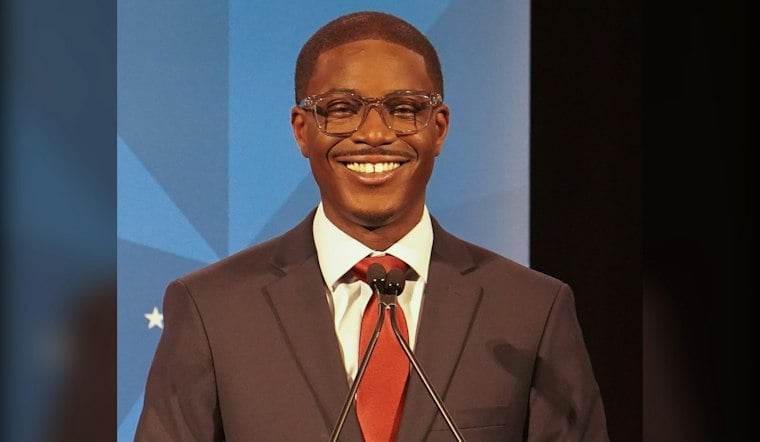
Wisconsin's first open-seat governor's race in 16 years remains a nail-biter, according to new polling released Wednesday. Democrat David Crowley holds a narrow 49% to 46% edge over Republican Tom Tiffany among likely voters, while the two are locked closer to even among the broader pool of registered voters heading into the November 3 general election.
Independents Start Drifting Toward the Sidelines
The numbers come from a Marquette University Law School poll conducted September 16-23, as reported by FOX6 News Milwaukee. Perhaps the most telling shift isn't between the two candidates but among voters who haven't picked a side at all: independent voters backed Crowley over Tiffany 44% to 18% in the new poll, down from a commanding 55% to 16% margin in August, according to WisPolitics. Poll director Charles Franklin noted that the lost Crowley support didn't flow to Tiffany — it moved into the undecided column instead, per the same report. Independent voters make up roughly one-third of Wisconsin's electorate, making that drift a variable both campaigns are watching closely.
Among registered voters overall, the race remains functionally tied. FOX6's report on the poll shows registered voters splitting with Crowley and Tiffany each drawing support and 9% still undecided, while likely voters — those Marquette determines are most apt to actually cast a ballot — hand Crowley his 49-46 edge with 5% undecided. Tiffany actually gained 2 percentage points among likely voters compared to the prior survey, narrowing what had been a wider Crowley advantage in August, when Crowley led 49% to 44% among likely voters following the primaries.
Why the Two Voter Models Tell Different Stories
The gap between the registered-voter and likely-voter numbers comes down to enthusiasm. While 46% of the registered voter sample identified as or leaned Republican compared with 32% Democratic, that partisan gap essentially disappears among likely voters, leveling to an even 45-45 split, the same WisPolitics report notes. Turnout commitment explains the difference: 85% of Democrats said they are absolutely certain to vote in November compared with 78% of Republicans and just 59% of independents. Marquette surveyed 843 registered voters, with a subset of 692 likely voters and margins of error of plus or minus 4.3% and 4.8%, respectively.
Marquette's polling has also moved beyond the head-to-head race to test broader economic policy questions. An earlier wave of the poll found 67% of surveyed Wisconsin voters supporting a temporary ban on new data center construction of at least one year, according to Marquette Law School, reflecting how data center development has become a flashpoint issue across the state alongside the governor's race itself.
An Open Seat With No Incumbent Advantage
This is the first open-seat gubernatorial contest in Wisconsin since 2010, created after two-term Democratic Governor Tony Evers announced in July 2025 that he would not seek a third term, according to PBS News. Without an incumbent on the ballot, both parties are fighting for a seat with no built-in edge, and Wisconsin last saw this dynamic play out in 2010 when Scott Walker won.
Crowley, the Milwaukee County Executive, won the Democratic nomination on August 11 by a razor-thin 0.48 percentage point margin over state Representative Francesca Hong, having re-entered the primary just 24 days before voters went to the polls after Lt. Gov. Sara Rodriguez dropped out, as Hoodline previously reported. As county executive, Crowley worked with state lawmakers in 2023 to pass bipartisan Wisconsin Act 12, which authorized a 0.4% county sales tax increase to close a $760 million municipal pension deficit and avoid deep cuts to public services.
Tiffany, meanwhile, has represented Wisconsin's 7th Congressional District in the U.S. House since winning a May 2020 special election, following eight years in the state legislature.
Affordability Becomes the Campaign's Central Battleground
Inflation and cost of living have emerged as the defining issue of the race. Marquette polling found 43% of Wisconsin voters naming it their top concern heading into the fall election, with 69% expecting inflation to worsen over the next year, according to CBS 58.
Tiffany's campaign has seized on that anxiety, launching statewide television ads in late September that target Crowley's fiscal record in Milwaukee County, pointing to five county property tax levy increases and the 2023 sales tax hike as evidence he can't be trusted with the state budget, per WisPolitics. With turnout enthusiasm favoring Democrats but partisan identification favoring Republicans, and independents increasingly parked in the undecided column, the final weeks of the campaign are likely to hinge on which side can convert its advantage into actual votes come November 3.



