

























































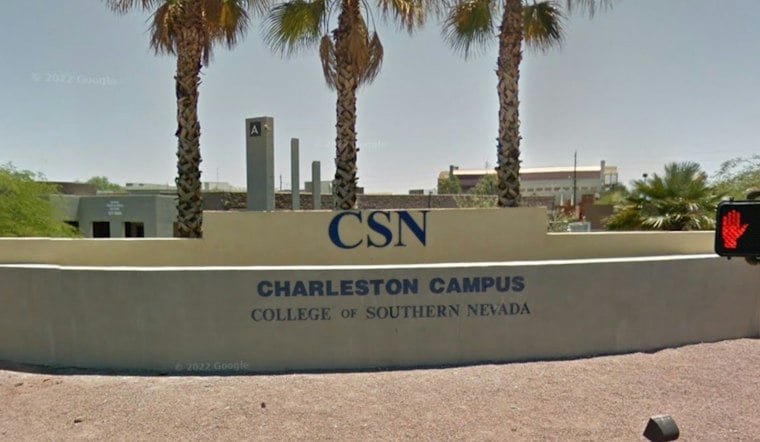
The race for Nevada System of Higher Education District 2 will test whether voters prefer an appointed regent with legal experience or a longtime community-college professor who says he can bring classroom-level perspective to the system's budget decisions. Patrick Villa, a 22-year math professor at the College of Southern Nevada, will face incumbent Regent Jennifer McGrath in the general election for a district covering parts of the central Las Vegas Valley from Spring Valley to Centennial Hills.
Neither candidate cleared 50% in the June 9 primary, sending the contest to the general election. According to Nevada Current, McGrath received roughly 49% of the vote to Villa's 25%. The exact tallies reported by The Nevada Independent were 10,513 votes (48.7%) for McGrath and 5,346 (24.8%) for Villa, eliminating primary candidates Hunter Cain and Dylan Chambers.
A Faculty Veteran Makes His Case
Villa has taught math at CSN for 22 years, spent six years chairing the mathematics department, and served as CSN faculty senate chair in 2024, according to Nevada Current. He argues his classroom-level experience gives him insight the board currently lacks, telling the outlet he knows what is best for students, faculty and staff and understands firsthand what makes a quality education and what changes can be made.
Villa has also presented to the NSHE board on multiple occasions as faculty senate chair, and he told Nevada Current that the board sometimes misunderstood aspects of higher education and the votes it was taking. He said faculty perspectives are often dismissed by other board members, and that the board has disregarded student opinions during public comment, with commenters sometimes cut off or told to hurry up. Jeffery Downs is another current professor serving as an NSHE regent, per the same report.
The Tuition Fight at the Center of the Race
The central policy dispute is a January Board of Regents decision to raise tuition between 9% and 12% to help close a systemwide budget gap exceeding $40 million. According to The Nevada Independent, board members largely attributed the shortfall to state-mandated faculty pay raises. Nevada Current reported that the increase was 12% for universities and upper-division community college courses, and that McGrath voted for it.
The Fee Framework Behind the Dispute
The January decision sits alongside NSHE's Predictable Pricing Program, which requires registration fees and nonresident tuition rates to be updated annually for at least four future academic years, with increases tied to the Higher Education Price Index and capped at 6%, according to the Nevada System of Higher Education. In a September 2025 briefing, NSHE estimated that replacing one-time AB 568 funds would require fee increases of 11% to 12% at four-year institutions and 4% to 6% at two-year institutions if applied uniformly.
Villa considered the proposal premature, telling Nevada Current it was rushed and that alternatives were not properly considered. In the Nevada Independent's candidate survey, he argued the board should have directed public colleges to trim non-essential programs or administrative overhead before passing a blanket tuition increase onto students. Villa has said Nevada's state funding for higher education is insufficient, that the NSHE budget has grown every biennium even as its share of the overall state budget has declined, and that the system could address revenue gaps by tackling budget redundancies and auditing wasteful spending. He wants to show the state that NSHE is not wasting money, saying demonstrated efficiency could lead lawmakers to consider increased funding.
Endorsements Split Along Labor Lines
The race has drawn a notable split among organized labor. Villa has secured endorsements from the Nevada Faculty Alliance, Culinary Workers Union, AFL-CIO, and Nevada State Education Association, while McGrath received the backing of the Laborers Union, according to the Nevada Independent's election coverage.
McGrath did not respond to Nevada Current's interview requests, nor to the outlet's requests for comment ahead of the primary election. An attorney, McGrath represented more than 300 women who claimed sexual abuse by UCLA gynecologist Dr. James Heaps, a case in which UCLA settled and agreed to pay victims $375 million in 2022, per Nevada Current. Outside her legal practice, McGrath serves on the board of directors for Hearts Alive Village, a Las Vegas non-profit running an at-cost veterinary clinic and animal rescue services, according to the Nevada Independent's Clark County election guide.
An Appointed Seat With a Shortened Term
McGrath has held the seat since being appointed in 2025. Republican Gov. Joe Lombardo appointed her to fill the vacancy left after longtime Regent Lois Tarkanian, who was elected to the seat in 2020, died in 2024, Nevada Current reports.
The winner will not serve a full term immediately. Legislation passed in 2023 shortened NSHE regents' terms from six years to four and requires the winner of this race to serve a two-year term before the seat returns to the standard four-year cycle, according to Nevada Current. The same law, Assembly Bill 118, also reduces the Board of Regents from 13 members to nine beginning in 2029, per The Nevada Independent.
The governance question extends beyond term lengths. Villa is one of three current NSHE employees running for a regent seat in 2026, a fact the Nevada Independent frames within an ongoing debate over whether public college personnel serving on their own employer's governing board creates a conflict of interest, even though Nevada law permits it. Regents themselves are paid modestly for the role: elected NSHE regents earn a base of $80 per official meeting attended, plus up to $2,500 annually in a business hosting account and a per diem capped at $60, according to the outlet.
The board's authority is broad. It oversees a system of eight institutions and roughly 100,000 students, including UNLV, UNR, Nevada State University, four community colleges, and the Desert Research Institute, the Nevada Independent reports. Nevada voters have twice rejected efforts to strip the board of its constitutional independence and shift oversight to the Legislature, most recently defeating Question 1 in November 2024 with only 45% support, according to Ballotpedia.





