

























































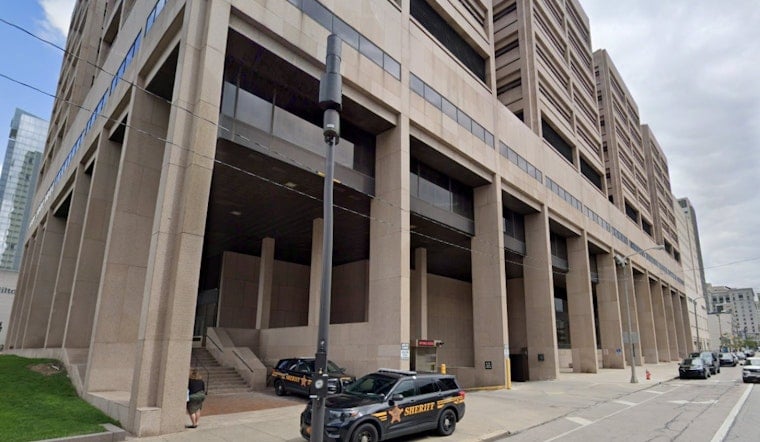
A car fleeing police at 112 mph on Aug. 20 got tangled up fast — literally. Cuyahoga County Sheriff's Deputy Brad Sala fired a net from a specialized bumper mounted on his cruiser, wrapped it around the fleeing vehicle's rear tire, and reeled the driver to a stop without a crash or a single injury.
The device is called the Grappler, and it's now in use across three Northeast Ohio law enforcement agencies — the Cuyahoga County Sheriff's Department, Parma police, and Garfield Heights police — as departments look for a safer way to end pursuits before they turn fatal, according to News 5 Cleveland. The net-launching bumper extends beneath a car's rear tire when the front bumper folds down, and a tether lets the officer apply the brakes and bring the pursued car to a controlled stop. Sala, who was traveling about 40 mph during the Aug. 20 chase, said the driver never saw it coming and that the stop was less violent than he expected.
A Deadly Pattern Behind the Policy Push
The push toward the Grappler follows two chases involving the same Cuyahoga County Sheriff's deputy that killed three people within five months, per the same News 5 Cleveland report. Parma police chases have also ended in serious crashes that killed three people, and county officials say pursuits across Cuyahoga County have left people seriously hurt or killed over the past four years. Those outcomes fed into Sheriff Harold A. Pretel's overhaul of the department's pursuit policy, announced in October 2025, which now restricts deputies from initiating chases unless a suspect is reasonably believed to have committed one of 39 specific violent felonies, according to Police1.
That policy sits within a broader legal framework: under Ohio Revised Code Section 2935.031, amended in October 2024, every state and municipal law enforcement agency in Ohio must maintain a written pursuit policy incorporating standards from the Ohio Collaborative Community-Police Advisory Board, according to the Ohio General Assembly. Individual departments still set their own thresholds for when a chase can begin, meaning standards vary agency to agency even under the same state mandate.
How Three Departments Are Using the Net
Parma and Garfield Heights became the first two departments in Ohio to equip patrol cruisers with the Grappler and train officers on it in December 2024, per News 5 Cleveland's reporting. Garfield Heights bought a Chevrolet Tahoe outfitted with the Grappler system in June 2024, and its Grappler cruiser is assigned to four officers certified to use the device; the department has logged two successful deployments and two attempts in which the net failed to make correct contact, prompting a review to improve future use. Garfield Heights is training additional officers and plans to add three more Grapplers to its fleet.
Parma has outfitted three cruisers with the specialized bumper and has recorded seven successful uses so far, though the department has not yet published a formal policy governing the equipment. One of those stops came when Sala used the Grappler to help Brooklyn police end a chase on Brookpark Road, detaining both people involved without injury. Parma officers describe the tool as an answer to a rise in chases in the city and say it is safer than traditional pursuit-stopping methods such as stop sticks or PIT maneuvers, which other departments still use by striking the back end of a fleeing vehicle to force a spinout.
The Cuyahoga County Sheriff's Department got its own Grappler in November 2025 and currently has one deputy trained on it — Sala, whose Aug. 20 stop marked his first successful use outside of training. That single deployment brought the department's total to nine successful Grappler uses. During the same chase, the fleeing driver managed to drive around deployed stop sticks before the net brought the car to a stop.
Why Officers Prefer the Net to Spike Strips
Brad Sala said stop sticks are notoriously dangerous, a concern borne out by federal data. The FBI's Law Enforcement Officers Killed and Assaulted program found that fleeing vehicles have struck and killed at least nine officers attempting to manually deploy tire deflation devices roadside, according to the FBI Law Enforcement Bulletin. Sala called the Grappler a safer, more controlled way to stop a pursuit, and he has the option to release the tether if a situation becomes too dangerous. The manufacturer says the device works on highways, city streets, and even in snowy conditions, and is meant to prevent reckless drivers from speeding through intersections and injuring or killing people.
The company behind the device says its ideal operating speed is below 70 mph, a limitation Northeast Ohio agencies have had to work around given some chases, like the Aug. 20 pursuit, exceed that threshold. Nationally, roughly 65 law enforcement agencies had adopted the Grappler as of December 2024, recording nearly 1,000 successful captures since its first operational deployment in November 2018, inventor Leonard Stock told WKYC. Parma police recorded their first successful operational deployment on March 2, 2025, netting a fleeing car along Chevrolet Boulevard and Brookpark Road during a pursuit led by neighboring Parma Heights police.
National Numbers Behind the Local Push
The stakes behind these deployments are stark. A cross-sectional academic study analyzing NHTSA fatal-crash data from 2009 to 2023 found police pursuits caused 6,352 deaths across 5,425 fatal crashes nationwide, averaging 423 deaths a year with fatalities climbing about 2% annually, according to research published on PubMed. The Police Executive Research Forum has urged departments nationally to restrict pursuits to violent felony cases, noting that bystanders who are not suspects make up more than 20% of people seriously injured in high-speed chases.
Equipping a single cruiser with the Grappler runs roughly $5,000 to $10,000, with replacement nets costing $300 to $400 each and officer certification adding another $900 to $1,200 per officer, per a breakdown published by the Los Angeles Times. Federal Edward Byrne Memorial Justice Assistance Grant funds have helped some agencies cover those costs, with the U.S. Department of Justice approving grant money specifically for Grappler purchases in December 2024. Similar grant-funded rollouts have played out elsewhere this year, including in Harris County's grant-funded rollout and a Fort Lauderdale deployment that ended a fleeing stabbing suspect's run near a Galleria bus stop.



