

























































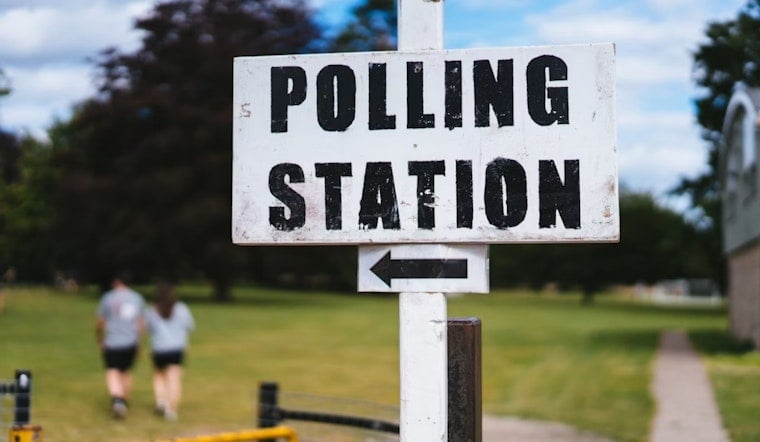
Dallas County is weighing whether to strip four area mosques of their status as official polling sites, a debate that has become entangled in a heated Commissioners Court race just two months before the November 3 general election. Republican challenger Barry Wernick has called for the Islamic Association of North Texas mosque in Richardson and a nearby church to be replaced as voting locations, citing what he describes as conflicts of interest tied to religious organizations serving as vote centers.
As reported by CBS News Texas, the Islamic Association of North Texas mosque has served as a polling site since 2023. It is one of four Dallas County mosques designated as official vote centers heading into 2026 — a list that also includes Makkah Masjid IDEA in Garland, Madinah Masjid of Carrollton, and the Islamic Center of Irving, according to WBAP. Three of those facilities were established as polling places in 2023 and 2024, while the Irving site was designated this year, the station reports.
A Recorded Speech Becomes Campaign Ammunition
Wernick, the Republican nominee challenging Democratic incumbent Andy Sommerman for the Dallas County Commissioners Court Precinct 2 seat, has circulated a recorded 2025 speech in which Sommerman told Democratic groups that opening three mosque vote centers generated 1,689 new voters who voted predominantly Democratic. The station's report indicates Sommerman credited that turnout with helping secure a key appellate judicial win for Judge Tina Clinton after he took office. Wernick has pointed to the recording as evidence the mosque designations amount to a partisan maneuver benefiting Democrats.
Official Dallas County election records complicate a simple read of that claim. Voters cast 12,040 total ballots across the three initial mosque vote centers in the November 2024 general election, with Clinton receiving 7,322 votes at those sites compared to 3,642 for Republican Matthew Kolodoski — in a race Clinton won districtwide by 1,596 votes, per the same account. Those aggregate location totals do not track individual voter party affiliation, or whether ballots came from first-time voters, a limitation WBAP notes complicates efforts to draw firm conclusions from Sommerman's remarks.
Wernick's Public School Alternative
In a campaign release posted to Facebook on August 28, Wernick formally proposed relocating the Islamic Association of North Texas polling site to Richardson ISD's Arzell Ball Center, while also shifting a church polling site at Ministerios Charisma to the former Greenwood Hills Elementary campus. Wernick framed the swap as establishing a single neutral standard applied equally to both churches and mosques, according to the release.
That proposal leans on state election law. Under Texas Election Code Section 43.031, county commissioners courts are instructed to select public buildings as polling places when practicable, permitting private facilities such as houses of worship only when suitable public buildings are unavailable, WBAP reports. The statute does not mandate that religious facilities be included, though it also does not bar them when public alternatives aren't available.
A History of Election Litigation
This is not the first time Wernick has clashed with county election authorities. The Texas Tribune reported that the Texas Fifth Court of Appeals dismissed a lawsuit Wernick filed in April seeking to force Dallas County to abandon its countywide vote center model in favor of precinct-assigned polling places for the primary runoff election. The court ruled Wernick lacked legal standing to challenge the county's election contract.
Dallas County has operated under its countywide Vote Center system since July 2019, allowing registered residents to cast ballots at any approved polling location on Election Day rather than being tied to a single precinct. Ahead of the 2024 general election, county officials evaluated more than 100 potential polling locations across churches, public schools, and community facilities to assess accessibility and capacity as population shifts increased local voting needs. The county also updated its precinct boundaries for the 2026 cycle following congressional redistricting, reducing the total number of precincts from 885 to 791, according to the Dallas County Elections Department.
What Happens Next
Whether the Dallas County Commissioners Court will actually vote to replace the mosques and the Ministerios Charisma church with public school sites remains an open question, as does how any changes might ripple through voter access under the county's vote center model. Sommerman previously appeared before the Commissioners Court in budget votes on a homeless tax hike, and the polling-site fight now adds another flashpoint to his reelection bid against Wernick before ballots go out this fall.





