

























































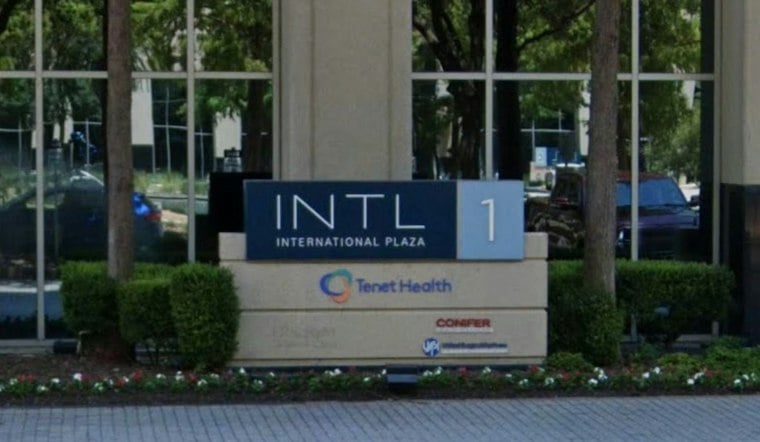
More than a thousand employees at Conifer Health Solutions are losing their jobs after the Dallas-based billing giant ended its long-running relationship with CommonSpirit Health in a corporate shake-up worth billions. The company plans to permanently lay off 1,037 workers effective November 2, with the cuts tied to the end of its long-running relationship with nonprofit hospital system CommonSpirit Health.
Conifer reported the layoffs to the Texas Workforce Commission in a WARN notice dated September 2, as reported by Chron. The affected employees organizationally report to Conifer's office at 14201 Dallas Parkway in Dallas, though the outlet notes they are primarily remote-based workers scattered across the United States. None are represented by a union, the notice states, and none have bumping rights to claim other positions — meaning every separation is permanent once the date arrives.
Conifer attributed the cuts to restructuring and technology initiatives connected to the fact that it will no longer provide services to CommonSpirit Health after October 30, per the same filing. CommonSpirit plans to insource revenue cycle operations for the facilities Conifer had been serving, ending an arrangement that once supported one of the company's biggest accounts.
How a $1.9 Billion Buyout Unwound a 14-Year Contract
The roots of the layoffs trace back to a February agreement in which CommonSpirit agreed to pay Tenet Healthcare, Conifer's parent company, $1.9 billion in installments over three years to terminate its revenue cycle outsourcing contract six years ahead of its scheduled 2032 expiration, according to Fierce Healthcare. That payout included $540 million in the first quarter of 2026, with three annual installments of $453 million to follow from 2027 through 2029, as detailed by Business Wire. CommonSpirit and its predecessor, Catholic Health Initiatives, had outsourced revenue cycle services to Conifer since 2012 under a 20-year agreement amended in 2015 — meaning the severance closes out a 14-year operational relationship, Fierce Healthcare reports.
The financial untangling ran in both directions. Tenet Healthcare restored full ownership of Conifer on January 1 by executing a separate $540 million redemption payment to eliminate CommonSpirit's capital account and buy back its 23.8% minority equity stake, a position CommonSpirit had held since 2012, according to Business Wire's reporting. Tenet lists Conifer as one of its four operating segments, and the subsidiary provides revenue cycle and value-based care services for healthcare organizations, serving 660 clients across the country per Chron's reporting.
Tenet Points to AI and Offshore Labor
With full strategic control back in hand, Tenet Chairman and CEO Dr. Saum Sutaria told investors that regaining ownership of Conifer allows the company to accelerate investments in artificial intelligence, workflow automation, and offshore operating capabilities to lower the cost to collect and replace or augment human workforce roles, according to Becker's Hospital Review. That framing suggests technology substitution is a driver of the cuts alongside the lost CommonSpirit business, not merely a byproduct of it.
The financial stakes of the split cut sharply different ways for each company. Tenet's total quarterly operating revenue rose 6.8% to $5.6 billion, prompting the company to raise its full-year 2026 revenue guidance to between $21.9 billion and $22.5 billion, according to Becker's ASC Review. CommonSpirit, meanwhile, recorded a $2.2 billion accounting charge tied to the termination and posted a $3.4 billion quarterly net loss in 2026, according to reporting cited by Becker's Hospital Review and AI Health Uncut. CommonSpirit CFO Michael Browning has said insourcing revenue cycle management supports the health system's multi-year integration strategy, according to the same reporting.
Questions Over Notice Timing and Worker Transitions
Founded by Tenet in 2008, Conifer manages more than $25 billion in net patient revenue annually for its client base, according to company background published by Hugo Inc. The federal WARN Act requires employers with 100 or more full-time workers to give at least 60 calendar days' advance written notice before a mass layoff affecting 500 or more employees, or face liability for up to 60 days of back pay and lost benefits, per Tully Rinckey PLLC. Compliance is enforced through private civil lawsuits in federal court rather than state penalties, the firm notes.
A page from class-action law firm Strauss Borrelli PLLC dated September 9 is labeled “INVESTIGATION CLOSED,” and its excerpt concerns a 4XH Logistics investigation, not Conifer. The page does not establish whether affected employees are entitled to back pay and benefits, and no litigation has been confirmed. It remains unclear whether any of the affected remote workers will be offered positions on CommonSpirit's internal billing teams as that system builds out its own operations.
The Dallas layoffs reflect the end of Conifer's outsourced revenue-cycle work for CommonSpirit. Conifer's affected workers have already been notified of their separation date, according to Chron, with the layoffs set to take effect November 2 — three calendar days after Conifer's work tied to CommonSpirit formally winds down.





