

























































When Dallas ISD police officer Justin Jones was shot in the upper leg on Aug. 6, Dallas Fire-Rescue medics were able to give him blood before he reached a hospital. The case came after Dallas had launched a prehospital blood pilot in February 2025 and offers a concrete example of how the city’s emergency-care system has changed.
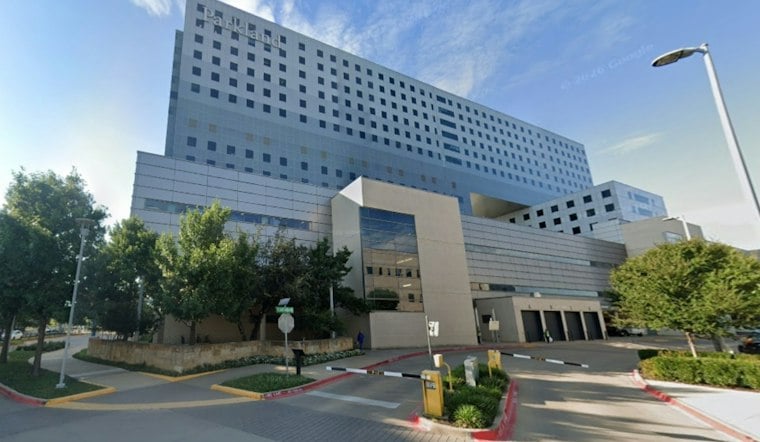
According to The Dallas Morning News, another Dallas ISD officer applied a tourniquet after Jones was shot during a struggle in a northwest Dallas retail parking lot. Dallas Fire-Rescue EMS supervisor Joseph Rider arrived with two units of blood and authorized a transfusion during the trip to Parkland Health. The bullet struck Jones’ femoral artery.
Jones’ account does not establish that prehospital blood alone determined his outcome. The Morning News reported that he also received a tourniquet, intravenous fluids, oxygen, tranexamic acid and hospital surgery, and that doctors believed the roadside transfusion and subsequent treatment helped him reach surgery alive. The available accounts do not establish the duration of his hospitalization or his later recovery. The available accounts do not provide a controlled comparison showing what would have happened without the transfusion.
The gap Dallas was trying to close
Before the city’s pilot, blood was not routinely available in Dallas-area ambulances. A 2023 investigation by The Dallas Morning News and the San Antonio Express-News reported that Dallas Fire-Rescue and Fort Worth-area provider MedStar did not carry blood products at the time. That finding predates Dallas’ February 2025 pilot; it does not mean Jones encountered the earlier system.
The investigation also documented a separate 2019 shooting death in southeast Dallas involving 13-year-old Malik Tyler. According to The Dallas Morning News, death records indicated that Tyler bled for about 20 minutes before paramedics arrived. The cases are not direct medical comparisons: they involved different years, locations, ages, injuries and available treatment. Tyler’s death is relevant as an example of the danger of delay, not proof that a blood program would have changed his outcome.
A regional shift, not a uniform system
Dallas has since made prehospital blood part of its care for bleeding patients, and city officials have reported that more than 75 patients received blood before reaching a hospital. Dallas Fire-Rescue Chief Justin Ball said the program had credited 34 lives saved in its first year, according to Patch. Those figures describe reported program outcomes; they are not a population-wide measure of survival or proof that every transfusion produces the same result.
The effort also depends on logistics. The American Red Cross reported that whole blood is collected by the organization, held at Parkland Health and retrieved by Dallas Fire-Rescue supervisors under protocols developed with Parkland BioTel. Dallas Fire-Rescue has expanded its specialized, temperature-controlled storage capacity, but access also depends on location and response speed.
Other North Texas agencies have added similar capabilities, but their programs should not be treated as one standardized regional system. The Morning News reported that field blood was being carried by EMS providers in Dallas, Fort Worth, Arlington, McKinney and Plano, while Fort Worth began delivering blood to hemorrhaging patients in the field in April 2025. Access remains uneven across the region.
The broader rationale is the risk of preventable death from uncontrolled bleeding. The Dallas Morning News and San Antonio Express-News investigation cited researchers’ estimate that about 31,000 people nationwide die each year from potentially preventable bleeding after injury. Jones’ shooting shows the potential benefit when blood is available before hospital arrival; the older Dallas case and the continuing differences among EMS systems show why availability remains uneven.
Police arrested Jose Pantoja Morales in connection with Jones’ shooting. A Dallas police affidavit reported by CBS News says he admitted taking Jones’ firearm and shooting him while trying to escape. The criminal allegation and the medical lesson are separate questions: the case is pending, while the policy question is whether more hemorrhaging patients can receive timely blood before reaching a trauma center.





