

























































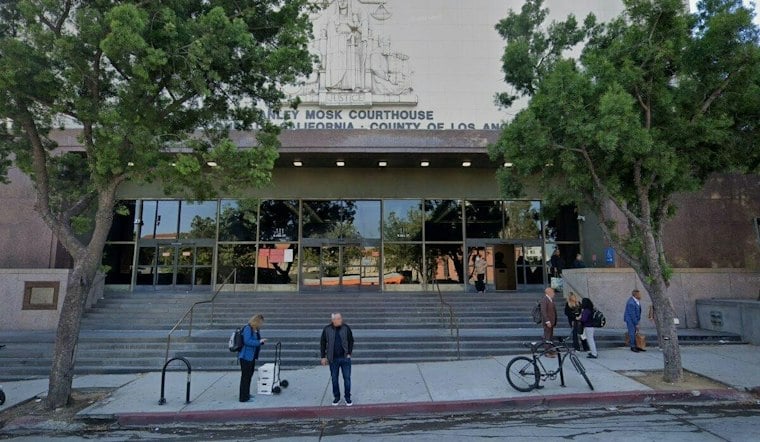
A California appeals court has thrown out Dan Schneider's defamation lawsuit against the producers behind “Quiet on Set: The Dark Side of Kids TV,” ruling that the former Nickelodeon showrunner failed to show his case had even minimal merit. The unanimous decision, issued Thursday, reverses a lower court ruling that had let Schneider's claims move forward and hands a decisive legal win to the docuseries' creators.
Judge Melanie P. Ochoa, writing for the three-judge panel of California's 2nd District Court of Appeal, Division Three, found that Schneider could not demonstrate the docuseries falsely portrayed him as a child sexual abuser, according to Courthouse News Service. The ruling reverses a November 2024 decision, as reported by the Los Angeles Times, in which Los Angeles County Superior Court Judge Ashfaq G. Chowdhury had denied the defendants' anti-SLAPP motion, finding Schneider had presented enough evidence for a jury to weigh whether ordinary viewers would infer he was linked to child sexual abuse, according to the Metropolitan News-Enterprise.
Schneider, who created and ran Nickelodeon franchises including “All That,” “The Amanda Show,” “iCarly,” “Drake & Josh,” and “Victorious,” filed the defamation lawsuit in May 2024 against Maxine Productions, Sony Pictures Television, and Warner Bros. Discovery, according to the Los Angeles Times. His complaint alleged the series falsely stated or implied that he sexually abused children who worked on his shows, and challenged specific edits, promotional material, and the program's “true crime event” marketing as defamatory, per the same account. Schneider has called the allegations fabrications.
The Core of the Legal Fight
The central dispute turned on the legal theory of “defamation by implication.” Schneider acknowledged that “Quiet on Set” never explicitly accused him of child sexual abuse, but his legal team argued that editing choices, trailers, and the juxtaposition of his workplace misconduct with convicted sex offenders created a misleading impression for ordinary viewers, per the Metropolitan News-Enterprise. His complaint specifically alleged the series conflated him with two convicted sex offenders who worked on Nickelodeon shows, according to the Los Angeles Times.
The appeals court rejected that theory outright. Judges ruled that the documentary clearly distinguishes alleged gender discrimination, harassment, toxic workplace behavior, and inappropriate sexual innuendo from the criminal child abuse committed by figures like Brian Peck, the Los Angeles Times reports. The panel also found that Schneider's attempt to find an alternative meaning than what is expressly stated in the documentary is unavailing, according to the same reporting.
Nickelodeon and parent company ViacomCBS severed their 20-year relationship with Schneider in 2018 following an internal investigation that found he engaged in verbal abuse and temper tantrums, though that inquiry uncovered no evidence of sexual misconduct, according to The Guardian. Shortly after the docuseries aired in March 2024, Schneider posted a 20-minute YouTube interview with former “iCarly” cast member BooG!e in which he apologized for demanding massages and fostering an uncomfortable writers' room, while denying any knowledge or involvement in child sexual abuse, per Page Six.
What the Ruling Means for Schneider's Wallet
Because California's anti-SLAPP statute, Code of Civil Procedure section 425.16, includes mandatory fee-shifting, a prevailing defendant in a successfully struck lawsuit is statutorily entitled to recover attorney's fees and litigation costs from the plaintiff, according to FindLaw. That means Schneider is now on the hook for the producers' legal fees unless he secures a reversal from the California Supreme Court.
Gerry Silver, Schneider's attorney, said his client's team is disappointed by the decision, according to the Los Angeles Times, and plans to consider options for further review and appeal. Silver added that the court acknowledged the makers of “Quiet on Set” presented no evidence that Schneider was sexually abusive toward cast members, stating, “Any allegation that Dan was sexually abusive toward cast members is provably false.”
Producers Mary Robertson and Emma Schwartz said they are grateful for the ruling and expressed pride in the continued impact of “Quiet on Set,” according to the Los Angeles Times. The pair said the decision protects filmmakers' and journalists' constitutional rights to report on important and difficult issues.
A Docuseries With Reach Beyond the Courtroom
“Quiet on Set” reached over 30 million viewers across Investigation Discovery, Max, and Discovery+ following its March 2024 premiere, accumulating 1.3 billion streaming minutes to become Max's most-watched unscripted title since the platform's May 2023 launch, according to Forbes. The series earned two 76th Primetime Emmy Award nominations, including Outstanding Documentary or Nonfiction Series, and won the Television Critics Association Award for Outstanding Achievement in News and Information.
Among the docuseries' most significant revelations, actor Drake Bell publicly disclosed for the first time that he was the unnamed minor victim in the 2004 criminal conviction of former Nickelodeon dialogue coach Brian Peck, who served 16 months in prison and registered as a sex offender, according to the Los Angeles Times. That revelation, and others like it, have fueled ongoing legal fallout across the youth entertainment industry — including a negligence lawsuit filed in August by former “The Amanda Show” performer Raquel Lee against Disney, alleging she was sexually assaulted by a studio worker at age 14 in 2001.
More recently, producers Robertson and Schwartz disclosed that “Quiet on Set” was explicitly cited during bipartisan legislation introduced in Congress aimed at establishing new federal protections for child actors, according to Complex. The docuseries continues to serve as a reference point in efforts to establish national labor and safety standards for young performers, a space that currently lacks uniform federal protections compared to individual state laws.





