

























































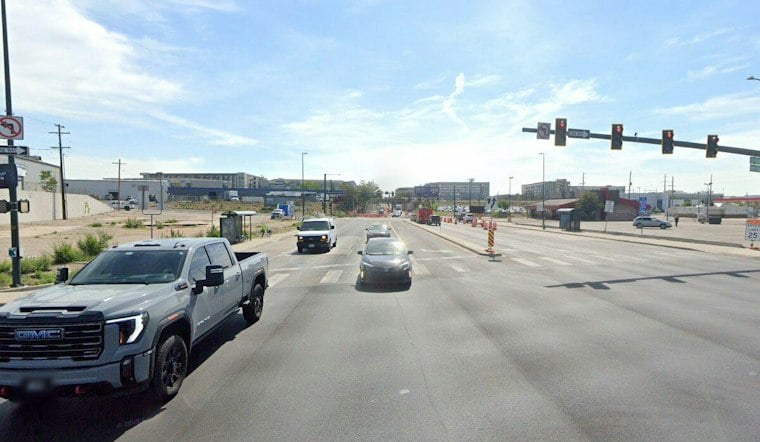
After another driver ran a red light and hit his car at Kalamath and Alameda on June 5, John Schroyer called 911 so police could document the crash for his insurance claim. The response left him without the report he had sought: the officer said the drivers’ exchange of insurance information meant there was nothing more to do, an explanation later found to be incorrect.
Denver Police Officer William Ladouceur arrived about 20 minutes after the collision, according to the Denver Gazette. He told Schroyer “there was nothing further he could do to investigate the crash” and left without preparing a report. Schroyer later contacted the Denver police station, where a woman also said that exchanging insurance information made the matter civil and that the other driver could not legally be cited, the Gazette reported.
That explanation conflicted with Denver police policy, which required a report for this type of crash, the Gazette reported. The paper found no Colorado law or Denver ordinance that barred an officer from writing one. It also reported that police may cite a driver for a traffic violation that caused a crash even without a written report; running a red light can qualify as a class 2 misdemeanor charge of careless driving.
A Complaint Leads to a Policy Review
Schroyer took his concern to state lawmakers and separately contacted Denver City Council representative Kevin Flynn. Flynn asked the department’s deputy chief to look into the matter, according to the Gazette’s account.
The department then acknowledged the mistake. Commander Joel Bell, who supervises Ladouceur and oversees Denver Police Department District 3, apologized to Schroyer and said the officer had been wrong. Ladouceur was expected to visit Schroyer to apologize in person and prepare the report, the Gazette reported. The report was completed on June 26, three weeks after the crash, and found the other driver at fault. Bell said a citation should also have been issued because dashcam video showed the driver running the red light.
Conflicting Understandings Inside the Department
Bell said the mistaken view that exchanging insurance details removes a crash from police jurisdiction was not limited to Ladouceur: other officers believed it, while some had heard the claim but had not acted on it. The Gazette reported that Bell described the idea as an “urban legend” and emailed District 3 personnel to clarify that exchanging crash information does not amount to a civil agreement that eliminates the need for a report.
Officers were reminded at roll calls to follow the department’s crash-investigation policy, and Bell urged them to review it themselves. A Denver police spokesperson later said the misunderstanding was specific to Ladouceur and had been documented in his personnel file. The Gazette reported that the department did not explain how it determined whether other officers had improperly declined to investigate crashes.
What a Report Can—and Cannot—Establish
Denver police policy requires officers to investigate crashes involving more than $1,000 in damage; officers may also investigate crashes at or below that amount if someone involved requests it. An officer’s report is not the only information insurers can use to assess fault: dashcam footage, as in Schroyer’s case, and witness accounts may also be considered.
Where Investigated Crashes Enter the State Record
An investigated crash report also becomes part of Colorado’s official recordkeeping process. According to the Colorado Department of Transportation, an officer sends the completed crash form to the Department of Revenue, which processes it and maintains the official legal record in DRIVES.
Genna Morton of the Colorado Department of Regulatory Agencies said a police report’s presence or absence does not, by itself, determine fault, though a report can help insurers assess responsibility. Ladouceur’s report totals also changed around the same time: he wrote 35 crash reports in May, 58 in June and 55 in July, compared with an average of 29 a month earlier in the year. The reason for the increase was unclear, according to the Denver Gazette.
The case drew attention beyond the newsroom, too. On Threads, a user posting as @denverinthedark recapped the sequence of events for followers, noting the roughly 20-minute police response time and the officer's initial refusal to investigate.




