

























































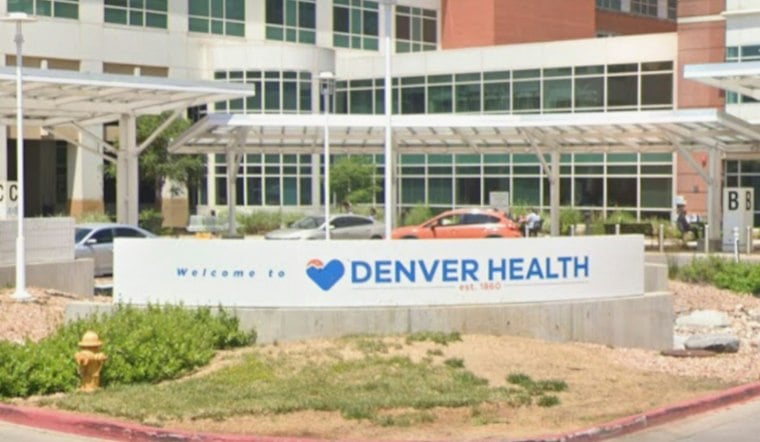
Denver Health ambulances exceeded the city’s nine-minute benchmark 7,865 times from Jan. 1 through July 31, 2026, according to an analysis by CBS Colorado. The finding covers priority 1 ambulance responses—calls that include conditions such as chest pain, breathing problems, strokes, falls and overdoses—and places a renewed focus on how Denver measures emergency medical performance.
The nine-minute standard is not a requirement that every ambulance arrive within nine minutes. Denver’s operating agreement with Denver Health calls for advanced life support responses to meet that time at least 90% of the time. In the CBS analysis, 3,552 of the delayed responses arrived between 10 and just under 13 minutes, while 202 took more than 20 minutes. The analysis said responses over nine minutes accounted for about 18% of Denver Health responses in the period; the share outside the city’s compliance standard was described as roughly 8%, reflecting a distinction between the number of responses exceeding the threshold and the agreement’s compliance calculation.
The clock does not start and stop at the same points
A key limitation is that the 2026 figures concern ambulance arrival performance, not necessarily the entire time a patient waits for help. In its response to the Denver Auditor’s 2024 emergency medical response audit, the Department of Public Safety said the city should instead measure total response time from the initial emergency call until a responder reaches the patient’s side.
The cited figures concern ambulances taking more than nine minutes after being assigned. As reported by 9NEWS, 29,066 of 500,279 emergency calls—about 6%—waited more than two minutes to be answered by 911 dispatchers. The same audit found that Denver Health reached 90% of emergency calls within 14 minutes and six seconds between May 2023 and March 2024, missing the audit’s 10-minute-30-second benchmark. Those figures are not directly interchangeable with the 2026 nine-minute ambulance data, but together they show that response performance can vary depending on which segment of the process is counted.
A persistent problem, with no single documented cause
Denver Health fell short of the city’s 90% nine-minute compliance standard in 2023 and 2024, and reported 82.1% compliance in 2025, according to the CBS analysis. Historical figures cited by FireRescue1 show that performance was 84% in 2021 and 81% in 2022. These records establish a multiyear performance problem, but they do not by themselves identify how much is attributable to staffing, deployment, traffic, dispatch, call demand or other factors.
City officials have questioned whether the nine-minute benchmark remains realistic in a dense urban environment affected by traffic and construction, while Denver Health Chief Paramedic Justin Harper has said traffic and congestion can slow ambulance travel. Those explanations are competing or overlapping considerations, not a demonstrated causal breakdown of the 7,865 2026 delays. The available figures also do not show whether the delayed calls were concentrated at particular times, locations or levels of clinical urgency.
What the city committed to—and what remains unresolved
Denver’s December 2024 audit response called for regular assessments of 911 staffing and requests for additional positions when warranted. The Department of Public Safety said 19 additional 911 full-time-equivalent positions were requested and approved through the 2025 budget process, but that staffing figure concerns dispatch capacity rather than the number of ambulances available. The response also set goals of clarifying the Denver Health operating agreement and implementing an emergency-response pilot in 2026; the verified documents do not establish that those commitments had been completed when the 2026 response data were collected.
The city and its emergency-response agencies are also considering a more dynamic model that would match the response to the nature and acuity of a call instead of automatically sending the highest level of response. That approach remains a proposed system change in the available reporting. It should not be treated as an explanation for the current delays or as evidence that performance has improved.
A limited comparison
Other systems use non-ambulance resources for specific coverage needs, but comparisons must account for geography and call mix. Toronto Paramedic Services’ 2025 annual report mentions 60 paramedics on bikes and a 550-kilometre ride. That is an example of targeted access planning, not evidence that the model would solve Denver’s ambulance delays or meet Denver’s contractual benchmark.
The immediate question for Denver is therefore broader than whether 7,865 ambulance arrivals exceeded nine minutes. Leaders still need to show how often delay occurs during dispatch, assignment, turnout or travel; whether the city’s proposed pilot has begun; and whether the operating agreement’s measurement rules capture the full wait experienced by patients. Until those questions are answered, the 2026 figures document a serious shortfall in one part of the system without establishing a single remedy or cause.





