

























































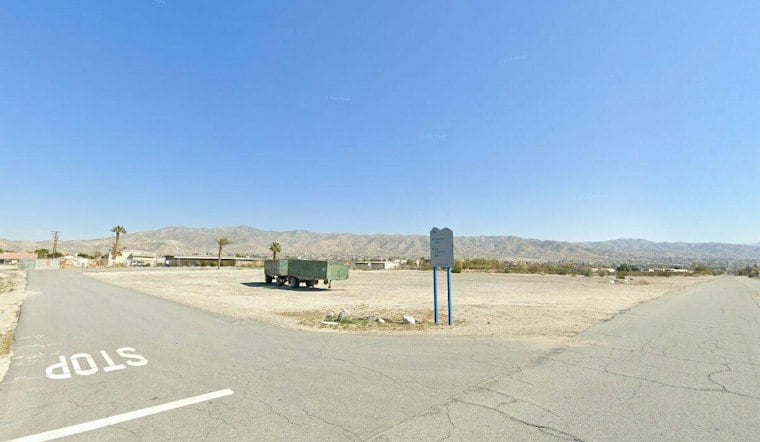
Tucked off Dillon Road in Desert Hot Springs, a small, unassuming cemetery holds one of the more surprising footnotes in presidential history: the grave of Liberty, Gerald Ford's golden retriever and the nation's First Dog during his administration. The cemetery, called Haven for Pets, is the only officially licensed animal graveyard in all of Riverside County, and it has quietly kept watch over Liberty's resting place for decades.
According to 930 WFMD Free Talk, the cemetery is owned and operated by Charley Stewart, and before Liberty was buried there, Secret Service agents reportedly inspected the grounds and searched for mines, per Stewart's own account. Liberty arrived at the White House as a puppy and became the nation's first dog under President Gerald Ford. She was registered as Honor's Foxfire Liberty Hume and had been bred by Ann Friberg in Washington state before being presented to Ford in October 1974 by his daughter Susan Ford and White House photographer David Hume Kennerly, according to the Gerald R. Ford Presidential Library.
A First Dog's White House Legacy
Liberty made history in 1975 when she gave birth to nine puppies on the third floor of the White House, becoming the first dog to whelp a litter there, per the same station's report. The puppies were such a sensation that White House staff created an official rubber stamp of Liberty's paw print just to keep up with the volume of fan mail and photo requests pouring in from the public, according to the White House Historical Association.
Of the nine puppies, the Ford family kept a female pup named Misty, while a male named Jerry was donated to the Leader Dog School for the Blind in Rochester, Michigan, the Ford Presidential Library notes. The remaining puppies were sold for $300 each or given to family friends to help cover breeding costs. Misty is buried alongside Liberty at Haven for Pets today, per 930 WFMD Free Talk's report.
From Celebrity Grooming Kennel to Pet Graveyard
Haven for Pets traces its roots back to the 1960s, when it opened as an extension of the Palm Springs kennel Dogtown USA, which groomed pets for celebrities. Charles Stewart purchased Dogtown USA in 1959 and went on to found Haven for Pets after seeing a dead dog discarded in a garbage can, the station reports. The Stewart family had already been caring for Coachella Valley celebrities' pets for years, with clients including Leonard Firestone and the Marx Brothers, whose dogs were looked after by Stewart's father.
That celebrity pedigree is reflected in who else rests at the cemetery. Liberace has six dogs buried there, and pets belonging to Michael Landon and Jimmy Van Heusen are also interred at the grounds. Roughly 1,000 animals in all have been laid to rest there over the cemetery's history — a figure that, per Alexandra Charitan's reporting, spans not just cats and dogs but also birds, monkeys, rabbits, pigs, and even a baby seal.
A Rare Green Burial Ground With a Presidential Distinction
Haven for Pets also holds a distinction as Southern California's first green pet burial ground, mandating biodegradable caskets or shrouds and prohibiting embalming fluids and vaults, Charitan's account notes. Cemetery caretaker Charley Stewart reportedly makes caskets by hand.
Liberty's grave gives the cemetery a presidential distinction. The CV Independent reports that Richard Nixon's Cocker Spaniel Checkers is buried at Bideawee Pet Memorial Park in Wantagh, New York. Checkers died in 1964, before Nixon became president, while Liberty actually resided in the White House during Ford's term, the outlet notes.
Fewer Burials, But a Cemetery Built to Last
Haven for Pets once handled as many as five burials a week, but now manages only three or four per year, according to 930 WFMD Free Talk. Burials that once cost $35 in the cemetery's early days now run nearly $900, and Stewart reportedly limits how often new burials happen specifically to extend the life of the cemetery grounds, which are advertised only by word of mouth and intended to last well in excess of 200 years.
That slower pace mirrors a broader shift across the pet aftercare industry. The North American pet funeral and aftercare services market was estimated at $670.48 million in 2024 and is projected to grow at a compound annual rate of 9.68 percent from 2025 through 2033, reaching $1,509.04 million in 2033, according to Grand View Research. Cremation is also part of the pet aftercare industry.
Even as new interments slow, Stewart reportedly spends about two hours a day sitting in a lawn chair among the headstones, keeping watch over the grounds — including, per the station's report, Liberty's grave itself. California's legal protections guaranteeing perpetual land use for pet cemeteries trace back to early state legislative advocacy following the 1928 founding of the Los Angeles Pet Memorial Park in Calabasas, according to the Beverly Hills Courier, protections that help ensure grounds like Haven for Pets endure well beyond the pets — and presidents — they were built to honor.





