

























































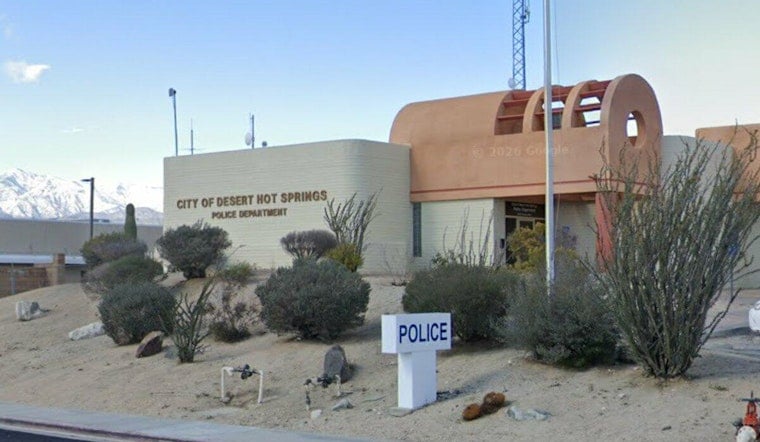
Desert Hot Springs police officers have patrolled the city with the same staffing number, 33 sworn officers, for more than two decades, even as the city's population grew 25.3% from 25,938 residents in 2010 to 32,512 in 2020. On September 1, 2026, the city council was scheduled to consider a resolution that would raise that number to 45 officers over five years, adding two new hires annually in an effort to catch policing capacity up to a city that has long outgrown it.
The council was scheduled to consider the resolution during its regular session at Desert Hot Springs City Hall on September 1, 2026, according to NBC Palm Springs. The resolution would set up a plan for adding officers beyond 45 as well, tying future hires to growth in public safety parcel tax revenue. If approved, the city would bring on two officers per year for five years, with the expansion projected to cost more than $370,000 annually, or roughly $185,000 per officer on average.
Two Decades Without a Staffing Increase
The Desert Hot Springs Police Department has held at 33 officers for more than 20 years, even as the surrounding city transformed. U.S. Census Bureau data shows Desert Hot Springs was the fastest-growing city in the Coachella Valley between 2010 and 2020, expanding 25.3% from 25,938 to 32,512 residents, and reaching an estimated 34,009 residents by mid-2025 while police staffing remained locked in place, per the U.S. Census Bureau.
The mismatch between population growth and staffing has taken a visible toll. According to the seed reporting, flat staffing has led to slower patrol response times, limits on investigations, high overtime costs, and a negative effect on officer morale and wellness. The strain isn't new: a 2007 city-commissioned staffing report already recommended a minimum baseline of 38 sworn officers back when the department had only 30 officers on duty, per KESQ.
An Independent Review Flagged Gaps
The push for expansion follows an outside evaluation. The California Commission on Peace Officer Standards and Training, known as POST, conducted an independent review of the department after Police Chief Steven Shaw formally requested the study to examine organizational structure and resource allocation. The review examined department organization, staffing, workload, and community expectations, and it found gaps in staffing, shift coverage, and overtime spending. POST recommended filling police positions on a more permanent, reliable basis. The agency trains and certifies police officers statewide, giving its findings added weight for local officials weighing how to restructure the force.
Shaw was formally sworn in as Chief of Police in April 2025 after serving as interim chief, following the retirement of Chief Jim Henson. Shaw now oversees a department with limited staff.
New Headquarters Space, New Tax Revenue
Desert Hot Springs neared completion this summer on a $7.26 million Police Department Annex Building Project next to its main station on Pierson Boulevard, providing detectives with more workspace and storage, as reported by NBC Palm Springs. The cited report does not identify the project's funding sources.
Measure P was a proposed 1% local sales-tax increase that voters would decide on, with revenue going into the unrestricted general fund, according to the Riverside Record. Measure P followed a rough budget stretch for the city: municipal leaders reported cutting over $2.9 million from the budget during a May 2024 study session, driven by sharp declines in local commercial cannabis tax revenue, per the City of Desert Hot Springs. Under the proposed resolution, the city plans to hire one additional officer for roughly every $500,000 increase in public safety parcel tax revenue beyond the initial 45-officer target, extending a funding mechanism first established when voters passed Measure B in November 2017 to extend the city's Public Safety Special Tax with a two-thirds majority.
Affordability Shapes the Stakes
The city's budget constraints shape how much taxpayers can realistically absorb for expanded public safety spending. That backdrop leaves open questions about how the city will recruit and retain 12 new officers, and whether the parcel tax revenue tied to future hires beyond 45 will hold steady given cannabis tax volatility in recent years.





