

























































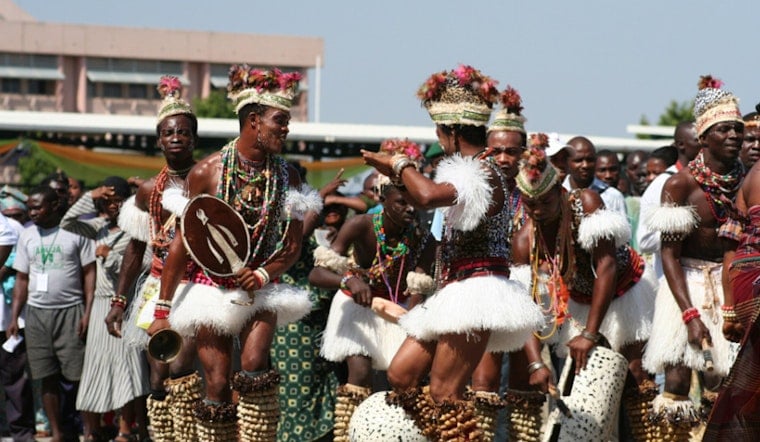
Fayetteville Street in downtown Raleigh transforms into a two-day celebration this weekend, with organizers expecting between 35,000 and 40,000 attendees for the 17th annual African American Cultural Festival. The free, family-friendly event kicks off Saturday at 11 a.m. with an opening procession featuring African dance, drumming, giant puppets and stilt walkers, and activities run until 10 p.m. each night through Sunday.
The festival has come a long way from its debut. According to CBS 17, the event drew over 15,000 attendees at its first run in 2010 and has since grown into one of Raleigh's premier Labor Day weekend events, featuring community, music, art and family-friendly programming across two stages. Executive Director and CEO Pamela Thompson Smith told the station the festival is about more than entertainment, saying it helps people celebrate African American culture, connect as a community, support artists and small businesses, and experience meaningful programming.
That growth trajectory checks out against the festival's own numbers. The African American Cultural Festival of Raleigh & Wake County notes on its website that attendance climbed from that 2010 debut crowd to 38,000 in 2019, then to an estimated 50,000 during last year's 16th annual event, according to the festival's official history. That puts this year's projected 35,000-to-40,000 turnout within the range of recent Labor Day weekends downtown, even as the specific 2026 estimate comes from CBS 17's reporting.
Two Stages, National Talent and a Sunday Church Service
Performances this year span local, regional and national talent across two stages, per the CBS 17 report. Entertainment includes southern soul line dancing and community conversations, and organizers have designated soul and R&B duo Kindred the Family Soul as a primary musical headliner for 2026, according to a festival video posted to Facebook.
Sunday morning brings Church Without Walls, a nondenominational service starting at 10 a.m. on the Main Stage in City Plaza and featuring Redeeming Love Missionary Baptist Church. Earlier Saturday, families can take part in an African dance and puppetry workshop at 10:30 a.m. ahead of the procession, and the City of Raleigh Museum hosts special children's author readings from 10 a.m. to 11:30 a.m., featuring Black authors engaging young readers with African American stories and creativity.
Where the Festival Fits on the Map
The 2026 footprint spans the 0-500 blocks of Fayetteville Street, with food truck vendors lining Davie and Martin Streets and the Main Stage anchored at City Plaza, 500 Fayetteville Street, according to the Downtown Raleigh Alliance. The festival's African Marketplace regularly hosts nearly 100 juried visual artists, craft merchants and food vendors, alongside interactive installations like the Creativation Station and public chalk art walls, per the festival's own account of its typical layout.
Beyond the two-day street festival, the organization also runs the AACF Youth Art Grant Program, which funds local high school students to carry out creative arts education projects in underserved areas. This year's event also expanded its tax-deductible Legacy Wall program, letting residents purchase $100 commemorative dedications, the same festival video notes.
Municipal Backing and a Growing Local Audience
The festival receives municipal operational support as one of 35 official Raleigh Arts Partners funded by the City of Raleigh Arts Commission. That institutional backing traces back to August 2008, when the Raleigh City Council and Wake County Board of Commissioners jointly appointed the festival's governing board with a mandate to build a signature tourist destination, leading to the inaugural event in September 2010 following a planning contract with local arts nonprofit Artsplosure. The organization incorporated as an independent 501(c)(3) nonprofit that same year and took over full, autonomous management of the festival in 2013 when it ended its fiscal partnership with Artsplosure.
The festival's local resonance is rooted in demographics as much as history. Non-Hispanic Black or African American residents make up 19.1% of Wake County's total population according to 2024 U.S. Census estimates compiled by USAFacts, well above the national average of 12.6%. It is worth noting this Labor Day weekend gathering is distinct from downtown Raleigh's other major Black cultural event, the statewide African American Cultural Celebration organized by the North Carolina Museum of History, which marked its 25th annual milestone in February, according to the North Carolina Department of Natural and Cultural Resources. The festival highlights the artistic and cultural traditions of African Americans in North Carolina and beyond, running Saturday and Sunday across downtown Raleigh, Fayetteville Street and City Plaza.





