

























































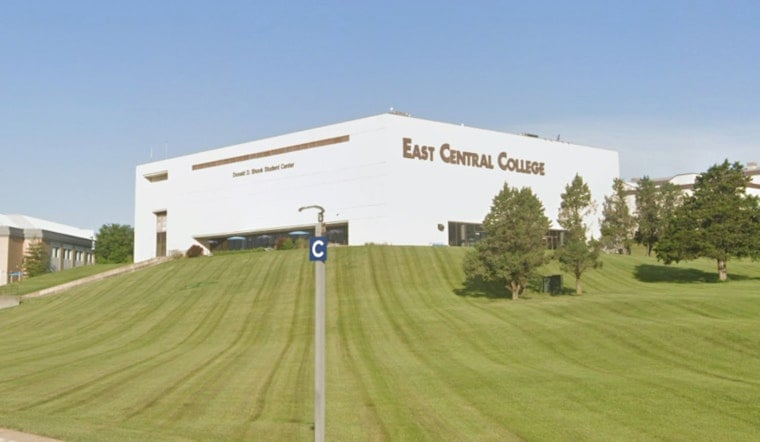
East Central College has set its lowest overall property tax rate in 40 years, with the levy falling to about 48 cents per $100 of assessed valuation — the lowest it has been since 1970. The drop comes after the college retired its debt-service bonds in February, eliminating a tax that had funded campus construction for more than five decades, and it means taxpayers across the district will see savings of about $107.50 per $100,000 worth of assessed property.
The ECC Board of Trustees unanimously approved an operating levy of 34.03 cents per $100 of assessed valuation, according to the Missourian. With no debt service levy attached this year, ECC taxpayers will not pay that portion of the bill at all — a first since the college began building its Union campus in the early 1970s. The college estimates the levy will generate just under $8.4 million in revenue for the upcoming fiscal year.
The debt levy had varied over the years, at one point reaching 20 cents per $100 of assessed valuation when the college's total tax levy stood at 54 cents — split between that 20-cent debt levy and a 34-cent operating levy, the outlet reports. Last year, the debt levy had already shrunk to about 9 cents before finally being retired. The rate reduction reflects the college paying off construction-related bonds, not a change in operating costs.
Voters Twice Said No to Shifting the Levy
The lower rate is also the direct result of a ballot measure that failed twice. Proposition ECC, which would have permanently shifted the expiring 9.9-cent debt service levy into the college's operating levy ceiling to fund campus repairs and workforce programs without raising total tax rates, was rejected by voters in both the April 2024 and April 2025 elections. Because the transfer measure did not pass, the debt levy simply expired rather than converting into ongoing operating revenue.
That leaves East Central College without the additional operating funds it had sought, even as it faces rising insurance premiums and utility payments, per the same account. State funding is expected to remain flat or decrease, and college officials say they will need to find another way to pay for rising operating costs going forward.
Enrollment Growth and Rising Valuations Cushion the Blow
Despite the lost revenue opportunity, ECC's finances remain solid. Christopher Woelzer said the college's financial position at the close of 2025 was the strongest it had been in several years, adding that strong enrollment combined with tuition hikes has buoyed college finances, the Missourian reports. That enrollment strength is backed by figures from East Central College, which reported a 12.8% surge in overall enrollment for Fall 2025, reaching 2,675 students taking 25,976 credit hours — driven in part by a 42.9% jump in dual credit high school participation.
Rising property values across the district are also helping offset the loss of debt levy revenue. Total assessed property valuation in ECC's tax district increased by roughly $46 million compared with the previous year, according to the Missourian's figures, with the tax district's total property valuation reaching nearly $5.23 billion in fiscal year 2025. The college's tax base spans 10 public school districts, and for households within the Washington School District, ECC's levy makes up about 5 percent of their overall property tax bill.
Tuition and Broader Cost Pressures
Tuition adjustments have played a supporting role in the college's finances for years. The ECC Board of Trustees approved an 8% tuition increase across all residency tiers back in February 2023 to counter inflationary pressure on operating costs, while keeping rates below maximum federal Pell Grant thresholds. For the current academic year, Tier 1 in-district tuition sits at $149 per credit hour, plus mandatory general fees of $43 per credit hour that support technology, facilities, student activities, and support services.
The college has also continued major capital investment outside the tax district levy. In August 2025, the ECC Board of Trustees approved a $9.64 million construction contract to renovate a 107,000-square-foot former U.S. Geological Survey facility in Rolla into a new consolidated campus set to open in 2027. That expansion is backed by $19.5 million in external state and federal funding, including $13 million in state ARPA funds, $3 million in federal earmarks for a Health Sciences Academy, and $3.5 million from Missouri's MoExcels program for an Advanced Manufacturing Center.
East Central Junior College was established on April 2, 1968, and voters approved its first debt service levy the following year to purchase a 114-acre tract in Union and build the primary campus, which opened for classes in January 1972. That debt levy has been a fixture of the college's tax bill for more than five decades — making this year's elimination a genuine milestone, even as administrators acknowledge the harder work of covering rising costs still lies ahead.




