

























































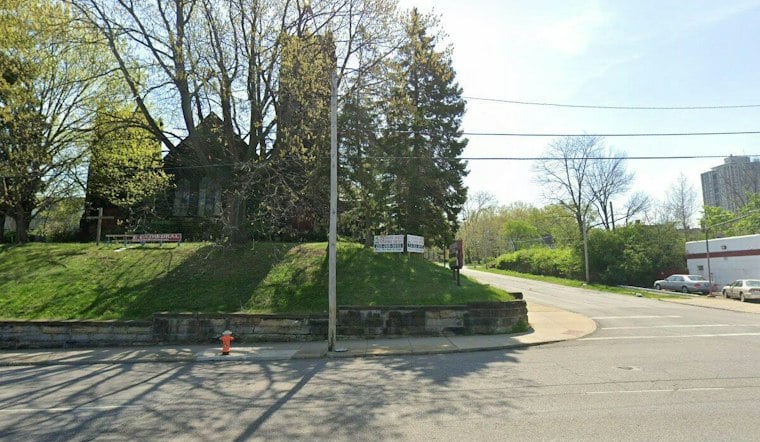
East Cleveland is set to receive $10 million for roads, bridges, water systems and storm sewers under Ohio’s newly enacted capital budget, as the city remains under state fiscal oversight. The allocation was included in Senate Bill 450, the state’s $3.7 billion capital budget, which lawmakers approved in June. Statehouse News Bureau reported that the legislation funds public works, schools and local projects across Ohio.
The money is designated for emergency infrastructure improvements, but East Cleveland has not released a project-by-project spending plan or a construction schedule. City officials are still determining which streets, pipes and bridges should receive priority, according to Cleveland.com. That leaves the specific projects, timing and eventual effect of the funding unresolved.
State Sen. Jerry Cirino, a Kirtland Republican and chair of the Senate Finance Committee, helped secure the allocation even though East Cleveland is outside his district. The state Senate described the investment as part of a broader effort to improve infrastructure in Northeast Ohio and support future development. The Senate’s announcement said Cirino viewed basic infrastructure improvements as necessary for attracting businesses and investment.
The funding arrives under unusual financial controls
East Cleveland is operating under a state receivership that gives receiver George E. Shoup III broad authority over city finances while leaving the mayor and City Council with their legislative and governmental powers. The Ohio Court of Claims appointed Shoup in February, making East Cleveland the first Ohio municipality placed under state financial receivership under the new law, according to Signal Cleveland.
The receivership followed a September 2025 request from Ohio Auditor of State Keith Faber. The Auditor reported active deficits in 10 municipal funds, unpaid bills and settlement debts, incomplete audits and the absence of a viable recovery plan. Faber said receivership was the remaining alternative short of municipal bankruptcy. The Auditor’s announcement did not identify which infrastructure projects should receive the new capital funding; that prioritization remains for city officials and the receiver to resolve.
A fiscal problem documented across generations of oversight
The city’s current financial controls follow an earlier state intervention. An Ohio Auditor of State audit says East Cleveland was declared in fiscal emergency on Sept. 9, 1988, prompting the creation of a Financial Planning and Supervision Commission to oversee a recovery plan. The audit also shows that state oversight was tied to specific administrative benchmarks, including improved financial systems, correction of fiscal-emergency conditions, implementation of a financial plan and a non-adverse five-year forecast.
That history helps explain why the $10 million is not simply an ordinary public-works grant. The capital budget provides a potential source of money for urgent physical repairs, while the receivership determines how the city’s finances are controlled. Until East Cleveland publishes its project list and schedule, it is not yet possible to say which infrastructure failures will be addressed first or how quickly residents will see construction.





