

























































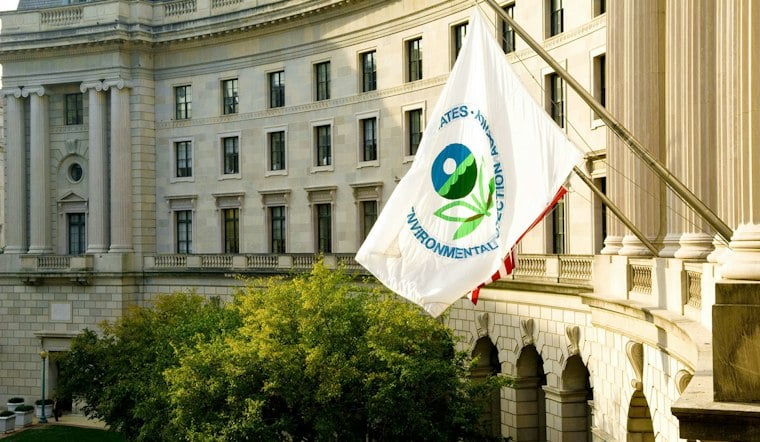
The U.S. Environmental Protection Agency finalized a rule Monday repealing Biden-era carbon emission limits on coal- and gas-fired power plants, announcing the move in Houston during a meeting of G20 energy ministers focused on energy security and expanding baseload power. EPA Administrator Lee Zeldin said the action would save energy companies $120 million a year, framing years of federal climate policy as a hindrance to domestic energy production.
The repeal, first reported by Reuters, undoes rules finalized under President Biden that required existing coal plants and new natural gas plants to capture or reduce 90% of their carbon dioxide emissions by 2032, largely through carbon capture and storage technology. Those standards, detailed by the U.S. Environmental Protection Agency when finalized in April 2024, set strict compliance schedules for existing coal units while subjecting new gas plants to peak-load performance benchmarks. The Trump administration first proposed repealing those rules, along with related Biden-era limits on carbon dioxide, mercury and other air pollutants from power plants, in June 2025.
A Long Legal Runway to Repeal
Monday's announcement did not happen in a vacuum. It follows the Supreme Court's 2022 ruling in West Virginia v. EPA, which found 6-3 that Section 111(d) of the Clean Air Act does not give the EPA authority to force system-wide shifts away from fossil fuels without explicit congressional direction, restricting the agency to source-specific controls rather than grid-wide mandates. Then in February, Zeldin finalized a separate rule revoking the 2009 Greenhouse Gas Endangerment Finding, according to the Associated Press, eliminating the scientific and legal finding that had underpinned federal regulation of power plant and vehicle greenhouse gases for 16 years.
The U.S. electricity sector accounts for nearly a quarter of the nation's greenhouse gas pollution, and the rules being unwound were projected to have significant reach. Had they stayed in place, the Biden-era carbon limits would have cut greenhouse gas emissions by 1 billion metric tons by 2047. A 2024 regulatory analysis from the Environmental and Energy Law Program estimated that keeping those standards would have delivered between $270 billion and $370 billion in net climate and public-health benefits through 2047, largely by reducing co-pollutants like sulfur dioxide and fine particulate matter tied to premature deaths.
Environmental Groups Push Back
Environmental groups argue the repeal itself carries a steep price. Maggie Coulter said the rollback would lead to more lost lives and suffering from intense heatwaves, drastic storms and destructive wildfires, adding that denying the existence of a quarter of the country's climate pollution is utterly reckless. Environmental groups separately estimated that repealing the rule would cost more than $120 million a year in environmental and public-health damage — the same figure Zeldin cited as projected industry savings.
The technological case for the original rule was also disputed. Clean energy legal analyses released this month found that only one commercial-scale coal plant worldwide had successfully deployed utility-scale carbon capture and storage, while no commercial natural gas facilities used the technology at scale, according to the Natural Resources Defense Council. Industry groups and the EPA cited that gap in deployment to argue the original standards demanded unproven technology in violation of Clean Air Act feasibility requirements.
Emissions Were Already Climbing
The repeal lands as power sector emissions have started rising again after two decades of decline. U.S. electric power sector carbon dioxide emissions increased 4.1% to 1,485 million metric tons in 2025, according to the U.S. Energy Information Administration, reversing a long downward trend amid higher electricity demand and increased coal burning. A January analysis from Rhodium Group found that power sector emissions grew by 55 million metric tons in 2025, driven partly by a 2.4% surge in commercial electricity demand concentrated in Texas, the Mid-Atlantic and the Ohio Valley as AI data centers and cryptocurrency operations expanded.
That uptick follows a much longer stretch of market-driven cleanup. U.S. electric power sector greenhouse gas emissions had fallen 41% between 2005 and 2024 as utilities voluntarily retired older coal plants in favor of cheaper natural gas and renewable generation, per the Center for Climate and Energy Solutions. The EPA's June 2025 proposal paired the carbon standard repeal with a separate push to undo 2024 Mercury and Air Toxics Standards amendments that had forced coal plant closures, with officials arguing both moves were necessary to protect grid reliability.
States Still Set Their Own Rules
Even with the federal rollback finalized, power plant operators remain subject to a patchwork of state requirements. New York, for instance, enforces its own carbon performance standards under state Part 251 rules and participates in the Regional Greenhouse Gas Initiative cap-and-trade market, according to Fingerlakes1.com, which reported that state regulators warn the federal shift could deepen the divide between Washington and state-level clean-energy mandates.
The Houston repeal is the latest in a string of Clean Air Act rollbacks under Zeldin's EPA. Hoodline previously reported on the administration's $2.5 billion break for energy firms and on federal intervention against Hawaii's push to retire oil-fired plants on Maui and the Big Island. Colorado also saw backlash last year over the EPA's initial move to unwind the Endangerment Finding and other federal climate rules.





.jpg)