

























































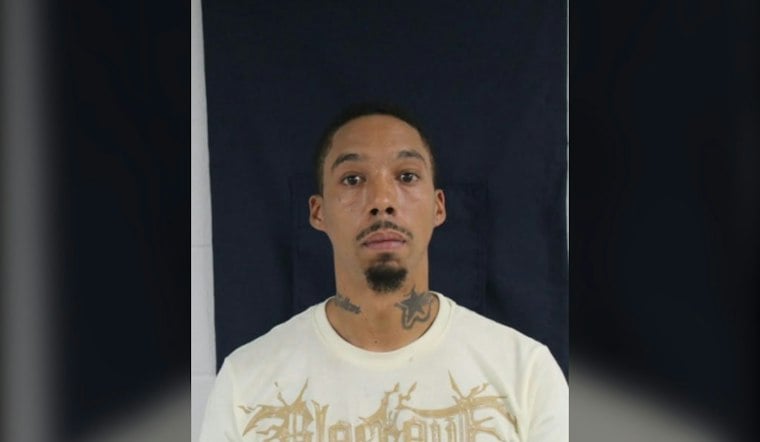
A traffic stop for a fake license plate on Nashville Road in Rocky Mount turned into a sprawling felony case Tuesday after deputies say the driver gave a false name, tried to run, and was ultimately found carrying fentanyl pills, cocaine, and drug distribution materials. Terrance McKellar, 38, is now held without bond at the Nash County Detention Center, facing new drug charges alongside a stack of outstanding warrants that includes assault with a deadly weapon with intent to kill and habitual felon status.
According to WITN, Nash County deputies spotted McKellar's car with a fake plate while patrolling Nashville Road on Tuesday. When deputies pulled him over, McKellar reportedly gave a false name, then tried to flee and physically resisted arrest before deputies got him into custody. A search of the vehicle turned up about 20 fentanyl pills, cocaine, and materials investigators say are used for drug distribution, per the station's report.
The stop is not the first time Nashville Road has drawn heavy scrutiny from Nash County investigators. In November 2025, deputies executed a search warrant at an adult care home on the same road, seizing roughly 472 grams of cocaine and arresting a caregiver, according to Spectacular Magazine. That earlier case underscores how the corridor has repeatedly surfaced in major county drug enforcement operations.
New Charges Stack Up After the Search
Out of Tuesday's stop, McKellar was charged with possession with intent to sell or deliver Schedule I substances, possession with intent to sell or deliver cocaine, possession of drug paraphernalia, maintaining a dwelling for controlled substances, and resisting a public officer, the same account notes. Effective this past December, North Carolina Session Law 2025-70 reclassified possession with intent to sell or deliver fentanyl from a Class G felony to a more serious Class F felony, according to the UNC School of Government, raising the sentencing exposure tied to the fentanyl allegation.
The maintaining-a-dwelling charge falls under N.C.G.S. § 90-108, a Class I felony that requires prosecutors to show a defendant had authority over the property and evidence of ongoing drug storage or sale, per Thomas Amburgey Law. Meanwhile, the resisting charge stems from N.C.G.S. § 14-223, which covers willfully resisting, delaying, or obstructing a public officer in discharging an official duty and carries up to 60 days in custody as a Class 2 misdemeanor, according to Ley Law.
Outstanding Warrants Raise the Stakes
Beyond the new charges from the stop, deputies also served McKellar with several outstanding warrants: possession of a firearm by a convicted felon, driving while license revoked, assault with a deadly weapon with intent to kill, and habitual felon status. The station reports McKellar received no bond as a result.
Assault with a deadly weapon with intent to kill is a Class E felony that can escalate to a Class C felony punishable by up to 231 months in prison if serious bodily injury is inflicted, according to Amburgey Law. The possession-of-a-firearm-by-a-felon warrant carries its own weight: under N.C.G.S. § 14-415.1, that offense is a Class G felony and can also draw federal prosecution, per the Hale Law Firm.
The habitual felon warrant adds another layer. Under North Carolina's Habitual Felon Act, a defendant with three prior felony convictions who is then convicted of a fourth felony faces a mandatory enhancement that raises the principal charge by four felony classes, up to a Class C felony, according to the Manning Law Firm. WITN reports McKellar is scheduled to appear in court Thursday.
Part of a Broader Interdiction Push
Nash County Sheriff Keith Stone, who took office in 2014, established a dedicated Highway Interdiction Unit specifically to conduct proactive traffic stops aimed at intercepting illegal narcotics and weapons before they reach neighborhoods, according to reporting cited by the Spring Hope Enterprise. The Nashville Road stop fits that broader posture, and it comes amid an opioid crisis in the county. Nash County has directed nearly $10 million in opioid settlement funds toward local recovery and intervention programs, per Nash County Government.
The Rocky Mount area has also seen a man face charges.



