

























































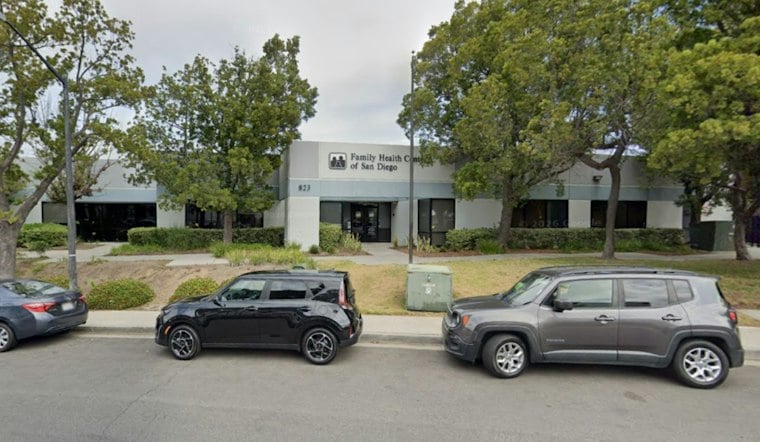
Nearly a dozen former employees of Family Health Centers of San Diego have sued the nonprofit over the past three years, alleging that understaffing compromised patient care and that the organization retaliated against workers who spoke up. UAPD has filed two unfair labor practice charges with the National Labor Relations Board over the firings of two doctors.
According to The San Diego Union-Tribune, former employees have filed retaliation claims in at least a dozen lawsuits over the last three years, seven of which remain pending while five have been settled. Family Health Centers of San Diego is one of the county's largest federally qualified health center networks, operating more than 90 locations and serving more than 227,000 patients annually, per the same report. The nonprofit denied the allegations generally, telling the paper it does not retaliate against employees who raise concerns and that there are no staffing shortages putting patients at risk.
The most recent labor charge involves Dr. Raquel Cornejo Piña, a family physician who worked at the network's Chula Vista clinic. Family Health Centers of San Diego fired Cornejo Piña in March, saying she had declined to sign a document confirming she deleted work emails containing hundreds of patients' information that she had allegedly forwarded to her personal account, the Union-Tribune reports. Cornejo Piña denied committing any misconduct and alleged the nonprofit fired her for retaliatory reasons, claiming workplace protocols caused delays in patient care and that the organization retaliated after she complained that male staff received preferential treatment. She countersued the organization in July, while Family Health Centers of San Diego has sued her for breach of contract.
The Union of American Physicians and Dentists reported that Cornejo Piña's firing left nearly 1,000 patients without their primary care physician, prompting labor leaders and local officials to demand leadership accountability. The union said retaliation against clinicians threatens workers' rights and professional judgment. Her unfair labor practice charge adds to an earlier December 2025 National Labor Relations Board filing, Case 21-CA-377502, according to a labor industry report from FQHC Talent. The NLRB has opened cases for both labor complaints but has published no actions on the charges so far.
A Second Doctor's Ouster Fuels Union Organizing
That earlier charge accused the health network of firing Dr. Devesh Vashishtha, its former medical director, for union organizing efforts in July 2025. Vashishtha said higher-ups told him he was fired for both organizing and performance reasons, while Family Health Centers of San Diego maintains it is not true that he was fired for organizing. In statements relayed by the union, Vashishtha alleged that FHCSD executives pushed doctors to see unsustainable patient volumes without adequate staffing while ignoring complaints of workplace discrimination, and said he had requested more free transportation, in-person translation, and care coordinators for vulnerable patients.
The complaints from Cornejo Piña and Vashishtha have fueled an ongoing UAPD effort to organize doctors at the network, the union's reporting shows. The dispute is part of a broader wave of physician unionization at California safety-net clinics, according to FQHC Talent's industry coverage.
Other Former Employees Describe Backlogs and Firings
Other lawsuits detail similar allegations of retaliation tied to staffing concerns. Ciarra McLean filed a wrongful-termination lawsuit against the network in December 2024.
Kelly Tran alleged she was required to see 14 to 16 patients every four hours, up from the 10 to 12 she had previously seen. Roberto Rodriguez Jerez, hired by the organization in 2017, filed a lawsuit in November 2024 alleging retaliation for complaints about racial discrimination and settled the case under undisclosed terms earlier this year. Attorney Aaron Mannis, who has represented former employees, said Family Health Centers of San Diego does not take kindly to criticism or opposition to its bottom line.
The Nonprofit's Financial Position and Defense
Family Health Centers of San Diego says it hired a workplace investigator who found former employees' claims were unsubstantiated and found no evidence of harassment, discrimination or retaliation, though the organization declined to share the confidential investigation report. The nonprofit says it fires employees for misconduct and for practicing below the standard of care, and it points to same-day or next-day primary-care appointments at almost all sites, with almost all locations meeting state appointment-scheduling wait-time standards. It also reports medical provider turnover under 8% and says it promptly sees patients better than other health systems.
The Union-Tribune reported that the network generated $488 million in revenue and spent $409 million in the prior year. The organization held $269 million in cash last year, up from $177 million in 2021, and has reported annual net income between $58 million and $80 million every year since 2020. That unrestricted cash amounts to roughly two-thirds of its annual spending, far above the reserves held by comparable networks San Ysidro Health and Neighborhood Healthcare, which reported reserves equal to about 7% and 8% of expenditures, respectively. Family Health Centers of San Diego says the reserves protect against funding cuts, emergencies, and healthcare policy changes, and notes it undergoes dozens of audits each year, none of which have found quality-of-care problems, along with accolades it has received for quality of care. ProPublica's Nonprofit Explorer, citing Family Health Centers of San Diego's Form 990 for the fiscal year ending June 2024, lists $436,375,423 in revenue, $358,225,634 in expenses and $78,149,789 in net income.
Why the Stakes Extend Beyond One Clinic
Because San Diego County lacks a public county-funded hospital, the region's healthcare safety net depends heavily on community clinic networks like Family Health Centers of San Diego to serve low-income and uninsured residents, according to a 2006 report from Voice of San Diego. Federally qualified health centers like FHCSD receive federal funding to serve underserved populations and cannot turn away patients who cannot pay. According to HRSA's Health Center Program Data System overview, health-center awardees and look-alikes must report data each calendar year on patient characteristics, staffing and costs. Under California Health and Safety Code Section 1278.5, health facilities are barred from retaliating against workers who report suspected unsafe patient care conditions, with violations subject to civil penalties up to $25,000, per legal reference site Justia.
Family Health Centers of San Diego traces its roots to 1970, when community organizer Laura Rodriguez and local residents occupied a Barrio Logan building to establish the Chicano Free Clinic, according to the organization's own history. That clinic evolved into what is now the Logan Heights Family Health Center and expanded into the countywide network at the center of today's labor disputes. The Union of American Physicians and Dentists, founded in 1972 and affiliated with AFSCME Local 206 and the AFL-CIO, represents more than 7,000 licensed doctors and advanced practice clinicians nationwide and is spearheading the organizing campaign now playing out at FHCSD, according to the union.
The Family Health Centers of San Diego network says it is confident it will prevail before the National Labor Relations Board on the Vashishtha unfair labor practice charge. With no NLRB rulings yet published and the network's own workplace investigation kept confidential, the core dispute over whether patient volume demands are compromising care remains unresolved.





