

























































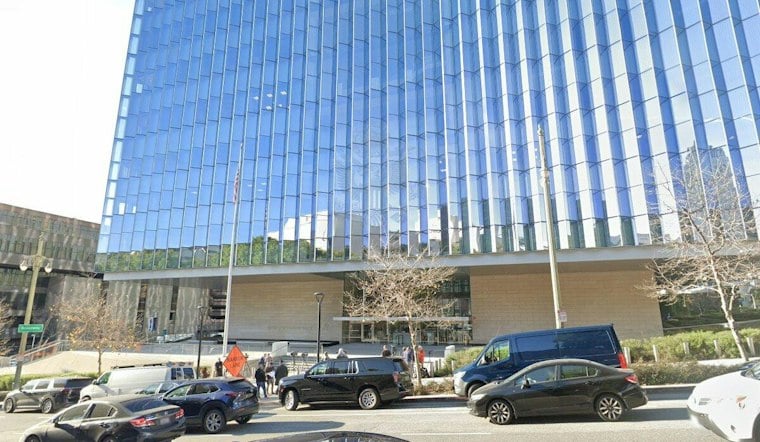
A federal judge in Los Angeles has ordered immigration agents across Southern California to stop making warrantless civil arrests unless they first determine, case by case, that a person is likely to flee before a warrant can be obtained. U.S. District Judge Maame Ewusi-Mensah Frimpong issued the preliminary injunction on Wednesday in the case Vasquez Perdomo v. Mullin, a class-action lawsuit that has challenged the federal government's immigration enforcement tactics across the region for more than a year.
The ruling, announced Wednesday, applies to a certified class covering everyone arrested without a warrant and without an individualized escape-risk assessment since June 6, 2025, across the seven counties that make up the Central District of California — Los Angeles, Orange, Ventura, Riverside, San Bernardino, Santa Barbara, and San Luis Obispo, according to the LA Times. The ACLU of Southern California called it a formal legal victory targeting the systemic, non-targeted sweeps that have swept through the region since last year.
Los Angeles Mayor Karen Bass celebrated the decision in a post on X, writing that “a federal judge has once again sided with Los Angeles and taken action to severely limit when federal immigration agents can make warrantless arrests in Southern California,” according to Mayor Karen Bass
. She thanked the Coalition for Humane Immigrant Rights, the Los Angeles Worker Center Network, and the United Farm Workers for their role in the case, and said families across Los Angeles had lived with fear of loved ones being taken away for more than a year. “The Constitution applies in Los Angeles as it does everywhere in America,” Bass said, adding that she would continue to stand with immigrant communities and defend their rights.
What the Law Actually Requires
Under 8 U.S.C. § 1357, part of the Immigration and Nationality Act, federal law has authorized immigration officers to make civil arrests without a warrant since 1946 — but only when they have probable cause of unlawful presence and make a specific, individualized determination that the person is likely to escape before a warrant can be secured, according to CalMatters. Courts typically weigh flight risk by looking at ties to the community, such as local employment, family, and long-term residency.
Evidence submitted by plaintiffs' attorneys undercut the government's compliance with that standard. Among 113 federal immigration arrest records reviewed in Southern California, nearly 80 percent — 89 cases — contained no escape-risk assessment whatsoever or relied on identical standardized boilerplate text, the LA Times reported. DHS agents themselves admitted in depositions that skipping flight-risk evaluations was standard practice, per the same account.
Civil administrative arrest warrants, known as Forms I-200 and I-205, are issued internally by Department of Homeland Security supervisors rather than by neutral judges. That distinction matters constitutionally: federal agents may not enter private homes without consent based solely on an administrative warrant, as Hoodline has previously reported.
A Year-Long Legal Fight
The lawsuit was originally filed in July 2025 following widespread immigration sweeps, and it initially produced a temporary restraining order. That order was stayed by the U.S. Supreme Court in September 2025 pending further litigation, according to The Fulcrum, which allowed the challenged enforcement practices to continue for another year while the case worked through expedited discovery.
Earlier orders in the case had already addressed detainees' access to counsel, according to Public Counsel. Advocacy groups had documented that people arrested in neighborhood raids were sometimes held without access to an attorney.
Los Angeles County and intervenor cities filed a complaint in intervention on July 29, 2025, in a coalition Hoodline previously covered. Bass's post described the lawsuit coalition as now including more than 20 local governments across Southern California, with the City of Los Angeles among the plaintiffs alongside the Angelenos who originally filed the suit.
Part of a Broader National Pattern
Judge Frimpong's decision follows similar federal court rulings that have restricted warrantless civil immigration arrests elsewhere in the country. Judge Beryl Howell issued a comparable ruling in Washington, D.C. in December 2025, and Judge Jeffrey Cummings ruled against similar tactics in Chicago in November 2025, according to the LA Times. Hoodline has covered both the D.C. sweep that followed and the Chicago consent decree ruling.
The shift toward these kinds of legal challenges follows a broader nationwide trend in enforcement tactics. Federal immigration detention tracking data from July 2026 showed that 70.6 percent of the 65,765 people held in ICE custody nationwide had no criminal convictions, while research from UC Berkeley found community-based arrests spiked from 17 percent to 47 percent of all ICE detentions nationwide, as Hoodline has reported. The Southern California litigation challenged raids and arrest practices in the region.



