

























































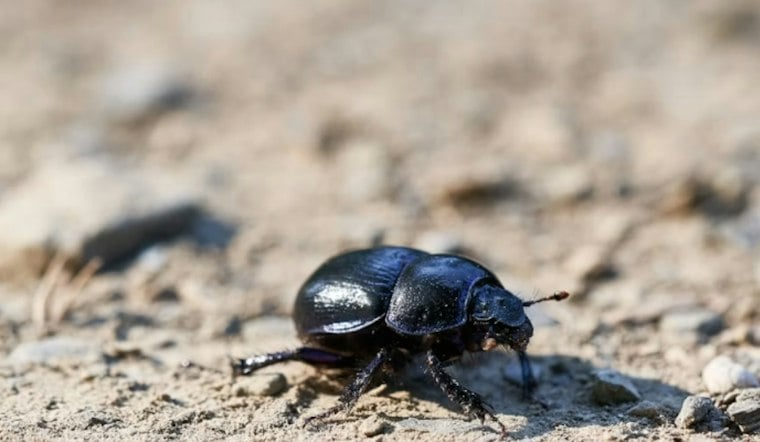
A package shipped from North Carolina to Germany and disguised with a label reading “4x play toy” was actually carrying three live, rare African beetles, along with beetle parts and display cases, according to federal officials. U.S. Customs and Border Protection agents intercepted the parcel during an air cargo inspection in Philadelphia, uncovering what investigators describe as a glimpse into an illegal underground market for exotic bugs.
CBP officers inspected the outbound package on Aug. 18, and inside they found three live Chief Goliath beetles along with a container of beetle parts and two shadow boxes typically used to display insects, according to the News & Observer. CBP reported the interception this week, per the newspaper's account. Officers sent the live beetles and photographs of the beetle parts to U.S. Department of Agriculture entomologists for identification.
Entomologists with the USDA's Animal and Plant Health Inspection Service identified the three live insects as female Chief Goliath beetles, while the dead specimens were identified as stag beetles, according to NBC10 Philadelphia. Stag beetles are native to Europe, Asia and North America, the outlet reports, while Chief Goliath beetles come from rainforests in Africa and are considered increasingly rare by researchers. The live beetles were turned over to the USDA, while the rest of the shipment — the beetle parts and shadow boxes — was handed to the U.S. Fish and Wildlife Service, per the same report.
A Giant Insect Under Pressure
Chief Goliath beetles rank among the world's biggest insects, capable of growing up to 110 millimeters, or about 4.3 inches, and they play an important role in dispersing nutrients throughout their rainforest ecosystem, the News & Observer notes. The species has seen a sharp decline over the past 30 years, driven largely by global demand tied to the West African cocoa industry, which has eaten into the beetles' habitats and food sources, the paper reports.
Federal officials described the seized cargo as one piece of a broader illegal market. CBP officials said the insect shipment is part of a larger illegal underground market selling exotic bugs to collectors, according to the News & Observer's reporting, and the agency's agriculture specialists said they remain committed to intercepting smuggling attempts while working alongside Fish and Wildlife Service conservation law enforcement partners. Elliot Ortiz, quoted in that same report, said the illegal trade of exotic pets brings hefty profits for people who are risking wildlife species and violating U.S. laws and regulations.
What Investigators Have Not Confirmed
CBP has not said where in North Carolina the shipment originated, nor has it clarified whether the agency has identified anyone responsible for the smuggling attempt, the News & Observer reports. CBP did not immediately return a request for comment from the paper.
The U.S. Fish and Wildlife Service is now investigating potential violations of the Endangered Species Act and the Lacey Act, according to the News & Observer's reporting. Potential violations include failure to declare the commercial export of wildlife and trading in wildlife without a license. Federal law also prohibits false or improper labeling and marketing of containers used to ship wildlife, and it bans importing or exporting injurious wildlife — including insects — that was illegally taken or sold. Violators can face up to $20,000 in fines and up to five years in prison for felony offenses, per the same account.
A Market Hiding in Plain Sight
The case echoes findings from a 2022 Cornell University study, which determined that endangered insects can be bought online through nothing more than basic internet searches. Researchers with that study found that endangered and threatened insects and spiders — plus common species that provide ecological services — could be easily purchased without adequate oversight, according to Cornell University. The team identified 79 species listed on the CITES treaty, the IUCN Red List or the U.S. Endangered Species List that were for sale online, including a Cyprus beetle that sold for $1,100 on eBay and a pinned birdwing butterfly listed for $3,850, the most expensive insect the researchers found.
A separate summary of the same research, published by EurekAlert, noted that a Luzon peacock swallowtail — endangered both internationally and in the United States — was found pinned in a display box on Amazon for around $110. Entomologists cited in that release estimated that Earth is losing about 10% to 20% of all insect species every decade, driven by habitat loss, pesticides, invasive species, urbanization, pollution and climate change. Researchers warn that collecting and selling rare insects can affect species survival.



