

























































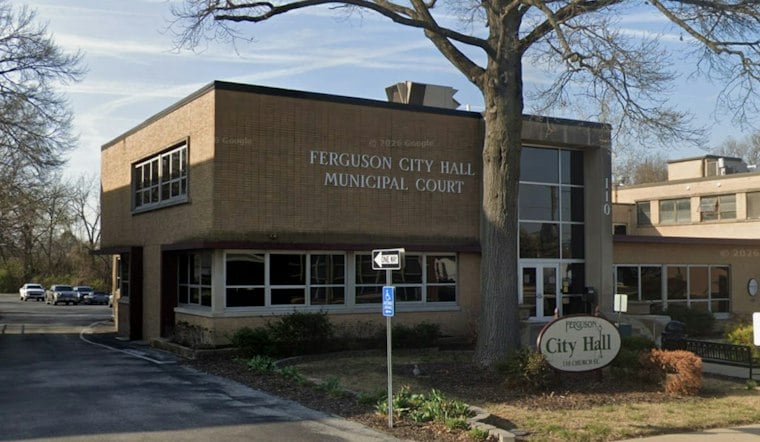
A tax abatement package for a massive data center project on Ferguson's old Emerson Electric campus is back before the city council, and this time it comes with a new $750,000-a-year sweetener for neighborhood repairs. The renewed push has done little to calm residents, who erupted during a tense special meeting Wednesday night at Ferguson City Hall.
Councilman Nick Kasoff and Councilwoman Linda Covington reintroduced the tax abatement legislation this month under Ferguson's municipal charter, according to the St. Louis Post-Dispatch. The updated version requires developer Jim Onder to pay $750,000 annually over 10 years into the Ferguson Neighborhood Improvement Program, an independent local nonprofit that funds residential repairs, the paper reports. The addition appears designed to win over skeptical council members after a similar package failed earlier this year.
The renewed proposal, tied to a project city filings refer to as “Project Butterfly,” returned to the council for its first reading this week, according to KMOV. A similar redevelopment plan was narrowly voted down in May, nearly four months earlier, the station notes.
Public Comment Turns Into Shouting Match
Wednesday's special council meeting devolved into open conflict when Mayor Adrian Shropshire restricted how much public comment time could be yielded to Henry Iwenofu, lead organizer for Ferguson Advocacy for Civic Transparency, prompting residents to shout at city leaders, per KSDK. Iwenofu had already spoken earlier in the meeting before audience members attempted to give him more of their own allotted time, the station reports.
The clash echoes the council's May 4 vote, when members rejected a 15-year tax abatement package on a deadlocked 3-3 tally, with Councilman Michael Palmer abstaining, according to KSDK. Whether Palmer changes his vote this time remains an open question the station flagged as worth tracking, along with an ongoing community recall effort targeting council members who support the incentives.
Onder's $18 Million Bet On a Vacant Campus
Personal injury attorney and real estate investor Jim Onder, operating through the project-specific entity SSL Investments LLC, finalized his purchase of the 217-acre, 11-building campus at 8000 West Florissant Avenue for roughly $18 million in July, according to Capdex. Former campus owner Copeland continues operations on-site under a lease-back agreement, the outlet notes. Emerson Electric had maintained its global corporate headquarters at the site for more than 80 years before relocating its executive offices to Clayton, Missouri, following the 2023 spin-off of its climate unit, Copeland — a departure that left Ferguson without a key economic anchor on the nearly 1 million-square-foot campus, Capdex reports.
Onder first floated a $1.8 billion redevelopment plan for the site back in March, a proposal Hoodline covered in Billion-Dollar Bet. But municipal filings tied to Project Butterfly authorize a financial ceiling of up to $22 billion in Chapter 100 industrial revenue bonds for long-term buildout and equipment, far beyond that baseline figure, according to the St. Louis American. Chapter 100 bonds allow municipalities to hold title to project property in order to grant real estate and personal property tax exemptions, the paper explains, and the gap between the stated investment and the bonding ceiling has amplified resident skepticism.
Schools and Budget Pressures Collide
The Ferguson-Florissant School District issued a formal statement in April opposing the requested tax abatement, arguing that tax incentives and TIF agreements have systematically diverted needed revenue away from local public schools since 2010, per the district's own statement posted to its website. District leaders emphasized they do not oppose redeveloping the site itself but object to financial structures that burden local taxpayers.
Council members backing the project point to Ferguson's own budget crisis as justification. City leaders faced a growing shortfall in mid-2026 that forced roughly $2 million in municipal budget cuts, hiring freezes, and spending halts after years of drawing down cash reserves, according to the Post-Dispatch. Proponents argue the development will generate new long-term tax revenue for municipal services once the abatement period ends.
Community activists opposed to the data center have launched a petition drive to recall council members who support the tax abatements, according to KSDK. Residents have voiced concerns over noise, heavy electricity usage, water consumption, and diesel generator emissions tied to the facility, the station reports.
Part of a Statewide Pattern
Ferguson's fight fits into a broader Missouri debate over data center incentives. State records indicate Missouri's Data Center Sales Tax Exemption program has resulted in approximately $77 million in forgone state and local tax revenue, a figure Hoodline detailed in Missouri Data Centers Cost $77M in Tax Breaks. Several Missouri municipalities have since debated guardrails or limits on similar tax breaks, a trend Hoodline also tracked in Kansas City Data Centers Become A 2026 Primary Election Issue, where the same fight over energy demands and abatements became a flashpoint in local elections.
For now, Ferguson's council has reopened a debate it thought it had settled in May, with the added $750,000-a-year neighborhood fund doing little to quiet objections raised at Wednesday's meeting. Whether the new financial terms are enough to flip a single vote — and whether the recall effort gains traction — remains unresolved as the legislation moves through the council process.




