

























































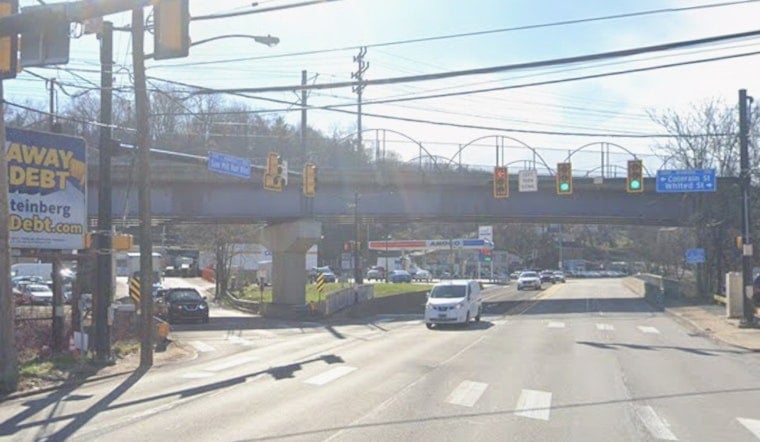
Floodwaters swallowed stretches of Route 51 in Pittsburgh's Brookline and Carrick neighborhoods Thursday evening as strong storms dumped heavy rain across Western Pennsylvania, stranding vehicles and prompting concertgoers at the Pavilion at Star Lake to shelter in place. High school football games were canceled outright, and the National Weather Service warned drivers across a wide swath of the region to stay off flooded roads as flash flooding threatened creeks, streets, and low-lying areas well into the night.
The National Weather Service issued a flash flood warning covering Allegheny, Washington, Armstrong, Butler, Beaver, Fayette, Westmoreland and Indiana counties, according to WTAE. Thunderstorms producing heavy rain moved through the warned area, with rainfall measuring between 1 and 2 inches in some spots and forecasters warning that another 0.5 to 1.5 inches was possible before the system cleared. Flash flooding was already underway or expected to begin shortly, threatening small creeks, streams, urban areas, highways, streets, underpasses and other poorly drained or low-lying areas across the region.
The station's report described flash-flood risk across a broad stretch of Western Pennsylvania without reproducing a complete list of affected communities.
Football Games Called Off, Star Lake Fans Told to Shelter
Football Games Called Off, Star Lake Fans Told to Shelter The storms disrupted Thursday night's high school football slate, with cancellations reported involving Bethel Park, North Allegheny and Beaver Falls, according to the same account. At the Pavilion at Star Lake in Burgettstown, a RÜFÜS DU SOL performance was delayed and concertgoers were instructed to shelter in place as the storms rolled through. The venue's 23,000-capacity amphitheater is notoriously bottlenecked by a single main access road along Route 18, a design that has trapped fans in multi-hour traffic backups during past severe weather, according to TribLIVE.
Powerful winds also shook cars crossing the Liberty Bridge in Pittsburgh as the storms brought heavy rainfall to the region. Damaging winds were the top threat from the late-day thunderstorms, with gusts capable of topping 70 mph northwest of Pittsburgh, and forecasters said the severe weather also raised the possibility of large hail and a low tornado risk.
Why Route 51 Keeps Flooding
The flooding along Route 51, also known as Saw Mill Run Boulevard, is not a one-off. The roadway runs alongside Saw Mill Run, a stream with a long history of flooding in the South Pittsburgh corridor, according to Watersheds of South Pittsburgh. Channel constriction and impervious surfaces throughout the South Hills cause water levels to rise rapidly whenever intense storms pass through, making the corridor one of the region's most persistent flash-flooding bottlenecks.
The region has also seen a documented surge in flash flood activity. The National Weather Service's Pittsburgh office issued 114 flash flood warnings across Western Pennsylvania through late July 2025, more than double its annual average of 51 and the highest year-to-date total since 2003, as reported by The Intelligencer. NWS meteorologists attributed the trend to higher atmospheric moisture levels and weak atmospheric flow that stalls heavy rain over local valleys rather than pushing it through quickly.
Soil conditions heading into this week's storms made matters worse. August 2026 was the rainiest August in modern history for the Pittsburgh region, according to earlier Hoodline reporting, leaving soils highly saturated and reducing the ground's ability to absorb heavy rainfall before it runs into urban streams like Saw Mill Run.
Local Infrastructure Projects Racing the Storms
Efforts to address the chronic flooding are already underway, though they will take years to finish. Pittsburgh Water and the City of Pittsburgh broke ground on the $6.8 million Stewart Avenue Stormwater Improvement Project on August 25, building new storm sewers, catch basins, and a green infrastructure facility designed to capture runoff in Carrick and Overbrook before it reaches the Saw Mill Run watershed, according to a Pittsburgh Water announcement. PennDOT separately undertook Route 88 work in 2026, including drainage and guiderail work.
Past disasters have also shaped the region's emergency response. The cited material does not provide details about specific flood-control installations, responder-training totals or swiftwater rescue-team locations.
The National Weather Service warning emphasized the danger of flooded roads. Floodwater can pose serious risks to vehicles and drivers.




