

























































U.S. Representative Greg Steube introduced legislation Thursday that would bar federal agencies from tapping into networked license plate reader systems like Flock Safety without first getting a judicial warrant, a move the Florida Republican says is overdue given how far the cameras' reach already extends into everyday drivers' lives. The bill, formally called the Facilitating Liberty and Accountability for Flock Observations Act, would also tie Department of Justice grant funding to whether state, local, and tribal police departments adopt similar privacy safeguards.
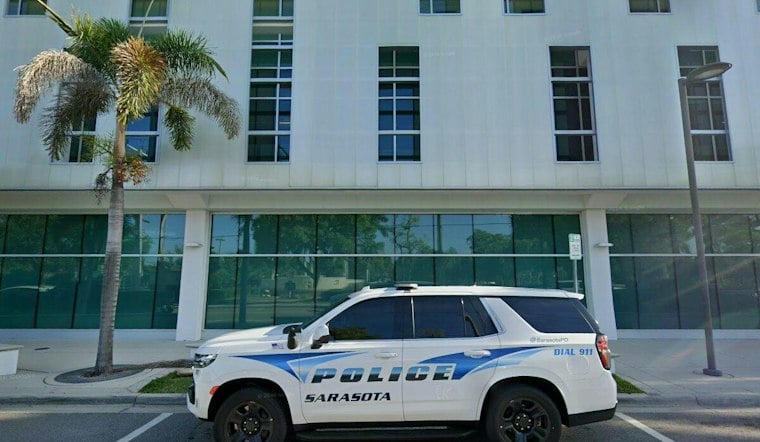
The push comes months after a Sarasota Police Department officer was accused of running searches through the Flock database far beyond what his job required. As reported by the Tampa Free Press, Steube directly cited that episode when unveiling the FLAFO Act, arguing that the Fourth Amendment is not optional and that Americans should not be tracked everywhere they drive without a warrant. The officer, Cory Waiters, was arrested in August 2026 and charged with felony official misconduct after an internal audit found he had allegedly searched a single license plate more than 350 times in the Flock system, according to Fox 13 Tampa Bay. Waiters was arrested after an internal investigation that began once news media uncovered the repeated searches.
How the Bill Would Work
Automated license plate reader networks rely on roadside cameras, sensors, and software to log plates, vehicle models, colors, and travel locations into searchable databases, per the Tampa Free Press report. Under Steube's proposal, federal agencies would be barred from buying, leasing, running, or accessing data from covered ALPR networks without securing a judicial warrant first, and the restrictions would apply to private vendors or government agencies operating multi-jurisdictional, AI-driven vehicle tracking databases.
The bill carves out several exceptions. Investigators could bypass the warrant requirement during immediate emergencies involving missing or endangered people, imminent threats to human life, or active investigations into terrorism and foreign espionage. Operations by the U.S. Secret Service, Customs and Border Protection, and national security installations under the Departments of Defense, Energy, and Homeland Security would also be exempt from the warrant mandate. Unauthorized access to database records under the legislation could bring up to five years in prison, civil fines reaching $100,000, and private civil lawsuits that would disallow qualified immunity defenses, the Tampa Free Press reported.
A Dominant Vendor Under Scrutiny
Flock Safety operates more than 80 percent of the automated license plate reader systems in use across the country, according to the Tampa Free Press. Separately, Flock Safety has reported operating over 120,000 cameras across more than 6,000 communities in 49 states, processing roughly 20 billion vehicle scans every month, according to Wikipedia. The company maintains contracts not just with police departments but with homeowner associations and private businesses as well.
Steube's home state has already moved against the technology. On August 31, 2026, the Florida Department of Transportation ordered the removal of all automated license plate readers from state highway rights-of-way within 30 days, revoking permits for Flock, Axon, and Motorola systems statewide, according to Military.com. Governor Ron DeSantis publicly stated he did not want Florida to become a surveillance state, the outlet reported.
A Bipartisan Wave in Congress
Steube's bill is not the only federal effort targeting Flock's networks. On September 15, 2026, U.S. Representatives Raja Krishnamoorthi and Michael Cloud introduced the bipartisan No FLOCK Act, which would withhold 10% of federal surface transportation funding from states that fail to restrict automated license plate reader usage to five specific public safety and tolling purposes, according to VitalLaw. Permitted uses under that bill include tolling, stolen vehicle recovery, missing persons cases, felony warrants, and felony investigations. Hoodline covered that legislation in its report on the No FLOCK Act.
The scrutiny extends beyond misuse cases to the technology itself. During a U.S. Senate hearing on September 23, 2026, cybersecurity researchers testified that Flock Safety cameras contained severe security vulnerabilities, including unencrypted administrative interfaces on pan-tilt-zoom cameras and compromised police credentials offered for sale on dark web marketplaces, per Mashable. Experts testified that certain camera models could be physically compromised in under a minute.
Misuse Cases and Accuracy Problems Pile Up
A September 2026 Washington Post investigation, cited by VitalLaw, documented at least 69 instances across the United States where police officials were accused, charged, or convicted of misusing Flock or other license plate reader systems for personal reasons, including stalking ex-partners. Federal lawmakers cited that investigation's findings when introducing ALPR oversight bills.
Accuracy has also drawn concern. An August 2026 audit by the Roseville, California Police Department, analyzing nearly 1,500 Flock camera reports, revealed a 71% failure rate in AI license plate character recognition, causing the system to frequently mistake plate digits and flag law-abiding drivers as operating stolen vehicles, according to CNET. In one documented instance, a 9 was repeatedly misread as an 8, but the incorrect alerts did not lead to wrongful stops or arrests.
The Constitutional Question Courts Haven't Settled
Civil liberties advocates trace their legal argument back to the 2018 U.S. Supreme Court decision in Carpenter v. United States, which held that acquiring historical cell-site location information without a judicial warrant violates Fourth Amendment privacy protections, according to Justia. Advocates argue that aggregated ALPR data creates a near-identical chronicle of a person's daily movements.
But appellate courts have drawn narrower lines in other cases. In March 2026, the U.S. Court of Appeals for the Fifth Circuit held in United States v. Porter that querying a localized 10-camera ALPR database to match a vehicle to an active felony warrant did not constitute a Fourth Amendment search, according to the Town of Mount Juliet, Tennessee. That ruling underscores the ongoing judicial division over where ALPR surveillance crosses a constitutional threshold. Meanwhile, ACLU data published in September 2026 shows that less than 1% of all vehicle license plates captured by ALPR networks are connected to active criminal investigations, warrants, or stolen vehicle reports, meaning the overwhelming majority of captured plates belong to people never suspected of any crime.
The FLAFO Act now moves to House committees for initial consideration, joining a growing list of local and federal actions responding to Flock's expanding footprint.




