

























































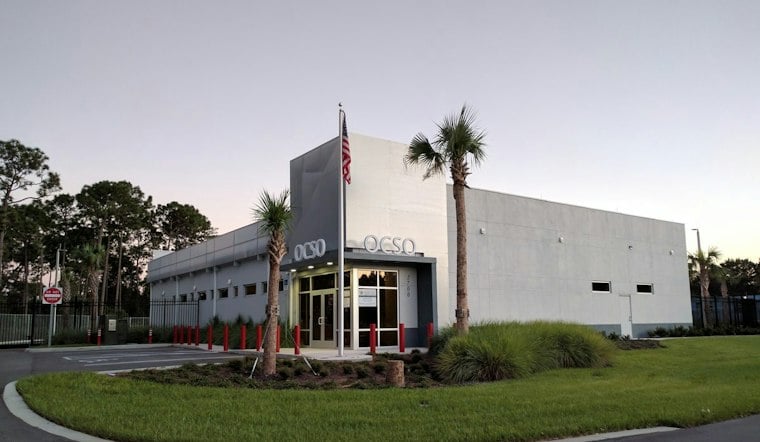
A Florida transportation directive is forcing changes to some automated license plate reader installations, but it does not by itself settle whether Orange County will keep using its Flock camera network. The Orange County Sheriff’s Office says the cameras have helped investigators locate missing people and develop leads in serious cases, while other Central Florida agencies have removed or reconsidered their systems, according to WFTV.
The state order has a narrower reach than the regional debate
On Aug. 31, 2026, the Florida Department of Transportation revoked existing permits for automated license plate recognition systems installed within the rights-of-way of roads on the State Highway System, giving local agencies 30 days to remove them, WUSF reported, citing the FDOT memorandum.
That directive concerns cameras in state highway rights-of-way; it does not automatically prohibit installations on every city or county road or on private property. Orange County’s continued use therefore remains a local policy decision unless particular cameras fall within the state-controlled locations covered by the order.
Orange County is emphasizing investigative utility
The sheriff’s office has pointed to several investigations in arguing that the technology should remain available. As reported by WFTV, the agency says Flock cameras assisted work on a Pine Hills serial-rape investigation, the search connected to the killing of 13-year-old Madeline Soto and a murder case involving a dismembered victim.
Those are claims about the cameras’ investigative role, not evidence that the systems independently solved the cases. The available reporting does not establish how many Orange County cameras are affected by the FDOT directive, how often the network produces actionable leads or what portion of each investigation depended on camera data.
The unresolved issue is how use is governed
The International Association of Chiefs of Police recommends that ALPR programs limit use to documented lawful purposes and include restricted access, written policies, audits and prompt investigations of suspected misuse. Those safeguards provide a framework for evaluating Orange County’s program, although the supplied reporting does not document whether the sheriff’s office currently meets each recommendation.
Florida’s broader records rules also matter. A 2023 Florida House staff analysis said license-plate-recognition records generally must be retained until they are obsolete, superseded or no longer administratively valuable, but for no longer than three years unless a longer period is otherwise required, the analysis said. That statewide rule does not by itself describe Orange County’s contract terms, access controls or deletion practices.
Other jurisdictions show different responses, not a single national outcome
In Los Angeles, the police department paused work with Flock in July 2026 while officials examined concerns about data use, ownership, sharing, security and privacy, the Los Angeles Times reported. That was a separate agency decision, not a finding about Orange County’s system.
Oversight can also take a different form from removal. A 2025 City of Austin audit found that the Austin Police Department’s quarterly ALPR audits generally reported accurate metrics and complied with policy requirements, according to the city auditor. And a 2025 Virginia State Crime Commission report said staff identified 18 states with statewide rules governing law-enforcement ALPR use, illustrating that agencies operate under varied regulatory approaches, the commission reported.
For Orange County, the immediate question is not simply whether cameras can remain on local roads. It is whether the sheriff’s office can show where the system operates, who can search it, how long records are kept and how misuse is detected—while demonstrating that the investigative benefits it cites justify continued surveillance.





