

























































Cannon fire, cricket lessons, and a recreated battlefield are set to fill Fort Howard Park this Labor Day weekend as the Dundalk-Patapsco Neck Historical Society marks the 40th anniversary of its Defenders' Day celebration. The free, family-friendly event runs Saturday, September 5, from 10 a.m. to 5 p.m., and Sunday, September 6, from 10 a.m. to 3 p.m., commemorating the 1814 Battle of North Point that helped save Baltimore from British invasion.
The celebration, sponsored by the Dundalk-Patapsco Neck Historical Society, is built around the anniversary of a battle that, according to The Avenue News, saw roughly 4,700 British soldiers land at Fort Howard to launch their attack on Baltimore, marking what the outlet describes as the largest land invasion by a foreign army in U.S. history. The society, a volunteer-run 501(c)(3) nonprofit founded in 1970, maintains a community museum and local history archives on the North Point Peninsula, according to the organization's own account. This year's theme, “Incorporate the Past, History for the Future,” frames a weekend of living history demonstrations, reenactments, and hands-on exhibits at the county park.
A Battle That Bought Baltimore Time
The Battle of North Point unfolded on September 12, 1814, as part of the broader War of 1812 between the United States and Britain, and it stands as one of the last major battles of that conflict, per The Avenue News. Brigadier General John Stricker led approximately 3,200 Maryland militia troops under overall defense commander Major General Samuel Smith, with orders to stall the advancing British forces, according to the National Guard. According to legend, as reported by The Avenue News, Pvt. Daniel Wells and Pvt. Henry McComas, both members of Capt. Edward Aisquith's sharpshooters, shot and mortally wounded British Maj. Gen. Robert Ross before the battle even began.
Ross's mortal wounding forced Colonel Arthur Brooke to take command of British forces. Brooke pushed the Maryland militia back but then chose to halt his advance, a decision that gave American troops crucial time to fortify Baltimore, according to the American Battlefield Trust. That pause prevented British infantry from coordinating effectively with the naval bombardment of Fort McHenry that followed. Combat casualties from the land battle were steep on both sides: 24 American militia members were killed and 139 wounded, compared to British losses estimated at 39 to 46 killed and more than 250 wounded, per the same organization's figures.
The Fort's Layered Military Past
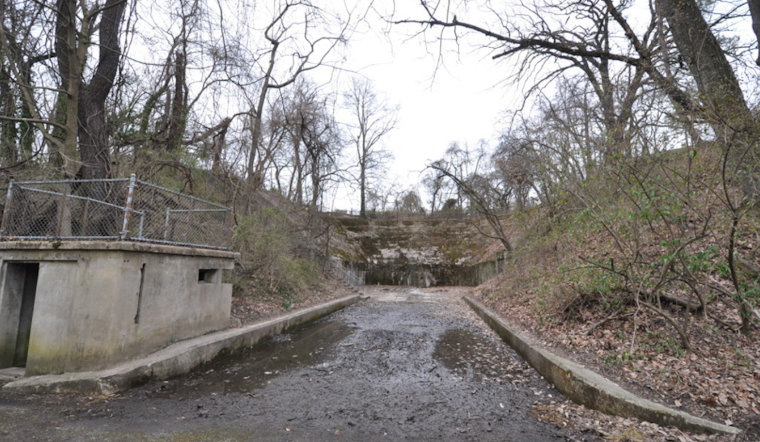
Fort Howard Park itself carries more than a single era of military history. The site was established in 1896 as a U.S. Army coastal artillery post nicknamed the “Bulldog at Baltimore's Gate” during the Spanish-American War era, and it later operated as a Veterans Administration medical complex until the VA abandoned the garrison area in 2002, according to the Historical Marker Database. The county park today preserves surviving coastal artillery batteries built at the turn of the 20th century alongside its War of 1812 landing-site history.
The successful defense of Baltimore that September also had a lasting cultural legacy beyond the battlefield. It inspired Maryland attorney Francis Scott Key to write the 1814 poem “The Defence of Fort M'Henry” after he watched the 25-hour British naval bombardment from a truce ship in Baltimore Harbor, according to the National Park Service. That poem was later set to music and designated by Congress as the U.S. national anthem in 1931. Per The Avenue News, the bombardment of Fort McHenry saved Baltimore after British forces had already burned Washington, D.C.
New Focus on African American Defenders
This year's celebration adds a specific focus on the role African Americans played during the War of 1812, The Avenue News reports. That emphasis lines up with the historical record: free Black defender Private George Roberts fought at North Point, while Private Gabriel Williams, an enslaved man who served with the 38th U.S. Infantry, was mortally wounded at Fort McHenry, according to the Maryland State Archives. Both free and enslaved Black Marylanders contributed to Baltimore's defensive preparations and military units despite the legal restrictions on slave enlistment at the time. The 2026 event will include an exhibit on the Old Defenders alongside this expanded historical focus.
What to Expect This Weekend
Beyond the history lessons, organizers have packed the weekend with hands-on activities: living history demonstrations, walking tours, food trucks, blacksmithing, cooking demonstrations, and children's crafts and games, according to The Avenue News. Visitors can also expect cricket instruction, period clothing and music, fencing instruction from the Calvert-Arundel Swordsmen, story time, and a magician. Last year's fencing demonstration featured Rick Chandlee and Timothy Kaltwasser of the Calvert-Arundel Swordsmen, and 2025 reenactors staged a recreation of the Battle of North Point at Fort Howard Park in late August, with photos of the event captured by Matt Wynn for The Avenue News.
This year's schedule again includes reenactments with mock battles and live cannon fire, along with Canadians portraying British soldiers and war-era medical procedures performed by Dr. Shadyfellow. Girls and women are encouraged to dress up and participate, as are anyone interested in portraying an 1812 soldier or civilian. Students who need community service hours for graduation are also encouraged to take part. Admission and parking are free, and organizers can be reached at 410-284-2331 for more information.
A Statewide Legacy Rooted in Baltimore
Defenders' Day carries more than local sentiment behind it. Under Maryland General Provisions Code § 1-111, it is designated an official state legal holiday on September 12, following statutory enactment by the Maryland General Assembly in 1908, according to legal records reviewed via Westlaw. It is also considered Baltimore's oldest annual holiday, first commemorated on September 12, 1815, when civic leaders laid the cornerstone for downtown Baltimore's Battle Monument, which was completed in 1825 and remains the central image on the official Baltimore City Seal, per the National Park Service.
Other regional observances are planned across the metro area the same weekend, including at Fort McHenry National Monument and Historic Shrine, where admission to the historic Star Fort runs $15 for adults 16 and older, according to Visit Baltimore. That site's programming includes living history reenactments, fife and drum performances, and a garrison flag-raising ceremony. For Dundalk and North Point Peninsula residents, though, Fort Howard Park remains the place where the story began — the ground the British marched over on their way toward Baltimore, and the ground where local volunteers have spent four decades keeping that history alive.





