

























































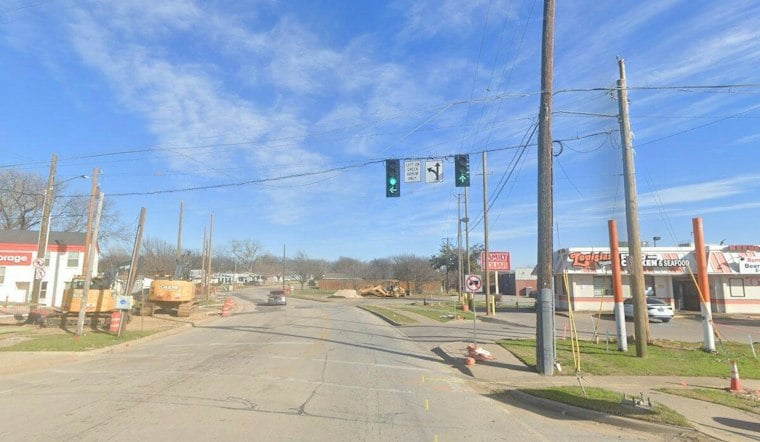
Three new school bus stops on Vel Drive began picking up Stop Six students on Sept. 11, following a two-year effort by Fort Worth mom Adrienne Haynes to address safety concerns created by Loop 820 construction. The service now gives eligible students in the historically Black neighborhood an alternative to walking through the construction area.
The Fort Worth Report reported that Haynes first asked Fort Worth ISD for transportation in 2024, after construction along the loop complicated students' walks to school. The report said she also contacted city officials, area schools and the school board while seeking a community-wide response.
A Long Wait for a District Response
Families in the area were initially told they had to contact the transportation department individually, and students living within two miles of school were told they were not eligible for regular bus service, Haynes said, according to the outlet's reporting. FWISD did provide transportation for Haynes' own children, but she said she was pushing for a fix for the community as a whole, not just her family. Fort Worth ISD serves four campuses in the area: Maudrie M. Walton Elementary, Dunbar High School, Young Men's Leadership Academy and J. Martin Jacquet Middle School.
Enrollment at those schools underscores what was at stake. Black students make up a majority of enrollment at Walton and Dunbar, and about four in ten students at Jacquet and Young Men's Leadership Academy, per the Fort Worth Report's account.
Construction Concerns Come to a Head
The issue drew renewed attention in September. The Fort Worth Report said Rufus Huckaby observed substantial construction, a barricaded pedestrian walkway and two crossing guards under the Loop 820 bridge at Ramey Avenue on Sept. 4. That day, Trenace Dorsey-Hollins asked FWISD to provide transportation for students at the four Stop Six campuses, while Parent Shield Fort Worth separately requested service.
According to the report, Laurie George told Haynes and Parent Shield that hazardous-route transportation would be considered at the board's Sept. 8 meeting. FWISD met with Parent Shield on Sept. 10, and Peter Licata said at the board meeting that the district did not want students walking through dangerous construction areas.
How the New Bus Stops Work
The board of managers approved the 2026-27 hazardous-routes designation on Sept. 8, clearing the way for the new stops. The Fort Worth Report said Texas law permits districts to seek additional transportation funding for students exposed to hazardous traffic or a high risk of violence, including conditions involving freeways, expressways, bridges and other major roadways. FWISD's board agenda also said the designation was not expected to create additional local financial impact beyond existing transportation costs and could support a request for state transportation funding.
FWISD assigned a bus, mapped the stops and set pickup times before service began Sept. 11. The three stops are on Vel Drive: one serves Walton students, one serves Dunbar and Young Men's Leadership Academy students, and one serves Jacquet students. Students in the affected area who live within two miles of their campus are eligible for transportation and may use any of the three stops.
FWISD plans to add the stops to its official hazardous-route list and incorporate them into an existing bus route, according to the Fort Worth Report. The district also plans to report the service for potential state transportation funding.
How hazardous-route rules apply
Texas law does not automatically require regular bus service for every student who lives within two miles of school. Instead, according to the Texas Education Agency, districts may apply for up to 10% of their regular transportation allotment to serve students within that distance who face hazardous traffic conditions or a high risk of violence while walking. FWISD's Sept. 8 agenda said the Stop Six designation could support such a state funding request without adding local costs beyond existing transportation expenses. A separate example shows that hazardous-route designations are not unique to Stop Six. Community Impact reported that Northwest ISD's board designated hazardous routes for the 2019-20 school year at an Aug. 12 meeting, though that involved a different district and school year from FWISD's action.
Parents Say the Fight Isn't Over
Haynes told the outlet that the district's response once officials engaged made her hopeful, but she continues to seek safe transportation options for students attending other schools or programs of choice.


