

























































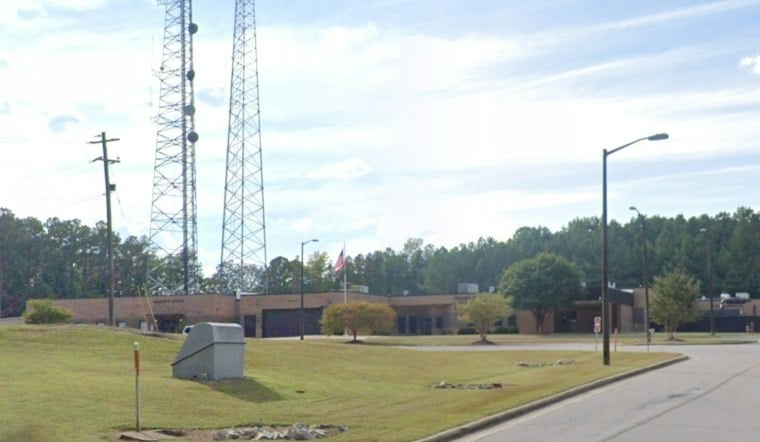
A Franklin County detective has lost her job after investigators say she used the county's Flock license plate camera system to track a private citizen's every movement. The Franklin County Sheriff's Office fired Detective Janet Leonard, halted its use of the surveillance cameras altogether, and sent the case to the district attorney's office for further review.
The firing came after an internal audit of the surveillance system uncovered the misuse, according to WRAL. The sheriff's office had relied on Flock cameras for nearly a decade before pulling them offline in the wake of the discovery. Leonard was dismissed specifically for using the system to track the every movement of a single, private citizen, the outlet reports.
Sheriff Vows Accountability
Sheriff White addressed the fallout directly, saying he will stop at nothing to keep the community safe and excellent beyond measure. He also said he will never allow community safety to come at the cost of privacy and constitutional rights, according to the same report. White added that citizens deserve transparency and a government they can depend on to keep them safe.
The sheriff's office has not released the detective's exact job title, the date of her termination, or the identity of the person whose movements were tracked. It also remains unclear whether the district attorney's office will pursue criminal charges, and the full text of the sheriff's statement has not been made public.
A Statewide Reckoning Over License Plate Readers
The Franklin County case lands amid a broader wave of scrutiny over automatic license plate readers across North Carolina, where roughly 2,800 of the devices are in use statewide, about 80% of them made by Flock, according to research cited by Spectrum News. That outlet reported that privacy concerns and community backlash have already led Asheville, Davidson and Dare County to end their Flock contracts entirely.
Flock itself insists its cameras only capture still images of vehicles in public view, without video recording or facial recognition, per a company statement cited by ABC11. The company also says agencies control their own data, that searches require a documented reason, and that every search leaves a permanent audit trail. In Erwin, North Carolina, 11 Flock cameras now watch busy intersections and the town's main entrances, costing the town $3,500 per camera annually, or $38,500 total, the outlet reported.
Company Announces Changes After Documented Abuses
Flock Safety announced platform changes intended to quell privacy concerns and address documented abuses by law enforcement officers, according to the Courthouse News Service. The company plans to shorten its standard data-retention window from 30 days down to seven, while allowing longer retention for material tied to an active case number. Starting in 2027, all law enforcement customers will also be required to implement an audit tool designed to flag abnormal search behavior, with users locked out pending internal review when that behavior is detected.
The changes follow a string of misuse cases nationwide. Courthouse News reported that six employees of the Savannah Police Department in Georgia, including four officers, were fired after being accused of using Flock to search for friends and family and letting an outside officer access the department's cameras. The same report cited a Washington Post finding of nearly 50 instances of police officers charged or accused of using the cameras for unauthorized purposes, and noted that more than 50 agencies or jurisdictions nationwide have canceled, suspended, rejected or deactivated Flock contracts or cameras since the start of the year.
Retention Policies Vary Widely by County
Elsewhere in North Carolina, the New Hanover County Sheriff's Office currently retains license plate reader data for 30 days and is evaluating whether to tighten that window, according to WECT. That station reported that Flock Safety CEO Garrett Langley himself recommended agencies cut storage times from 30 days down to seven after addressing misuse of the technology.
In Ohio, the debate has played out even more publicly. The Hilliard Herald reported that a July 2026 audit in Columbus found more than 15,000 searches of city Flock data possibly related to immigration enforcement, prompting the city to pull out of the national Flock sharing network that June and later restrict data sharing with other Ohio departments. A city council hearing in August drew emotional testimony from crime victims, civil-liberties advocates and activists but produced no immediate policy changes. Neighboring Hilliard, by contrast, reported an 18% reduction in property crime in 2025 after fully implementing its own camera network in 2023, operating under a department policy that deletes images after 30 days and logs every query by name, date and time for quarterly audits.
Whether Franklin County will adopt similarly strict retention and audit rules before resuming its Flock program remains an open question. For now, the county's cameras sit dark while the district attorney's office weighs what, if anything, comes next.





