

























































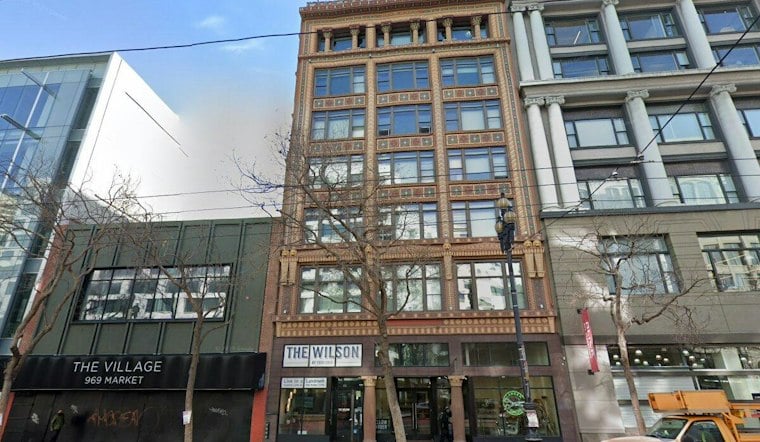
The investment firm behind the recent purchase of San Francisco's historic Wilson Building has a new name and a fresh pile of cash to deploy. GTIS Partners has rebranded as Brightshore Capital and launched a $250 million debt platform aimed at capitalizing on a wave of maturing real estate loans nationwide, with San Francisco named as one of its top target markets for recovery upside.
The rebrand, announced Tuesday, comes after GTIS completed a 2025 buyout of minority owner GoldenTree Asset Management, transitioning the firm to 100% partner ownership, according to PR Newswire. Founded in 2005 by Tom Shapiro, who now serves as founder and president of the renamed firm, Brightshore Capital manages $5.6 billion in gross assets globally. As reported by Bisnow, the firm is keeping its existing operations, team, leadership and investment strategy intact even as it takes on the new name.
Alongside the name change, Brightshore is launching its first vehicle focused solely on debt: a $250 million fund called Brightshore Credit. The platform can be upsized through sales of senior notes to support more than $1 billion in real estate transactions, building on roughly $1.5 billion in debt the firm had already originated across previous vehicles, the outlet's report notes. The fund is expected to originate stretch senior loans, mezzanine debt, preferred equity and B-notes.
A Maturity Wall Fuels the Debt Push
Timing appears central to the strategy. Commercial real estate borrowers nationwide face nearly $65 billion in commercial mortgage-backed securities loans maturing by the end of 2026, with $37 billion of that classified as hard maturities carrying no extension options, according to Bisnow. Rising interest rates and tighter bank lending have pushed many property owners toward private recapitalization rather than risk defaulting, a dynamic that non-bank lenders like Brightshore are positioned to exploit.
Per the Bisnow report on the rebrand, multifamily debt alone accounts for a large share of that maturing pile, and Brightshore plans to invest in residential projects that need financing as owners scramble for capital ahead of deadlines. The firm intends to originate loans across a range of structures rather than sticking to a single debt product.
Why San Francisco and Austin Are in Focus
Brightshore is directing its equity focus toward San Francisco and Austin, betting that both markets are positioned for a turnaround. The firm expects the San Francisco market specifically to recover and provide upside for investors willing to get in during the downturn, per the Bisnow story.
That confidence lines up with Brightshore's recent local moves. In July, GTIS Partners and GreyBrick Partners acquired The Wilson, a 67-unit apartment building at 973 Market Street in San Francisco's SoMa district, marking the ninth acquisition for their joint venture, according to PR Newswire. The 120-year-old property survived the 1906 earthquake and was converted into apartments through a $17 million adaptive-reuse restoration during an earlier tech boom, as Hoodline previously reported, and it still holds a Mills Act historical contract along with its Byzantine terra-cotta facade.
Austin, meanwhile, is drawing attention for having fully occupied new buildings paired with lower rents, the Bisnow report states. Multifamily tenant demand nationally increased 8% year-over-year even as asking rents fell 1.5% year-over-year, and Sun Belt net absorption outpaced the rest of the country during the first half of 2026 — trends that inform Brightshore's plan to focus on recapitalization opportunities in the Texas capital.
A Broader Portfolio Beyond the Rebrand
The rebrand and new fund arrive as Brightshore continues deploying equity across a wider slate of residential and industrial projects in the U.S. and Brazil. In April, GTIS Partners and Hovnanian Enterprises completed a $200 million joint venture — combining $150 million from GTIS and $50 million from Hovnanian — to recapitalize seven residential communities across five states totaling 907 remaining homes, according to HousingWire.
The firm's industrial ambitions extend to Florida, where it appointed JLL in July to manage leasing for 4Ward Logistics Center, a Class A industrial park with two distribution buildings totaling 382,500 square feet under construction in East Tampa, per JLL. That project builds on the firm's earlier East Tampa land acquisition, which Hoodline covered in a story on the warehouse push in the area.
Internationally, the firm's footprint includes Campus JK, a three-building office complex exceeding 100,000 square meters in São Paulo set to serve as Santander Brazil's corporate headquarters starting in late 2028, according to the company's own newsroom materials. GTIS also ranks among the top Qualified Opportunity Zone managers in the country by capital raised, having accumulated roughly $1.5 billion in Opportunity Zone equity across 17 developments that include nearly 4,000 residential units and 2.5 million square feet of industrial space, per InvestmentNews. The firm's Sun Belt residential ambitions are also visible in Miami, where GTIS Partners, in partnership with Related Group, is developing Baccarat Residences Miami — a 75-story luxury tower in Brickell that surpassed its 40th floor of construction earlier this year, as Hoodline reported on the project's progress.
Taken together, the rebrand marks less of a strategic pivot than a repackaging of an already-active platform, with Brightshore now positioned to lean on its balance sheet and two-decade track record to chase both distressed debt opportunities and equity plays in recovering markets like San Francisco.





