

























































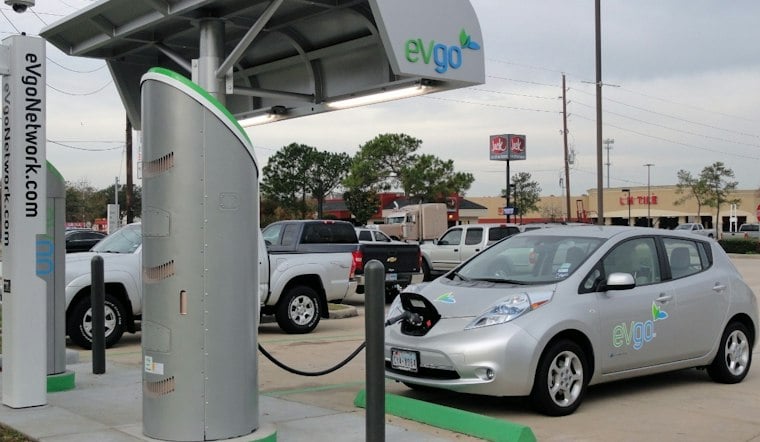
Twenty-four new electric vehicle charging stations are headed to the San Antonio area, with 21 of them landing inside the city itself and the rest split between Seguin and Hondo. The buildout follows the September opening of San Antonio's first EV fast-charging station on the city's southeast side, a Shell gas station at 418 Fair Avenue near Interstate 37.
The 24 planned stations come out of Phase 2 of the National Electric Vehicle Infrastructure program, a federal effort established under the 2021 Infrastructure Investment and Jobs Act, according to KENS 5. That first phase has already opened 22 stations statewide, with at least five more expected by the end of the year and another 30 planned to open across Texas in 2027. Stations are also under construction in Wichita Falls, Selma and Kerrville.
The Texas Department of Transportation unlocked the next wave of funding after the Federal Highway Administration officially certified in January that the state had fully built out its Phase 1 network along designated Alternative Fuel Corridors, according to a document posted on the Texas Department of Transportation's FTP site. That federal sign-off is what allowed TxDOT to announce $226 million for 321 charging stations spread across 264 MPO areas and 57 county seats statewide.
Why San Antonio Qualified for 21 Stations
The money flows through Texas's 25 metropolitan planning organizations, bodies created under the Federal Highway Act of 1962 to oversee transportation planning and funding in metro areas, the station's report notes. Locally, the Alamo Area Metropolitan Planning Organization is responsible for all 24 stations planned across the San Antonio area, and it gathered input through three public workshops plus an online crowdsourcing application before sending its site recommendations to TxDOT.
“We are pleased with the results of this effort,” said Sonia Jiménez, deputy director of the Alamo Area Metropolitan Planning Organization, per the same account. TxDOT Data Management Director Michael Chamberlain said the number of alternatively fueled vehicles on Texas roads continues to rise, and that the new stations will help the agency keep pace with demand.
Federal NEVI rules require every funded fast-charging site to include at least four non-proprietary DC fast-charging ports, each capable of delivering at least 150 kW simultaneously, and to sit within a mile of a designated travel corridor, according to the Federal Highway Administration. Those standards are designed to let several drivers charge quickly at once rather than wait in line behind a single slow port.
EV Registrations Are Climbing Fast Statewide
The push comes as Texas's EV population keeps expanding. The state had 456,667 registered electric vehicles in February, a number that climbed to 532,282 by mid-October, according to TxDOT data cited by the same outlet. Texas received roughly $407 million in total NEVI formula funding over five years, the largest allocation of any state, per the Center for the New Energy Economy, with the federal grants covering up to 80 percent of project costs and private site developers supplying the rest.
That growth has a cost side, too. Under Texas Senate Bill 505, which took effect in 2023, EV owners pay a $200 annual fee at registration renewal and $400 upfront on new purchases, money that flows into the State Highway Fund, according to the Texas Department of Motor Vehicles. State agencies have estimated Texas loses roughly $200 a year in uncollected fuel taxes for every EV on the road, since those drivers skip the pump.
Grid Strain and Local Charging Options Already in Place
San Antonio's municipal utility, CPS Energy, is already working to keep the city's grid from buckling under rising EV demand. In June, the utility partnered with grid software provider WeaveGrid to launch the EV Smart Rewards program, which offers residential EV drivers up to $120 in annual bill credits plus a $30 enrollment incentive for charging during off-peak hours, according to WeaveGrid. The incentives encourage off-peak charging.
CPS Energy's FlexEV public charging network includes Level 2 stations, including one at an H-E-B. Those Level 2 ports typically add about 20 miles of range per hour of charging, a much slower pace than the high-speed NEVI chargers now being planned.
San Antonio adopted its SA Climate Ready plan in 2019. Bexar County continues to face federal clean air standards challenges tied to ground-level ozone.





