

























































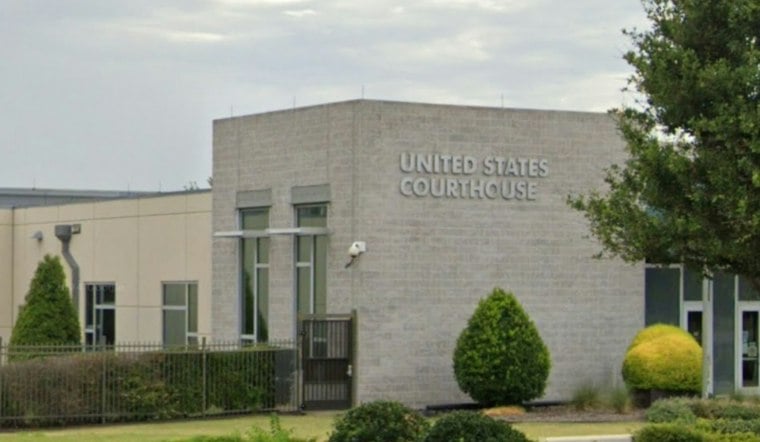
A man Guatemalan authorities call “The Iceman” stood before a federal judge in Plano on Friday and pleaded not guilty to drug trafficking charges alongside three co-defendants; the four had been extradited from Guatemala to the United States before arriving at McKinney National Airport aboard a Drug Enforcement Administration plane. Juan Carlos Cruz Ovalle and the other men were accused of trafficking tons of cocaine into the United States, and all four were ordered held without bond following the hearing.
According to CBS News Texas, each of the four defendants was appointed a public defender, and defense attorneys left the courthouse without commenting to reporters. The men arrived in North Texas the day before their court appearance, flown directly into McKinney National Airport in DEA custody.
Eight Years in the Making
Per the same outlet, U.S. authorities said they had been trying to bring Cruz Ovalle to the United States for about eight years before his extradition. Federal prosecutors allege he trafficked multi-ton quantities of cocaine from Guatemala for distribution in the United States. Cruz Ovalle was indicted in 2018.
NBC 5 Dallas-Fort Worth reports that Cruz Ovalle faces federal charges of conspiracy to manufacture and distribute cocaine, and to smuggle it into the United States. Eastern District of Texas U.S. Attorney Jay Combs told the station, “We came in on a DEA aircraft accompanying four individuals who were being extradited from Guatemala.”
Cruz Ovalle's history with U.S. and Guatemalan investigators stretches back years. The Treasury Department identified him in December 2019 as a key drug trafficking associate of Erik Salvador Suniga Rodriguez and his organization, according to CBS News Texas. Guatemalan anti-narcotics authorities then arrested him on April 7, 2020, in Tecún Umán on a U.S. extradition request, with Guatemala's government alleging he served as a coordinator who arranged for cocaine shipments to be received in the country and then transported into Mexico.
Guatemala's Public Ministry went further at the time of that 2020 arrest, alleging that Cruz Ovalle belonged to a trafficking organization operating throughout the Americas. As reported by Prensa Libre, prosecutors described a sophisticated infrastructure used to produce, acquire, store, transport and distribute several tons of cocaine bound for the United States.
Why North Texas Courts Keep Seeing These Cases
Friday's arraignment is the latest in a long pattern for the region's federal courts. Over the last 15 years, federal prosecutors in the Eastern District of Texas have turned courts in Plano and Sherman into go-to destinations for extraditing and trying foreign drug suspects, the same NBC 5 report notes. Federal prosecutors in North and East Texas have been targeting suspected drug traffickers and others in Guatemala as part of a broader effort to disrupt cocaine trafficking into the United States, with a U.S. attorney saying the effort will put a stranglehold on cocaine trafficking.
Dr. Nathan Jones, a professor at Sam Houston State University, said increased enforcement efforts along the U.S.-Mexico border have pushed some cartel operations farther south into Central America, with drug cartels starting to stage operations in the region. U.S. authorities say continued cooperation with the Guatemalan government is intended to make it harder for trafficking organizations to establish safe places to operate.
Cruz Ovalle's case is not an isolated one. Other Guatemalan nationals have faced similar extraditions to U.S. courts in recent months, including Elmer Antonio Pancan Barrios, known as “Chepio,” who was extradited to the United States on March 5, 2026, according to the Eastern District of Texas U.S. Attorney's Office.
CBS News Texas said it will provide updates on the case as more information becomes available.





