

























































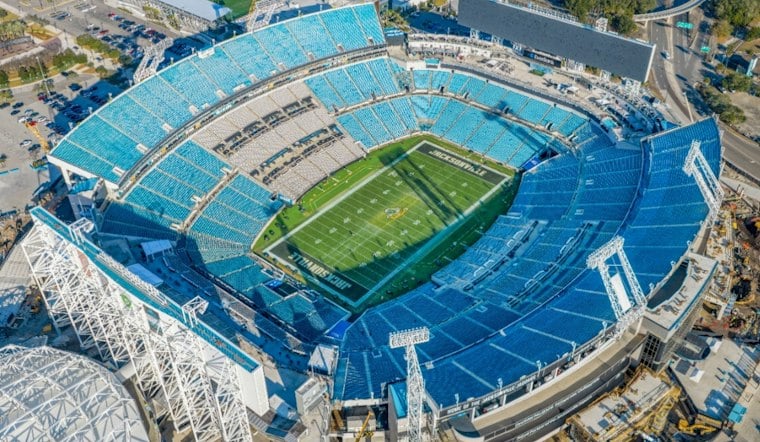
Two national gun rights organizations and a group of individual plaintiffs have filed a lawsuit against the City of Jacksonville, accusing city-owned venues of illegally turning away people who were legally carrying firearms. The suit names Mayor Donna Deegan and Sheriff T.K. Waters directly, and claims that armed visitors were told to disarm, denied entry, or threatened with trespass at spots including EverBank Stadium, the Florida Theatre building and the Jacksonville Center for the Performing Arts.
According to News4JAX, Florida Carry Inc. and Gun Owners of America filed the lawsuit alongside individual plaintiffs, arguing that Florida law largely leaves firearm regulation to the state and that local governments cannot enforce their own restrictions through venue policies. The suit asks a judge to declare the challenged venue policies invalid under Florida law.
The complaint describes both written and unwritten venue-admission rules, directives, or recurring enforcement practices that the plaintiffs say restricted firearms at Jacksonville-owned venues. The report notes that individuals who were legally carrying were told to disarm, denied entry, and in some cases threatened with trespass — allegations that stretch across multiple locations tied to the city.
Florida’s preemption law reaches beyond formal ordinances: it bars local governments from regulating firearms in areas reserved to the state and expressly covers written or unwritten policies and directives. It allows affected people or organizations to seek a court declaration and an injunction; prevailing plaintiffs may also recover attorney fees and actual damages capped at $100,000. The statute separately allows fines of up to $5,000 against officials if a violation is found to be knowing and willful. Florida’s firearm-preemption statute lays out those rules and remedies.
City and Sheriff's Office Respond to Being Served
The stadium dispute also sits alongside a state-law restriction specific to sporting events: Florida’s licensing statute says a concealed-weapons license does not authorize carrying a weapon or firearm into a professional athletic event unrelated to firearms. EverBank Stadium’s published rules likewise list guns among prohibited items, while noting that exceptions will be made to comply with applicable law. Those provisions make the legal question more specific than a general challenge to a city venue’s no-guns rule: the lawsuit contests how state restrictions and city venue policies apply at the locations named. Florida’s list of restricted locations and the stadium’s entry rules spell out those provisions.
A City of Jacksonville spokesperson said the city and sheriff's office were served with the lawsuit over firearms at city-owned venues, the station's report states. The Jacksonville Sheriff's Office, for its part, directed questions about the litigation to the Office of General Counsel rather than commenting further.
The lawsuit lands months after Florida Attorney General James Uthmeier sued the City of Jacksonville in May, seeking a judgment of $5 million and other relief the court deemed appropriate. That earlier state action grew out of firearm logbooks kept at City Hall and the Yates Building, which recorded personal information and firearm details of people entering while legally carrying, per the same account.
Investigation Found No Criminal Intent Behind Logbooks
A State Attorney's Office investigation memo, referenced in the report, found no criminal intent in the creation of those firearm logbooks. The memo concluded the directive originated with a public works manager and was never reviewed or approved by senior city officials.
Uthmeier has framed the broader dispute in blunt terms, saying the Second Amendment is not a second-class right, per the article. His May lawsuit sought the $5 million fine under state law, separate from the new venue-access suit filed by Florida Carry and Gun Owners of America.
The new lawsuit does not allege a single mix-up. It describes a pattern involving uniformed law enforcement in multiple incidents, and it asks a judge not only to declare the venue policies invalid but also to block their enforcement going forward. No court date or docket details were included in the reporting on the filing.


