

























































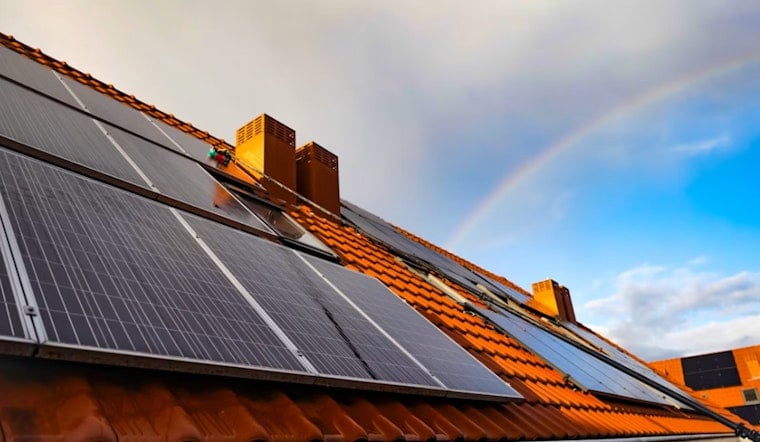
Harris County is about to break ground on a massive rooftop solar project at NRG Center that officials say could shave roughly $1,000 a year off electric bills for about 10,000 households. Construction is expected to begin Monday, Sept. 14, according to County Commissioner Adrian Garcia, who says the array will generate enough electricity annually to power about 500 homes.
The project is the centerpiece of Harris County's Affordable Community Energy program, which is designed to pass the county's own energy savings on to residents rather than letting those savings simply disappear into the general budget, according to Chron. Garcia said the strategy hinges on finding large public rooftops sturdy and expansive enough to support solar panels at scale, and NRG Center was picked specifically because it offers a large, flat roof suited to the job. Combined, the roughly 10,000 participating households could see about $10 million in overall annual savings.
A County Already Banking Energy Savings
Harris County has already saved millions of dollars on its own energy bills, and officials are now reinvesting those savings into solar projects like the one at NRG Center, per the same Chron report. Garcia said turning those county-level savings into real money for residents would mark a major success for the program, which is expected to open enrollment to around 10,000 households sometime in 2027.
The push comes as the county's footprint keeps expanding — Harris County has added more than 1 million square feet of office space since 2023 — and as the wider region braces for dramatic growth. The Houston area is expected to add roughly 3 million new residents over the next two decades, a surge officials say will strain the electricity grid even further.
Resilience as Much as Savings
Garcia framed the NRG Center array as more than a bill-cutting measure, calling it a resilience initiative as well. The article notes one stark example of that vulnerability: the Harris County jail's generator runs on diesel fuel, and that backup power source can become inaccessible when a hurricane leaves the jail surrounded by floodwater.
That resilience angle fits into a broader county effort. The Harris County Engineering Department has separately equipped 16 community facilities across all four precincts with solar arrays, battery storage, and EV chargers, intended to keep critical sites running during severe storms and prolonged ERCOT grid outages.
Filling a Federal Funding Gap
The NRG Center groundbreaking follows a rocky federal chapter for Harris County's clean-energy ambitions. In 2024, the EPA had awarded $249.7 million from the Inflation Reduction Act's Greenhouse Gas Reduction Fund to the Harris County-led Texas Solar for All Coalition, an effort meant to cut energy bills by 20% for underserved households across Houston, Dallas, Austin, San Antonio, and Waco, according to Harris County Precinct 4. But the federal government terminated the national $7 billion Solar for All program, prompting Harris County Attorney Christian Menefee to sue the EPA and Administrator Lee Zeldin last October to recover a $54 million grant the county had been awarded, as reported by Utility Dive.
Rather than wait on that lawsuit to play out, the Harris County Commissioners Court voted 3-1 in March to authorize $88.3 million in local funding for distributed solar and battery storage projects across six to ten sites, aiming to lower bills for roughly 10,000 low-income households — the same target population as the NRG Center effort. Precinct 3 Commissioner Tom Ramsey cast the lone opposing vote, per Community Impact.
Building on Existing Infrastructure
NRG Center isn't new to clean energy experiments. Harris County Sports & Convention Corporation approved the venue's first solar project back in 2014, installing 700 rooftop and canopy panels generating 221 kilowatts across pedestrian bridges and parking structures — a project that also made NRG Stadium the first NFL venue in the country with LED field lighting and rooftop solar, according to the Houston Chronicle. More recently, in 2023, Harris County and the Sports & Convention Corporation signed a 20-year, $54 million energy performance contract with Johnson Controls to fund complex-wide sustainability upgrades across the 350-acre NRG Park campus using guaranteed utility savings rather than upfront taxpayer money.
The new solar array also supports goals the county set for itself in its 2023 Climate Action Plan for Internal Operations, which targets a 40% cut in county government greenhouse gas emissions by 2030. The county hit 31 of its initial 32 climate milestones within the plan's first year, according to the Harris County Office of County Administration.
Why Low-Income Households Need the Relief
The stakes for local households are significant. A June 2025 Kinder Institute for Urban Research study at Rice University found more than 106,000 residential structures in Harris County lack central air conditioning, leaving low-income residents exposed to severe heat risks and high energy burdens, as Hoodline previously reported. Individual rooftop solar remains out of reach for many of those households — a standard 5 kW residential system in Houston cost an average of about $9,450 to install even after the 30% federal tax credit, according to FindEnergy data from early 2025, underscoring why a shared, off-site array like the one at NRG Center matters for families who can't afford their own panels.
The NRG Center project also lands amid a broader regional buildout of the solar industry. SEG Solar announced plans in May to build a nearly 500,000-square-foot solar module manufacturing plant in Houston, a $200 million investment expected to create up to 800 local jobs when commercial operations begin later this year.





