

























































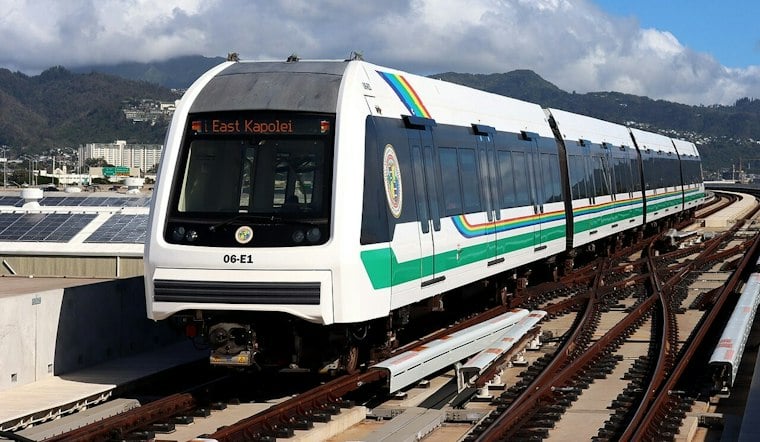
A $300,000 pot of taxpayer money meant to send Hawaiʻi lawmakers and agency staffers on a fact-finding trip about transit-oriented development has no confirmed destinations, no attendee list, and no locked-in schedule — even as the Hawaiʻi Community Development Authority hands off the whole arrangement to a different state department. The board that controls the money approved transferring it to the Department of Health for what officials are calling a mobile travel study workshop, originally planned for late October.
According to Honolulu Civil Beat, HCDA's board authorized Executive Director Craig Nakamoto to enter an agreement letting the Department of Health take over planning and organizing the trip, even though HCDA will keep part of the $300,000 for its own staff expenses. Nakamoto has said there is no single answer or single city that fits the bill, and that participants should see multiple places rather than just one. He has also acknowledged the late-October timing will likely slip.
The workshop is supposed to study transit-oriented development around train stations, with multiple stops envisioned rather than a single site visit. The Department of Health, for its part, has said discussions are ongoing and that no decisions have been finalized, and the agency notes it brings relevant expertise along with an existing contract that could support the effort. That expertise reportedly includes the department's Complete Streets policy, which encourages walking and biking over car use — a natural fit for transit-focused planning, though the department has not finalized any agreement for the trip itself.
Who's Footing the Bill, and Why
HCDA funded the $300,000 appropriation out of a special fund built from leasing and managing public land in Kakaʻako, the district the authority has overseen since it was created in 1976 under Hawaii Revised Statutes Chapter 206E. That statute empowers HCDA to establish urban development districts and fund special planning accounts using exactly this kind of lease revenue, according to the Hawaii Data Portal. HCDA is also the agency responsible for planning, zoning, and permitting across 98 acres around Aloha Stadium served by the Hālawa Skyline Station, which is why the authority has a direct stake in the trip's findings.
Not everyone at the table is sold on the idea. State Rep. Josh Kopp questioned the fiscal wisdom of spending taxpayer money on travel for elected officials and agency staffers, according to Civil Beat, and said plainly that the travel program is not a Best Western vacation — suggesting instead that virtual meetings with outside experts could accomplish the same goal without the plane tickets.
Defenders Say Mistakes Cost More Than Travel
State Rep. Chris Lee, who added the $300,000 for HCDA's educational exchange programs to the 2027 state budget, has defended the expense as money that could save taxpayers far more down the road. Lee said planning errors on projects of this scale can cost tens or hundreds of millions of dollars, framing the travel as insurance against exactly the kind of costly missteps Hawaiʻi can't afford on a rail system that has already climbed past $10 billion.
Mark Garrity offered a similar defense, telling Civil Beat that the workshop is not a boondoggle and needs to happen. But Garrity also suggested a middle path — using the same budget to bring outside experts to Oʻahu instead of relying exclusively on travel abroad, a suggestion that leaves open exactly how the money might ultimately be spent.
A Decade of Study, and Tokyo's Shadow
Hawaiʻi policymakers have been studying development along the Honolulu Skyline for more than a decade, with transit-oriented development aimed at creating walkable villages near train stations where people can live, work, shop, and play without needing a car. Governor Josh Green established an advisory committee on transit-oriented development in 2024, and that committee — whose members include Mary Alice Evans, Lori Kahikina, Stanford Carr, BJ Kobayashi, and Masafumi Ota — published a 107-page study earlier this year on the opportunities and challenges facing development along the Skyline line.
Greater Shibuya in Tokyo keeps coming up as the model officials point to, an example of transit-oriented development that folds retail, housing, offices, and public space around a train station. Japan's Tokyu Group has already shared transit-oriented development ideas with Hawaiʻi government officials and private developers, and as Hoodline previously reported, Governor Green's administration has been negotiating a formal memorandum of understanding with the group to advise on station-area planning. Civil Beat noted that on an afternoon in March, the Skyline itself sat largely empty — a detail that underscores just how much ridership and development around the line still lag the vision officials are studying abroad.
What's Actually at Stake in Hālawa
The area drawing the most attention is the roughly 98 acres around Aloha Stadium that HCDA oversees, where the New Aloha Stadium Entertainment District could become a major Oʻahu project linking rail directly to new development. As Hoodline reported, contracts have already enabled demolition and construction plans for a new 22,500-seat stadium. Hawaii Business Magazine has valued the full 20-year redevelopment at up to $4 billion, encompassing thousands of housing units and hotel towers around the Hālawa Skyline Station.
That scale is exactly what supporters point to when defending the travel budget — the idea that a $300,000 fact-finding trip is a rounding error next to a $4 billion district and a $10 billion rail line, if it helps planners avoid the kind of mistakes Chris Lee warned about. Yet the unanswered questions Civil Beat raised remain unresolved: why travel money was authorized before fixed destinations, schedules, or attendee lists existed, and why the agreement moved from HCDA to the Department of Health in the first place. Civil Beat's reporting describes the entire program as having an unknown destination, unknown timing, and an unknown attendee list, even as the money sits ready to spend.
Meanwhile, the broader infrastructure picture adds pressure to get the planning right. A March 2025 Hawaii legislative resolution found the state faces a $1.1 billion unfunded infrastructure deficit and an overall D+ infrastructure grade from the American Society of Civil Engineers, according to BillTrack50, a backlog that continues to delay transit-oriented housing projects even as officials debate how best to study successful models elsewhere.



_Arriving_at_Ahua_Station_westbound_2025-11-24.jpg)