

























































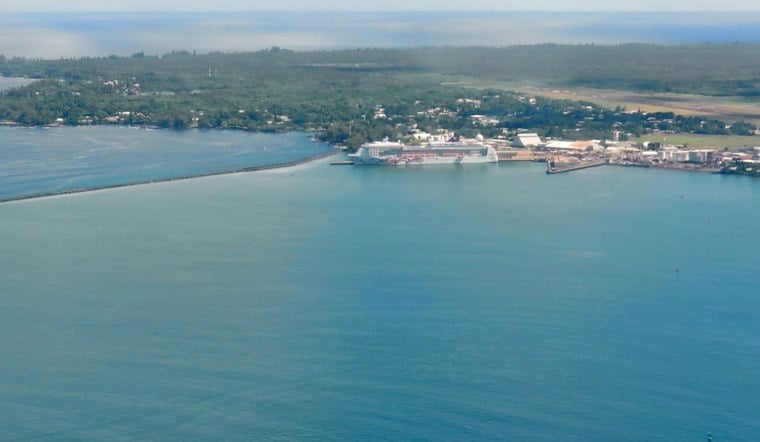
A sudden electrical failure at Hilo's wastewater treatment plant sent roughly 71,000 gallons of partially treated sewage spilling into Puhi Bay Monday night, prompting Hawaii health officials to warn the public to steer clear of nearby coastal waters. The discharge flowed through the plant's ocean outfall between 9:06 p.m. and 9:55 p.m. Warning signs have been posted, and the advisory remains in effect.
The Hawaii Department of Health has advised the public to stay entirely out of the water from Puhi Bay to Onekahakaha until those signs come down, according to the Honolulu Star-Advertiser. The Hawaii County Department of Environmental Management reported that the wastewater entered the bay without required chlorine disinfection. The department notified the Department of Health.
A Plant Already Under Federal Watch
The Hilo Wastewater Treatment Plant, built in the early 1990s, serves roughly 30,000 residents and typically treats about 3 million gallons of municipal wastewater a day, according to Big Island Now. The facility has been under close federal scrutiny since March 2024, when Hawaii County entered into an Administrative Order on Consent with the U.S. Environmental Protection Agency after Clean Water Act violations tied to operation and maintenance deficiencies that caused illegal discharges and sewer overflows, per the agency's own account.
That order also required the county to have Kulaʻimano ready by June 30, 2030, and Pāpaʻikou by June 30, 2031, and leaves the county exposed to potential Clean Water Act lawsuits if it misses those federal deadlines, as reported by Honolulu Civil Beat. Mayor Kimo Alameda issued an emergency proclamation covering the Hilo plant in February 2025 after engineering assessments found mechanical defects, structural degradation, and corrosion that created imminent spill risks, a declaration that authorized emergency management measures and streamlined procurement.
Construction Underway, But Old Systems Still at Risk
Hawaii County broke ground in July 2025 on a $337 million rehabilitation and replacement project contracted to Nan Inc., aimed at overhauling the Hilo facility while keeping it running throughout construction. The consent order sets June 30, 2035, as the start date for operation of a new or upgraded Hilo plant. Even with that overhaul now underway, the plant's aging electrical and mechanical systems remain vulnerable to disruptions in the interim, since the facility must keep operating throughout the years-long construction effort.
Monday's spill is far from the first at this facility. In June 2024, a chlorination process failure sent approximately 607,000 gallons of unchlorinated sewage into Puhi Bay over a four-hour window, an incident that prompted joint inquiries by federal and state health officials. Before that, a November 2022 discharge caused roughly 2.2 million gallons of partially treated wastewater to spill into the bay, triggering a water advisory between Puhi Bay and Onekahakaha, according to the Hawaii Department of Health Clean Water Branch.
Water Quality Concerns Predate This Spill
The bay's troubles were already on regulators' radar before Monday's incident. Hawaii's Department of Health issued a Brown Water Advisory for the Hāmākua Coast to Hilo Bay region on Aug. 25. A University of Hawaiʻi at Hilo marine science study published in January 2025 had already confirmed sewage pollution and fecal indicator bacteria in nearby Keaukaha coastal waters, tracing the contamination to both onsite cesspools and the plant's ocean outfall, according to UH Hilo Stories.
Keaukaha residents have long raised concerns about plant odors and water quality, and the study's findings underscored those complaints with scientific evidence of nearshore contamination. Hawaii County's wastewater division says it will now conduct daily shoreline sampling to monitor bacterial contamination levels in the wake of Monday's spill. Residents are urged to avoid the water while the advisory remains in effect.





